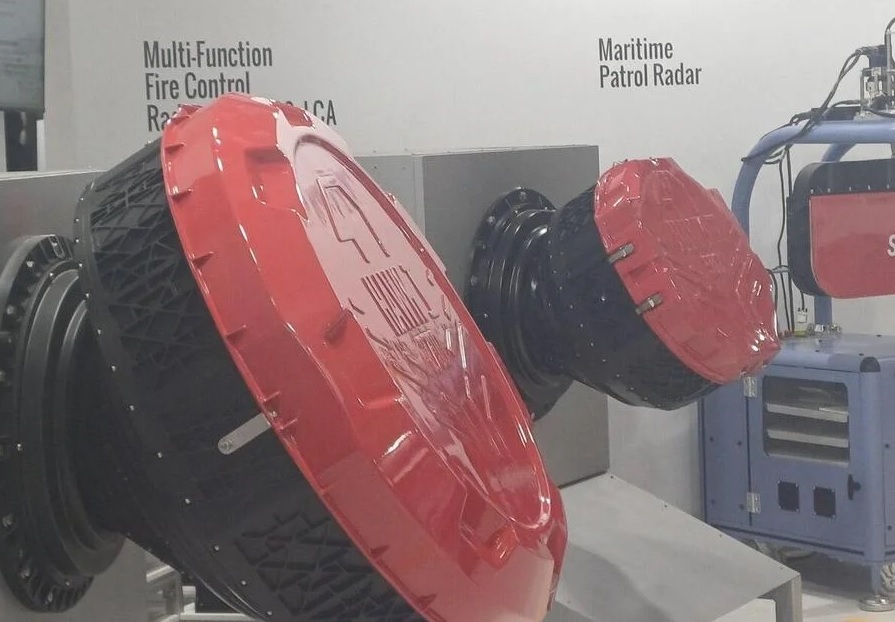
India’s quest for a next-generation radar system for the Su-30MKI fighter jets has taken an interesting turn with the unveiling of the Hawk I 2700—an indigenously developed GaN-based Active Electronically Scanned Array (AESA) radar by DATA Patterns. Showcased at Aero India 2025, this radar is being positioned as a direct competitor to the Virupaksha AESA radar, rather than an extension of it.
One of the key differentiators of the Hawk I 2700 is its sheer number of Transmit/Receive Modules (TRMs)—a staggering 2700, surpassing the 2400 TRMs of the Virupaksha radar. This increase in TRMs directly translates to enhanced range, resolution, and overall radar performance, making it a formidable option for the Indian Air Force (IAF).
Powerful Detection Capabilities
The Hawk I 2700 is designed to detect a wide range of targets at impressive distances:
- 5m² RCS target: Up to 350 km
- 2m² RCS target: Up to 250 km
- 1m² RCS target: Up to 200 km
This advanced detection capability would give the Su-30MKI fleet a much-needed edge in beyond visual range (BVR) engagements, surveillance, and situational awareness.
GaN-Based TRMs: A Game Changer
A major technological leap in the Hawk I 2700 is its use of Gallium Nitride (GaN) technology in its TRMs. GaN-based radars are known for:
- Higher power efficiency
- Better heat resistance
- Enhanced durability
These attributes make the Hawk I 2700 significantly more reliable and powerful than traditional Gallium Arsenide (GaAs)-based radars.
Swash Controller Unit: Expanding Radar Coverage
Another standout feature is the inclusion of a Swash Controller Unit, which enables the radar antenna to mechanically tilt on both sides. This capability extends the radar’s field of view, allowing for better situational awareness and multi-target tracking—a crucial aspect in modern air combat.
A Competitive Battle for the Su-30MKI Upgrade
With the Su-30MKI upgrade program in full swing, the IAF now has two powerful indigenous AESA radar options—Hawk I 2700 and Virupaksha. While both radars promise significant improvements over the older Russian N011M Bars PESA radar currently used in the Su-30MKI, the choice will come down to specific operational preferences and cost-to-performance considerations.
Interestingly, DATA Patterns is also eyeing international markets, particularly countries that operate Su-30 variants with older PESA radars. The AESA upgrade would provide these air forces with enhanced tracking, counter-countermeasures, and multi-tasking capabilities—a major advantage over legacy systems.
With its superior TRM count, GaN technology, and enhanced scanning flexibility, the Hawk I 2700 has positioned itself as a serious contender in India's push to modernize its frontline fighter fleet. The final decision by the IAF could mark a significant milestone in India’s journey toward self-reliance in advanced radar technology.
——— End of Article ———