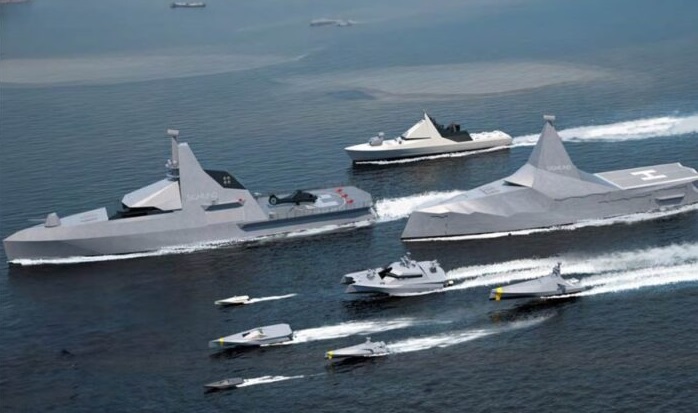
ATHENS : Greek and British defense companies have jointly presented a proposal for the domestic construction of a new family of unmanned surface vessels (USVs) intended for service with the Hellenic Navy and the Hellenic Coast Guard, according to information released by SAS Technology.
The presentation was delivered by SAS Technology, also known as Spirit Aeronautical Systems S.A. and part of the Spirit World Group, in cooperation with Sigmund Naval & Marine Ltd and Concept Marine Group. The briefing was addressed to the Hellenic Navy General Staff and the Hellenic Coast Guard under the Ministry of Maritime Affairs and Insular Policy. An international European and United States–based Class-A manufacturer of weapons, electro-optical and communications systems is also participating in the program.
Proposal for Domestic Construction
According to the companies, the proposal centers on the construction in Greece of next-generation USVs that are already in operational use with European end users. The vessels are described as being adapted to the specific operational requirements of Greek waters, including the Aegean Sea and the wider Eastern Mediterranean.
The program foresees domestic manufacturing, technology transfer, and the establishment of dedicated production infrastructure in Greece. SAS Technology stated that the initiative includes plans for a composite materials facility for air and maritime platforms and a dedicated shipyard capable of producing large unmanned vessels exceeding 10 meters in length.
Regional and Operational Context
The companies presented the initiative as a response to evolving security developments in the Eastern Mediterranean. Particular reference was made to parallel unmanned surface vessel programs in neighboring countries, including Turkey, which publicly displayed fully armed attack unmanned surface vessels of up to 75 feet during IDEF 2025.
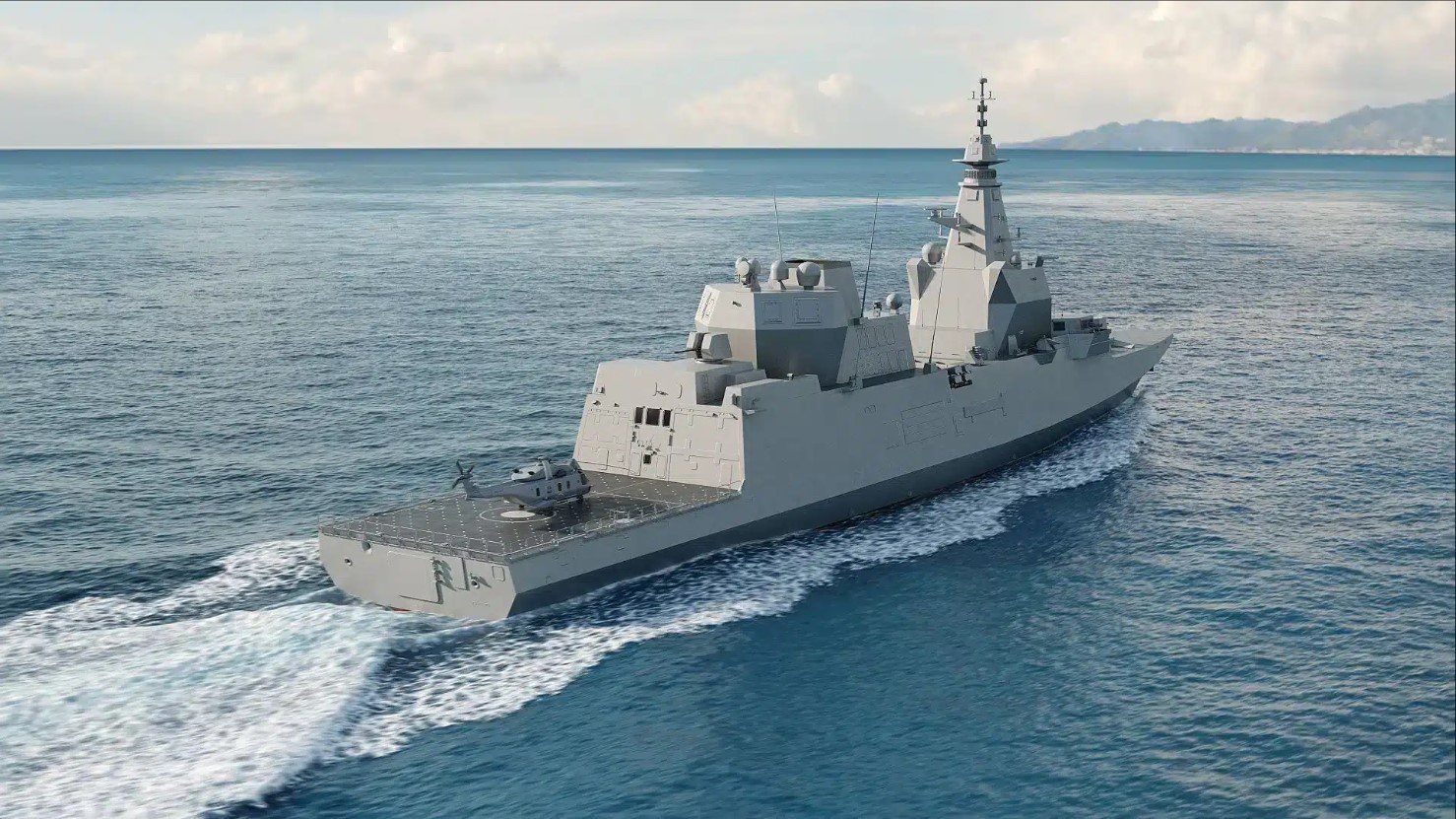
The proposal follows recent modernization steps by Greece, including the induction of the frigate HS Kimon. The USVs are positioned as complementary systems intended to expand surveillance coverage, persistence, and operational reach, while reducing reliance on crewed platforms for selected mission sets.
Platform Characteristics
The proposed USV family includes platforms constructed from advanced composite materials, ranging from approximately 7 meters to more than 30 meters in length. Vessels exceeding 20 meters are designed with the capacity to transport between six and ten personnel when configured for such missions.
The platforms are intended to operate in sea states corresponding to Douglas Scale 5 and 6. Primary emphasis is placed on the 60-foot, 75-foot and 87-foot classes. Depending on configuration, maximum speeds are stated to range from approximately 30 knots to more than 70 knots.
Each vessel is designed around a modular architecture. Standard and optional payloads include electro-optical and infrared sensors, radar systems for surveillance and reconnaissance, secure communications, satellite connectivity, and integrated command-and-control systems. These systems allow for fully autonomous, semi-autonomous, or remote operation. The modular design also allows for the integration of weapon systems where operational requirements permit.
Intended Missions and Areas of Operation
The companies outlined several operational roles aligned with current Greek maritime security requirements. In the Aegean Sea, the USVs are intended to support continuous maritime surveillance, rapid response to asymmetric threats, and persistent monitoring of island approaches.
For operations south of Crete and in the Libyan Sea, the platforms are designed to provide extended-range presence and wide-area surveillance at significant distances from main operating bases. In addition to defense missions, the vessels are described as suitable for maritime security, search and rescue operations, and counter-illegal activity tasks, in accordance with established rules of engagement.
Industrial Roles and Technology Integration
Under the proposed division of responsibilities, Sigmund Naval & Marine would provide core vessel design, drawing on experience in naval architecture, high-performance craft, mega-yachts, and racing vessels. Concept Marine Group would contribute construction guidance and expertise in high-specification composite vessel manufacturing, with an emphasis on hydrodynamic efficiency, stability, and low-signature characteristics.
Weapons, sensor, and communications systems would be supplied by the participating EU/US Class-A manufacturer, with configurations tailored to the requirements of the Hellenic Navy and Hellenic Coast Guard. SAS Technology would integrate its proprietary automation, navigation, control, communications, and swarm-management technologies, transferring experience from unmanned aerial systems to the maritime domain. Additional systems referenced include SEASting, Sea Rescue, SARISA-based weaponized configurations, and ISR-oriented mission packages adapted for Greek operational environments.
Operational and shipbuilding support is planned through cooperation with Spirit World Shipping and Spirit Management Services, providing experience from commercial and open-sea maritime operations.
Statements from the Companies
SAS Technology Chief Executive Michalis Spiridakos said the program is intended to complement recent naval acquisitions by providing autonomous surface platforms built domestically and adapted to Greek requirements.
Sigmund Naval & Marine Chief Executive Peter Symonds stated that the collaboration aims to support the development of sovereign unmanned surface vessels aligned with Greece’s maritime security needs.
Concept Marine Group Chief Executive Kevin Viles said the partnership combines design, systems integration, and manufacturing expertise, with a focus on establishing local industrial capability in Greece.
The proposal is currently at the presentation stage, with no contract awards announced. Further evaluation by the Hellenic Navy and Hellenic Coast Guard is expected to determine potential next steps.
——— End of Article ———