ATHENS, — March 2026 : Greece has formally concluded a contract for the procurement of 52 RIM-116D Rolling Airframe Missile (RAM) Block 2A interceptors, advancing efforts to standardize and modernize close-in air defense systems across the Hellenic Navy’s surface fleet. The agreement, designated Contract No. 001B/25, was signed on March 10, 2026, between the General Directorate for Defence Investments and Armaments (GDDIA) of the Hellenic Ministry of National Defence and the German defense consortium RAM-SYSTEM (RAMSYS) GmbH.
The signing ceremony took place at the residence of German Ambassador to Greece Andreas Kindl in Athens. Major General Ioannis Bouras, Director General of GDDIA, signed on behalf of Greece in the presence of Ambassador Kindl, representatives of RAMSYS, and Vice Admiral Spyridon Lagaras of the Hellenic Navy. The procurement program had previously received approval from the Hellenic Parliament on December 3, 2025.
Under the terms of the contract, all 52 missiles are to be delivered within 18 months from activation.
Integration with Roussen-Class Fast Attack Craft
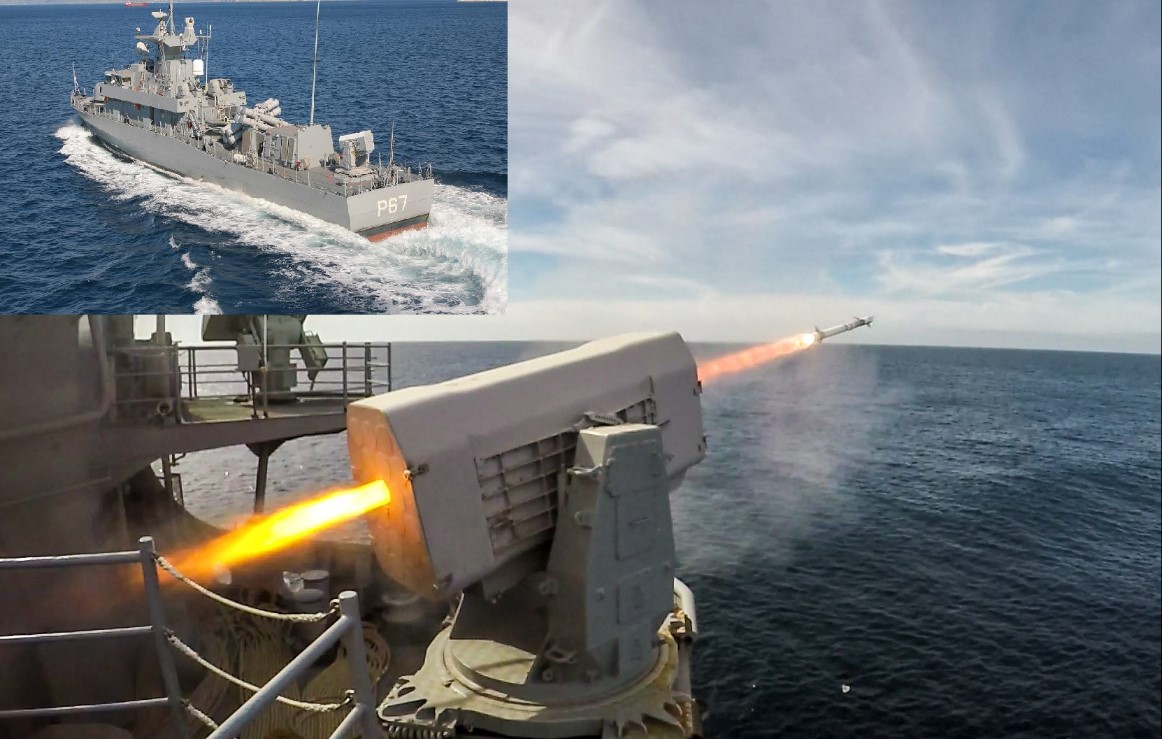
The primary purpose of the acquisition is to equip the final two vessels of the Roussen-class (Super Vita) fast attack missile craft fleet—HS Karathanasis (P-78) and HS Vlahakos (P-79). Both ships entered active service between 2020 and 2022 and are fitted with the Mk 49 Guided Missile Launching System (GMLS), a 21-cell launcher designed for the RAM system.
The procurement also includes an additional 10 missiles allocated for reserve stockpiles, supporting fleet readiness.
The Roussen class currently comprises seven vessels. Earlier ships in the class are equipped with the previous Block 1A (RIM-116B) missiles, while the newly acquired Block 2A variant offers full backward compatibility with existing launch systems following modernization upgrades. This compatibility enables gradual fleet-wide transition without requiring structural changes to launch platforms.
The final two vessels, constructed at Elefsis Shipyards under a 2008 contract, incorporate upgraded systems such as the Thales Vigile 100 R electronic support measures suite and the STIR 1.2 EO Mk2 fire-control radar. Each vessel is also armed with a 76 mm Oto Melara Super Rapid gun, eight Exocet MM40 Block 3C anti-ship missiles, and two 30 mm guns in addition to the RAM launcher.
Technical Characteristics of RAM Block 2A
The Rolling Airframe Missile (RAM) system is jointly developed by the United States and Germany, with industrial contributions from Raytheon and Diehl Defence, while RAMSYS GmbH serves as the prime contractor for export customers.
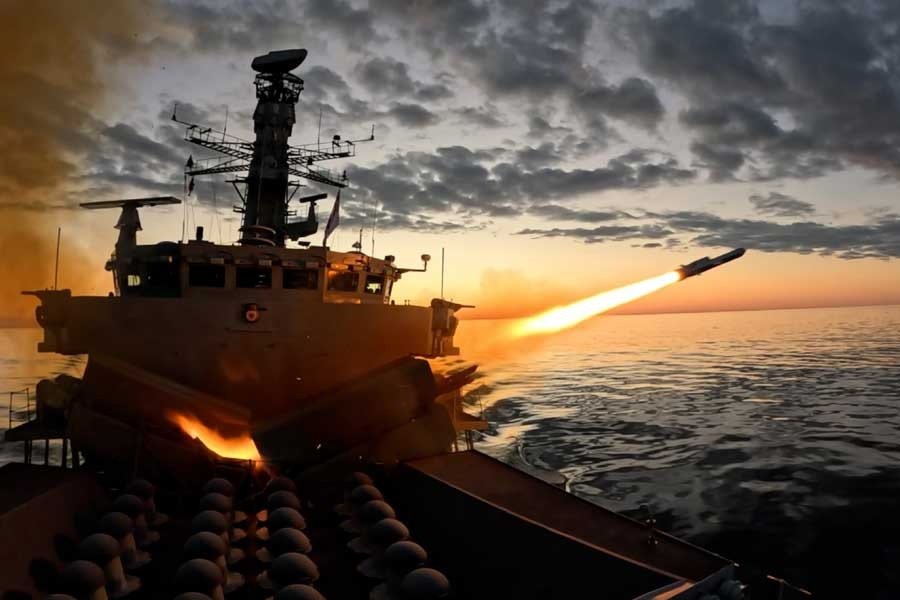
The RAM is a fire-and-forget close-in weapon system (CIWS) designed to counter a wide spectrum of threats, including anti-ship missiles, unmanned aerial systems, helicopters, fixed-wing aircraft, and asymmetric surface targets. It is capable of engaging multiple targets in high-density threat environments, including littoral operations.
The Block 2A (RIM-116D) configuration incorporates several upgrades over the earlier Block 1A variant. A larger dual-thrust rocket motor increases missile diameter from 12.7 cm to 15.8 cm and extends effective engagement range to approximately 15 kilometers, compared to roughly 9 kilometers for earlier versions. The missile is equipped with an independent four-axis control actuator system, improving maneuverability against high-speed and evasive threats.
The system also features an enhanced passive radio frequency (RF) receiver designed to detect and track targets employing low-probability-of-intercept (LPI) radar emissions. Additionally, Block 2 missiles support inter-missile communication during salvo launches, enabling coordinated engagement and reducing redundancy against already neutralized targets.
The Mk 49 launcher integrates with a ship’s combat management system and accommodates up to 21 ready-to-fire missiles.
Follow-On Procurement for Kimon-Class Frigates
Greece is preparing a separate procurement program for the RAM Block 2B variant to equip its new Kimon-class (FDI HN) frigates. The planned acquisition is expected to include at least 84 missiles dedicated to four ships of this class.
The lead vessel, HS Kimon (F-601), has already entered active service and is fitted with a 21-cell RAM launcher positioned above the helicopter hangar as part of its point-defense suite. The remaining three frigates are scheduled for delivery by 2028.
Upon completion of the Kimon-class program, the Hellenic Navy is expected to operate a total of eleven RAM launchers—seven aboard Roussen-class vessels and four on Kimon-class frigates.
Fleet Standardization and Air Defense Architecture
The introduction of RAM Block 2A missiles supports Greece’s effort to establish a unified close-in air defense capability across its surface fleet. The system forms a core component of the Navy’s layered defense architecture, providing terminal protection against incoming aerial and surface threats.
The planned transition to Block 2 and Block 2B variants ensures interoperability across both existing and next-generation platforms, aligning Greek naval capabilities with broader NATO operational standards while maintaining compatibility with legacy systems.
The procurement reflects a structured approach to sustaining and upgrading short-range naval air defense capabilities, with an emphasis on commonality, readiness, and incremental modernization.
——— End of Article ———