KYIV / MUNICH — March 23, 2026 : Germany has agreed to finance the procurement of 15,000 STRILA interceptor drones for the National Guard of Ukraine under a new defense agreement aimed at strengthening Ukraine’s counter-drone capabilities. The program will be implemented through cooperation between German technology firm Quantum Systems and Ukrainian unmanned systems developer WIY Drones.
The contract was formally signed in Kyiv in the presence of Maximilian Rasch, alongside representatives of the National Guard and Quantum Systems. The multi-million-euro package includes not only drone deliveries but also operator training, logistical support, maintenance frameworks, and provisions for continued joint development of unmanned systems.
Industrial Collaboration and Production Expansion
The agreement follows a direct investment by Quantum Systems into WIY Drones, the original developer of the STRILA interceptor platform. The funding is intended to scale up domestic production capacity in Ukraine, enabling rapid manufacturing and deployment to meet operational demand.
Prior to the agreement, WIY Drones had reached a production rate of approximately 100 units per day under existing government contracts. The new partnership is expected to significantly increase output through industrial scaling, localized manufacturing, and integration with German production expertise.
Officials involved in the program indicated that while initial production is dedicated to Ukrainian defense requirements, potential surplus capacity could support future exports to international partners.
Sven Kruk, Co-CEO of Quantum Systems, stated that the partnership is focused on industrializing combat-proven Ukrainian drone technology and integrating it into large-scale manufacturing processes.
System Role and Operational Context
The STRILA interceptor—named after the Ukrainian word for “arrow”—is designed specifically to counter fast-moving aerial threats, including loitering munitions such as Iranian-designed Shahed drones, as well as high-speed reconnaissance UAVs.
The system is intended to provide a cost-effective alternative to conventional surface-to-air missile systems, which are significantly more expensive to deploy against low-cost aerial threats. With an estimated unit cost of approximately $2,300, STRILA offers a kinetic interception capability that can be deployed at scale.
Technical Specifications and Capabilities
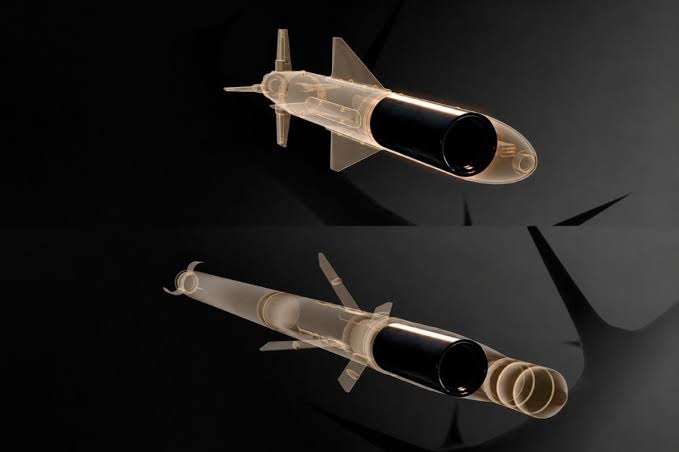
The STRILA is a rocket-type interceptor drone optimized for speed, maneuverability, and autonomous engagement.
Speed and Engagement Envelope:
The drone exceeds operational speeds of 350 km/h, with reported test speeds approaching 400 km/h. It has a tactical interception radius of over 10 kilometers, with manufacturer-listed figures around 14 kilometers, and a maximum flight range of up to 28 kilometers.
Altitude and Endurance:
STRILA can operate at altitudes of up to 4 kilometers, with some data indicating capability up to 5,000 meters. Flight duration is estimated at 15–20 minutes, depending on payload and mission profile.
Payload and Warhead:
The interceptor carries a modular warhead with a maximum weight of up to 800 grams, while some configurations indicate a 500-gram payload depending on mission requirements.
Avionics and Targeting Systems:
The platform is equipped with day and thermal imaging cameras for round-the-clock operation. Target detection ranges reach approximately 1,000 meters during daylight and 600 meters at night. A rotating optical module enables full-angle visibility and tracking.
Advanced variants incorporate the “SineLink” communication module, allowing GPS-independent operation and providing resistance to electronic warfare interference. The system also supports in-flight channel switching to maintain communication in contested environments.
Guidance and Control:
The STRILA uses AI-assisted autonomous targeting, with manual control available during the final phase of interception, ensuring a balance between automation and operator oversight.
Reusability:
If an interception mission is aborted or the target is neutralized by other systems, the drone can return to its launch position, preserving hardware and improving operational efficiency.
Training, Support, and Future Development
In addition to hardware delivery, the German-funded program includes comprehensive operator training, along with long-term logistical and maintenance support structures. The agreement also includes continued joint research and development between Quantum Systems and WIY Drones, focused on next-generation UAV technologies.
Quantum Systems, which has maintained operations in Ukraine since 2022, has previously supported Ukrainian defense efforts through reconnaissance platforms and localized production initiatives. The latest investment represents an expansion into interceptor drone manufacturing at industrial scale.
Strategic Implications
The procurement reflects a broader effort to integrate Ukrainian battlefield-developed technologies with Western industrial capabilities. By combining local innovation with external financing and manufacturing expertise, the program aims to accelerate deployment timelines and strengthen Ukraine’s layered air defense architecture.
German officials described the agreement as part of ongoing efforts to counter persistent aerial threats, particularly mass-produced loitering munitions.
The STRILA program is expected to supplement existing air defense systems by providing a scalable, lower-cost interception layer tailored specifically for drone warfare environments.
——— End of Article ———