BERLIN : German defense manufacturer Diehl Defence has announced plans to dramatically expand production of its IRIS-T air-defense missiles, a move that could significantly reshape Europe’s military industrial capacity and bolster Ukraine’s overstretched air-defense network.
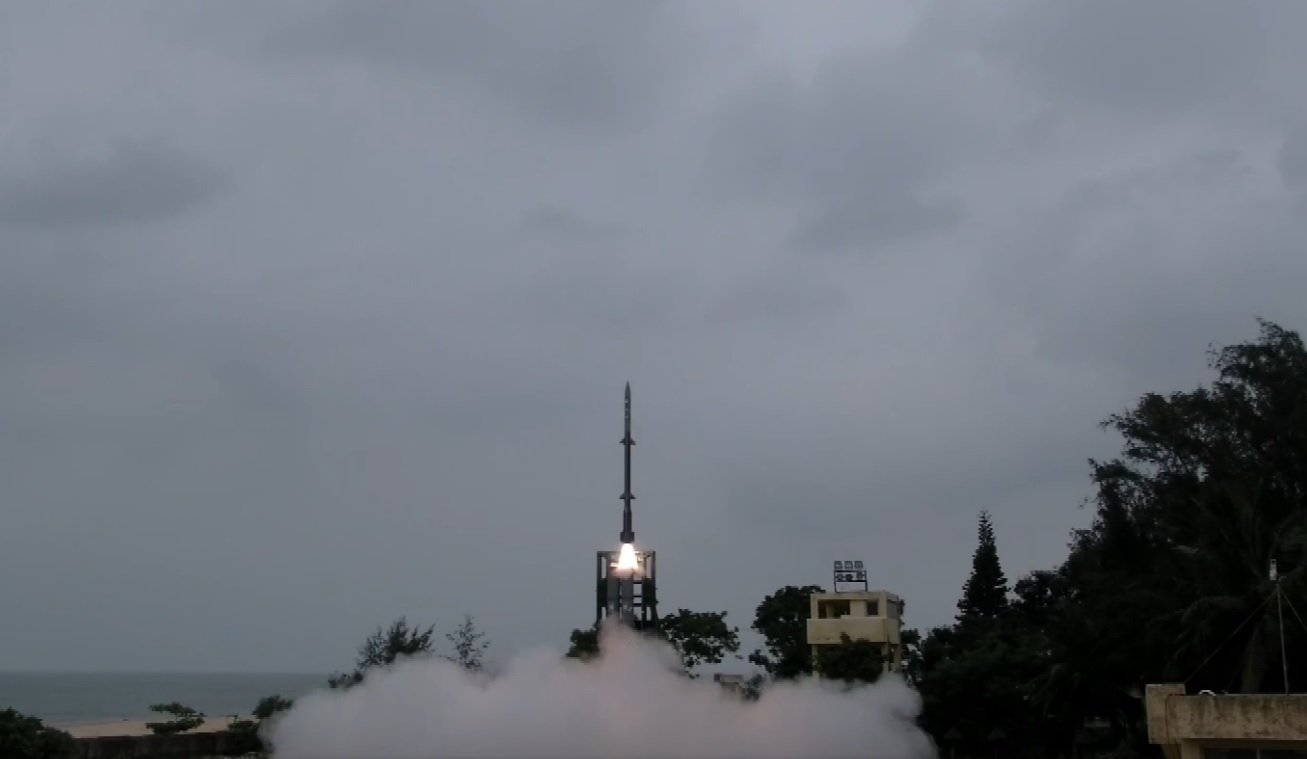
Speaking at the Handelsblatt conference “Security & Defence,” Diehl Defence Chief Executive Officer Helmut Rauch said the company intends to establish a new production line for IRIS-T missiles with a planned annual output of up to 2,000 units. If realized, the expansion would represent the largest single increase in IRIS-T manufacturing capacity since the system entered service.
While Rauch did not disclose a concrete timeline, investment figure, or the exact variant mix to be produced, the announcement itself underscores a strategic shift in European defense planning as demand for modern surface-to-air missiles continues to surge.
A Quantum Leap in Missile Production
The proposed new line would mark a dramatic escalation from Diehl’s previously announced production goals. As of mid-2024, the company had planned to reach an annual output of 800 to 1,000 IRIS-T missiles by the end of 2025, already considered ambitious by industry standards given Europe’s historically limited missile manufacturing base.
An expansion to 2,000 missiles per year would more than double those figures, positioning IRIS-T among the most rapidly produced Western air-defense interceptors.
Industry analysts note that such capacity would require substantial upstream investment, including expanded propulsion manufacturing, seeker production, electronics supply chains, and qualified labor — all areas that have faced persistent bottlenecks since the start of Russia’s full-scale invasion of Ukraine.
Implications for Ukraine’s Air Defense
The announcement carries particular significance for Ukraine, which has relied heavily on Western-supplied surface-to-air missile systems to defend its cities, critical infrastructure, and energy grid against sustained Russian missile and drone attacks.
IRIS-T SLM and SLS systems, supplied by Germany and partner countries, have earned a reputation for high interception rates, especially against cruise missiles and low-flying aerial threats. Ukrainian officials have repeatedly praised the system’s accuracy and reliability.
However, despite its performance, Ukraine continues to receive far fewer IRIS-T missiles than operational demand requires. The limited supply of interceptors has forced Kyiv to ration air-defense fire, leaving some regions exposed during mass Russian strike waves.
A production capacity of 2,000 missiles annually could substantially ease these constraints — assuming political approval, export licensing, and funding mechanisms align to prioritize Ukrainian deliveries.
European Rearmament and Industrial Strategy
Diehl’s announcement reflects a broader recalibration of European defense policy. Since 2022, NATO members have pledged to rebuild depleted stockpiles, reduce dependence on non-European suppliers, and establish sustained high-volume production for critical munitions.
Germany, in particular, has pushed defense firms to move away from peacetime “just-in-time” manufacturing models toward continuous, wartime-scale output. IRIS-T has emerged as a flagship program within this shift, serving both national air-defense needs and alliance commitments.
The possibility that the new production line could include IRIS-T SLM, IRIS-T SLS, or future upgraded variants further suggests long-term planning beyond the immediate Ukraine war.
Unanswered Questions Remain
Despite the significance of the announcement, key details remain unclear. Diehl Defence has not yet confirmed when construction of the new line would begin, where it would be located, or how quickly full-rate production could be achieved. It also remains unknown how much of the future output would be earmarked for Ukraine versus NATO stockpiles.
Defense analysts caution that even with expanded capacity, missile production typically lags battlefield demand by months or years. Nonetheless, the announcement signals that Europe’s defense industry is preparing for a prolonged period of elevated military readiness.
A Strategic Signal
More than a manufacturing update, Diehl’s move sends a political and strategic message: Europe is no longer planning for short conflicts or symbolic support. Instead, it is investing in sustained, large-scale defense production — a development that could have lasting consequences for both the war in Ukraine and the continent’s security architecture.
As missile and drone warfare continues to dominate modern battlefields, the ability to produce interceptors at scale may prove as decisive as the systems themselves.
——— End of Article ———