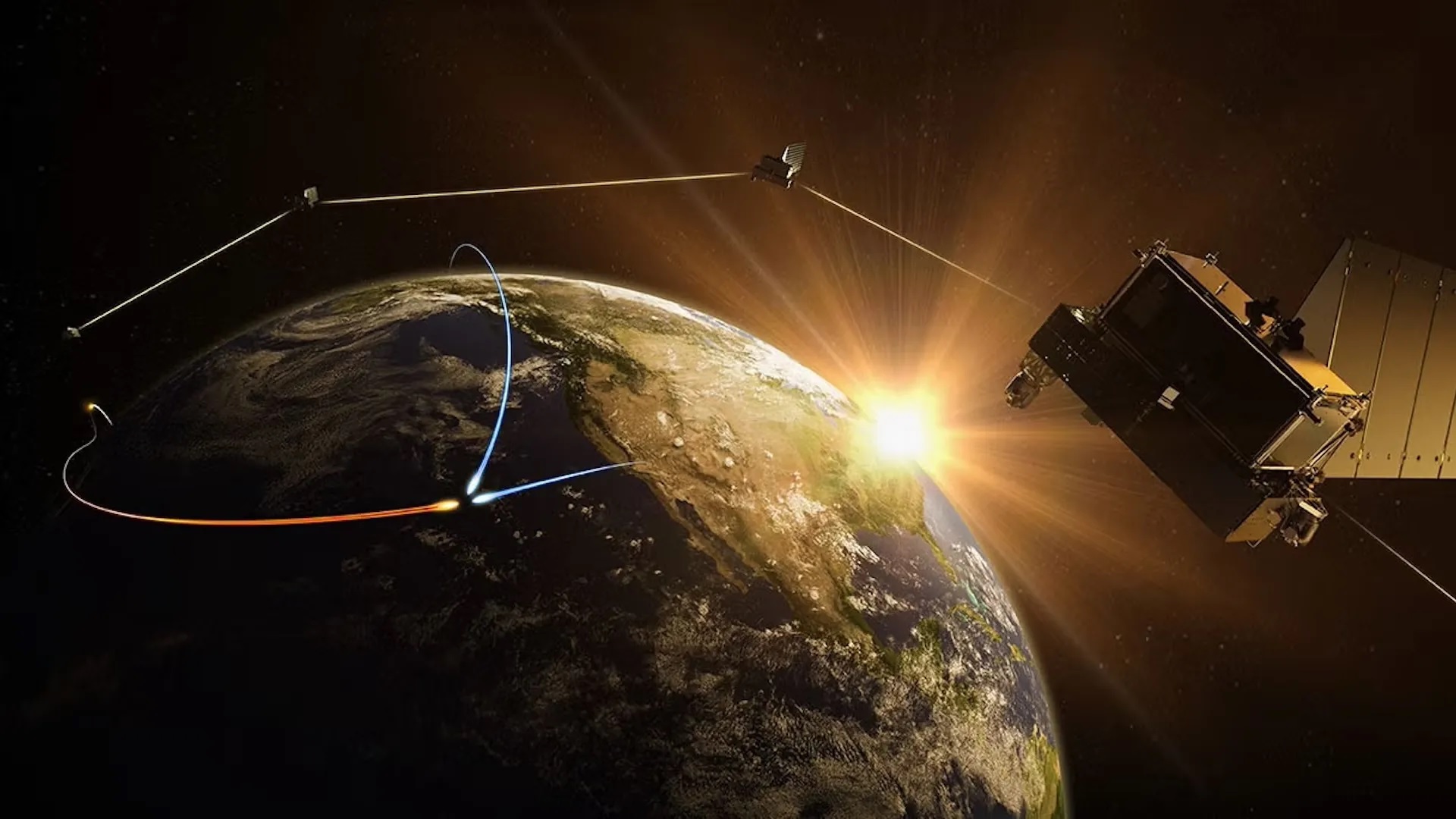
BERLIN : Germany has formally set in motion plans to develop a national space-based missile detection and early-warning system, marking a major shift in European defense posture and a deliberate effort to reduce long-standing reliance on United States intelligence infrastructure for missile launch detection and tracking.
The initiative was confirmed this week by Major General Michael Traut, commander of the German Space Command (Weltraumkommando), who said the establishment of a satellite-based early-warning architecture has been designated an operational priority for the Bundeswehr. The system is intended to detect and track ballistic missiles and hypersonic missile launches through space-based sensors, providing independent, real-time warning data to German and allied defense forces.
While the program is being launched as a German national project, Traut stressed that it is being designed with interoperability and future expansion in mind, allowing other European states to integrate into the architecture at a later stage. German officials view the effort as a potential backbone for a broader European missile-warning network.
Strategic Rationale and Security Environment
German defense planners cite the deteriorating security environment in Europe as the principal driver of the decision. The war in Ukraine, Russia’s increased use of long-range missile strikes, and the deployment of hypersonic and maneuverable weapons systems have underscored the limits of Europe’s existing early-warning arrangements.
Hypersonic glide vehicles and advanced ballistic missiles significantly reduce warning times, placing greater emphasis on continuous space-based detection of launch signatures and flight trajectories. German military officials argue that without sovereign satellite sensors, Europe remains dependent on external actors for time-critical intelligence needed to activate missile defenses and civil protection measures.
Traut said space-based missile detection has become an urgent operational requirement due to the immediacy of the threat environment, particularly along Europe’s eastern flank.
Reducing Dependence on U.S. Systems
For decades, European NATO members have relied almost entirely on U.S. early-warning systems, including the Space-Based Infrared System (SBIRS) and successor platforms operated by the U.S. Space Force. These systems provide global missile launch detection and early-warning data shared with allies through NATO and bilateral frameworks.
German officials have acknowledged that this dependence limits European strategic autonomy and constrains decision-making during fast-moving crises. Traut noted that Europe has relied on U.S. space capabilities “in almost all aspects,” including early warning, satellite communications, and space situational awareness.
By developing sovereign missile detection satellites, Germany aims to shift the transatlantic security relationship from one of dependency to complementarity. German defense leaders argue that an independent capability would allow Europe to contribute its own sensor data to NATO, strengthening collective defense while preserving independent situational awareness.
Scope of the Program and Funding
The missile detection initiative forms part of a wider expansion of Germany’s military space posture. Berlin has committed to invest approximately €35 billion in military space capabilities by 2030, reflecting the growing role of space as an operational domain alongside land, sea, air, and cyber.
According to defense officials, the funding envelope covers several core capability areas.
The early-warning satellite layer will rely on infrared and multispectral sensors capable of detecting the heat signatures and trajectories associated with missile launches and mid-course flight. These satellites are expected to operate across multiple orbital regimes to ensure persistent coverage.
Secure military satellite communications are another central element of the investment plan, with an emphasis on resilience against jamming, cyber intrusion, and kinetic threats.
In addition, Germany is developing “guardian” satellites designed to monitor, protect, and defend German orbital assets against interference, debris hazards, and hostile actions, reflecting growing concerns about space security and counter-space capabilities.
Integration With European Air and Missile Defense
German officials have indicated that the space-based missile detection system is intended to integrate directly with Europe’s ground-based air and missile defense architecture. The effort aligns with the European Sky Shield Initiative (ESSI), launched by Germany in 2022, which seeks to establish a multi-layered air and missile defense shield across participating European states.
ESSI focuses on the joint procurement and integration of systems such as IRIS-T SLM, Patriot, and the Arrow-3 exo-atmospheric interceptor. A space-based early-warning layer would provide the detection and tracking data required to cue interceptors, particularly against high-speed and long-range missile threats.
German defense planners view the space component as essential to closing existing gaps in warning time and target tracking, especially against missiles launched from extended ranges or on non-traditional trajectories.
European Cooperation and Future Outlook
Although Germany is leading the program, officials have repeatedly emphasized its openness to European participation. Discussions are expected with key partners, including France and other ESSI member states, covering data-sharing arrangements, sensor integration, and potential joint satellite procurement.
The German Defense Ministry has not yet released a detailed acquisition timeline or launch schedule for the first satellites. However, officials indicate that planning and preliminary development are already underway, with the objective of achieving initial operational capability before the end of the decade.
Traut said the development of sovereign missile detection and interception capabilities is increasingly viewed in European capitals as a prerequisite for credible defense and strategic autonomy, particularly as missile and space technologies continue to advance.
——— End of Article ———