BERLIN : Germany has acknowledged that it can no longer provide Ukraine with additional Patriot air defense systems from its own military reserves, citing the growing strain on the Bundeswehr after already transferring a significant share of its capabilities to Kyiv.
German Defense Minister Boris Pistorius made the remarks on Monday, January 26, during a joint press conference in Berlin with Lithuanian Defense Minister Robertas Kaunas. His comments come amid renewed Ukrainian appeals for Western air defense assets as Russia intensifies missile and drone strikes across the country.
A Disproportionate Contribution
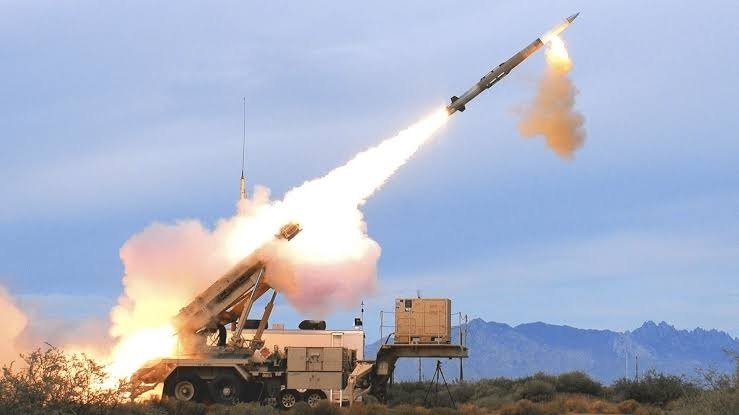
According to Pistorius, Germany has already delivered more than one-third of its Patriot air defense systems to Ukraine — a contribution he described as “disproportionately large” compared with other allies.
“As things stand, further deliveries from our own stocks are not possible,” Pistorius said, as reported by German and international media.
He explained that the Bundeswehr is now awaiting replacement systems for those already transferred and must preserve sufficient equipment to train personnel and maintain operational readiness at home.
Germany has so far supplied a total of five Patriot systems to Ukraine, making it one of the largest individual contributors of the U.S.-designed air defense platform.
Bundeswehr Under Pressure
Behind Berlin’s decision lies a growing concern over Germany’s own defense posture. Patriot systems are central to NATO’s integrated air and missile defense architecture, and Germany plays a key role in alliance air defense missions, including deployments on NATO’s eastern flank.
Defense officials say that further reductions in Patriot inventory would undermine Germany’s ability to meet NATO commitments, conduct training for operators and maintenance crews, and respond to potential threats to its own territory or allies.
The delivery of replacement Patriot systems is also not immediate. Production timelines are long, global demand is high, and many NATO countries are competing for the same limited pool of interceptors and launch units.
IRIS-T Supplies Also Falling Short
Pistorius also acknowledged that Germany’s deliveries of the IRIS-T air defense system — another critical pillar of Ukraine’s air defense — are insufficient given the scale and intensity of Russian attacks.
Germany is currently the only country capable of supplying IRIS-T SLM systems to Ukraine and has been doing so on what Pistorius described as a near-continuous basis. Even so, he admitted that existing deliveries cannot fully counter the “massive intensification” of Russian aerial assaults.
“These attacks have increased in scope and brutality,” Pistorius said, stressing that Ukraine’s air defense needs now exceed what Germany alone can provide.
Call to Allies to Check Their Reserves
Addressing Ukraine’s Western partners, Pistorius urged other countries to reassess their stockpiles and production capacities.
“The task for all of us is to jointly check our own reserves,” he said, according to AFP, “especially those who may still have free capacity.”
His remarks highlight a broader challenge facing Ukraine’s supporters: while political backing remains strong, physical stocks of advanced air defense systems and interceptors are increasingly depleted after years of sustained military assistance.
Production Expansion, But Not an Immediate Fix
Germany is attempting to address the shortfall through defense-industrial expansion, though officials caution that increased output will take time to translate into battlefield capability.
Diehl Defence, the German manufacturer of the IRIS-T system, has opened a new production facility in Nonnweiler (Saarland). The company plans to raise output to up to ten air defense systems this year and has already invested €1.5 billion to expand production capacity.
Missile production is also set to increase, with Diehl Defence expected to reach a rate of approximately 2,000 missiles per year. However, defense officials note that even this accelerated pace will not immediately close the gap between demand and supply, particularly as Ukraine faces sustained Russian attacks.
Sharp Criticism of Russian Energy Strikes
During the press conference, Pistorius sharply criticized Russia’s continued strikes on Ukraine’s energy infrastructure, calling them “particularly cynical.”
He noted that while discussions in Abu Dhabi have touched on the possibility of a ceasefire, Russian forces continue to target civilian energy facilities during winter conditions.
“Russia is striking civilian energy infrastructure with relentless brutality and cruelty,” Pistorius said, accusing Moscow of seeking to terrorize the Ukrainian population in violation of international law.
Strategic Limits Exposed
Germany’s inability to supply further Patriot air defense systems underscores the strategic limits now confronting Ukraine’s Western backers. Years of underinvestment in air defense, combined with the unprecedented scale of aid to Kyiv, have left even Europe’s largest economies facing difficult trade-offs between supporting Ukraine and safeguarding their own military readiness.
For Ukraine, the announcement is a setback at a time when air defense remains one of its most urgent priorities. For Germany and its allies, it is a stark reminder that political will alone cannot substitute for finite stockpiles and slow-moving defense production lines.
——— End of Article ———