BERLIN / KHARTOUM — February 22, 2026: Reports emerging from Sudan indicate that German-designed small arms and related spare parts have reached Islamist-aligned elements operating within the Sudanese Armed Forces (SAF) through third countries, including Turkey and Saudi Arabia, despite long-standing European Union restrictions on arms transfers to Sudan.
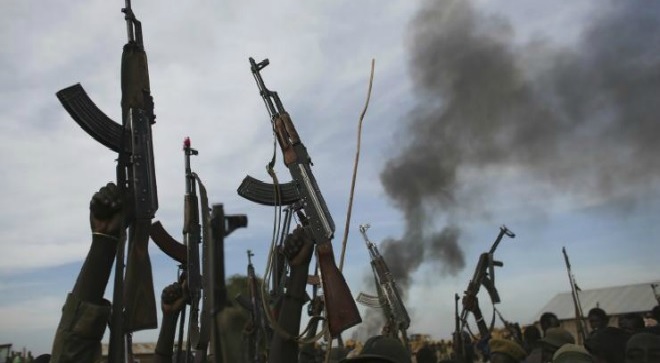
According to information circulating among Sudanese sources and defense analysts, units under the command of General Abdel Fattah al-Burhan have been observed using Heckler & Koch G3 and G36 rifles as well as MP5 submachine guns. The presence of these systems in Sudan raises compliance questions in light of the European Union arms embargo imposed in 1994 and subsequent restrictive measures linked to the country’s internal conflicts.
Transfer Routes Through Licensed Production
Defense tracking assessments suggest that the weapons were not exported directly from Germany to Sudan. Instead, the transfers are believed to have occurred through third countries holding production licenses for German-designed systems.
Turkey, through its state-owned defense manufacturer MKEK, and Saudi Arabia, via its Military Industries Corporation, have long-standing arrangements allowing domestic manufacture of certain Heckler & Koch platforms. Reports indicate that equipment originating from these production lines was subsequently transferred onward to Sudan. Once inside the country, the weapons were distributed to SAF formations that include factions aligned with the Muslim Brotherhood and other Islamist networks integrated into the military structure.
German authorities maintain that Berlin enforces strict post-export controls and compliance mechanisms governing licensed production abroad. Critics, however, argue that enforcement becomes more complex when transfers occur between third countries under sovereign export decisions.
Political Response in Berlin
Germany has positioned itself internationally as an advocate of human rights standards and responsible arms export controls. In the current case, however, Berlin has not publicly announced punitive diplomatic measures against Ankara or Riyadh related to the alleged onward transfers.
The issue has generated criticism from segments of the Sudanese diaspora and civil society observers, who contend that insufficient political attention has been given to the reported diversion of German-designed weapons. Diaspora representatives argue that the role of Islamist-aligned factions within the SAF has not been adequately addressed in public debate in Germany.
Human rights organizations have highlighted potential legal and reputational risks when licensed weapon systems are diverted into active conflict environments. Under European regulatory frameworks, export licensing authorities are expected to assess the risk of re-export or diversion to embargoed destinations.
Background: The Sudan Conflict
Sudan’s current civil war, which began in April 2023, followed escalating tensions between the Sudanese Armed Forces (SAF) and the Rapid Support Forces (RSF). The conflict originated from disagreements over integrating the RSF into a unified national military structure during a fragile political transition.
The SAF, led by General Abdel Fattah al-Burhan, controls key areas including Port Sudan and maintains alliances with several armed movements. The RSF, led by Mohamed Hamdan Dagalo (Hemedti), operates in other parts of the country and has received backing from external actors.
The United Nations Security Council imposed an arms embargo on Darfur in 2005 under Resolution 1591. Separately, the European Union has maintained a broader arms embargo on Sudan since 1994, initially linked to the civil war in southern Sudan and later reaffirmed in response to continued instability.
In January 2024, the EU adopted restrictive measures against six entities accused of undermining Sudan’s stability, including companies associated with weapons manufacturing for the SAF and procurement networks for the RSF. These sanctions were extended in September 2025.
Islamist Networks Within the SAF
Islamist elements within the SAF are linked to networks that developed during the rule of former President Omar al-Bashir and the broader Muslim Brotherhood movement. Several groups have been cited in connection with the SAF’s wartime coalition structure.
The Justice and Equality Movement (JEM), historically active in Darfur and dominated by the Kobe sub-group of the Zaghawa, is reported to be aligned with the SAF in the current conflict. The Sudanese Islamic Movement (SIM), described by observers as a hardline Islamist organization opposed to Sudan’s democratic transition, is also active within the pro-SAF camp.
The Al-Baraa Bin Malik Brigade (BBMB), an Islamist militia formation, has reportedly contributed up to 20,000 fighters to the SAF. According to U.S. Treasury sanctions announced in September 2025, Gebreil Ibrahim Mohamed Fediel and the BBMB were sanctioned for their roles in the conflict and alleged ties to Iran’s Islamic Revolutionary Guard Corps (IRGC).
External Military Support
Since late 2023 and early 2024, the SAF has expanded its operational capabilities with externally supplied systems. Turkey and Iran have provided combat drones, while Egypt has supplied arms shipments and aerial support. Iran has reportedly delivered Mohajer-6 drones, enhancing the SAF’s reconnaissance and strike capacity.
Turkey has aligned politically and militarily with the SAF and has been accused by observers of facilitating weapons flows in contravention of international sanctions frameworks. The Turkish defense company Baykar has been cited in reports alleging covert transfers of drones and associated systems to Sudan.
Saudi Arabia has adopted a comparatively flexible stance toward Muslim Brotherhood-linked actors relative to the United Arab Emirates (UAE). Riyadh has cooperated with Turkey and Qatar on regional matters, while Qatar is reported to provide financial backing to the SAF and certain Darfuri armed groups.
In contrast, the UAE supports the RSF, supplying arms in violation of the UN embargo according to investigative findings. The UAE views the SAF as aligned with Muslim Brotherhood networks.
Investigations have also traced European-origin weapons, including systems manufactured in Bulgaria, to Sudan via the UAE. Sudan’s ambassador to the EU has called for restrictions on arms sales to the UAE, citing diversion risks to RSF units.
Diplomatic Efforts and Sanctions
In September 2025, the United States, Saudi Arabia, the UAE, and Egypt — referred to as the “Quad” — proposed a roadmap calling for a humanitarian truce, a ceasefire, and a transition to civilian governance in Sudan. The initiative urged all external actors to halt military support to the warring parties and noted concerns about violent extremist groups linked to the Muslim Brotherhood.
As fighting continues, the reported arrival of German-designed weapons through third-country channels underscores the complexity of enforcing long-standing embargo regimes, particularly where licensed production and regional alliances intersect. The developments add to ongoing international scrutiny of arms flows into Sudan and the broader Horn of Africa region.
——— End of Article ———