KYIV/BERLIN : German-manufactured electronic components remain present in Russian military unmanned aerial vehicles (UAVs) deployed in Ukraine, according to findings published in early 2026 by Deutsche Welle (DW). The report, based on data from Ukraine’s Defense Intelligence (DIU), details the scale, origin, and procurement routes of these components despite European Union sanctions imposed after Russia’s full-scale invasion in 2022.
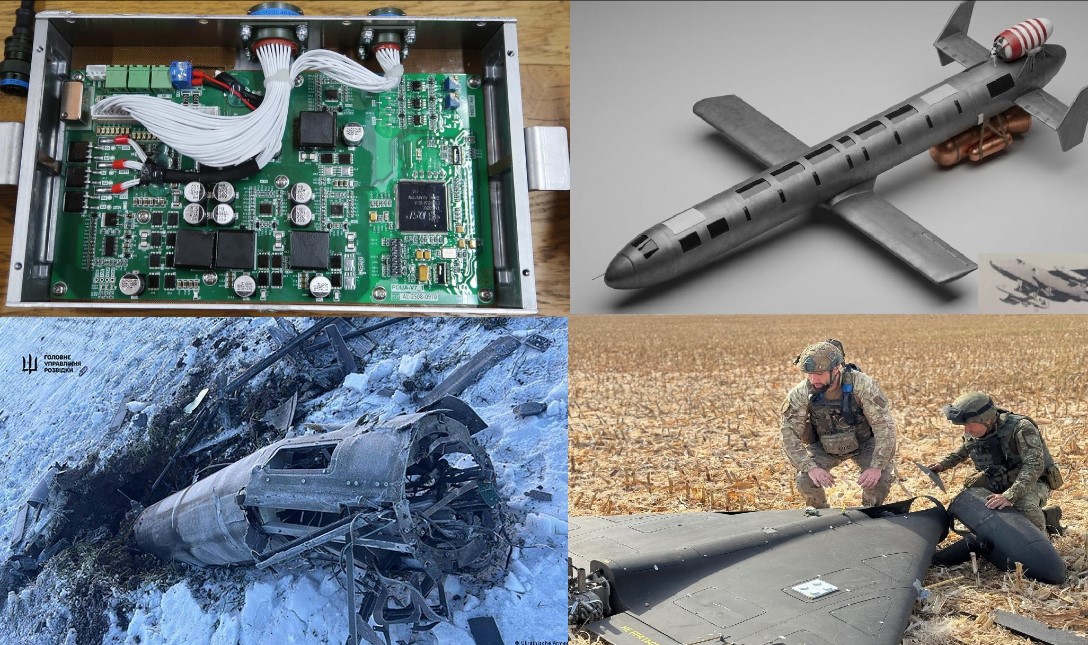
The issue gained renewed attention in January 2026 following the technical analysis of the latest Russian jet-powered drone, Geran-5. Information about foreign-made parts was published on the War&Sanctions portal, operated by the Main Intelligence Directorate of Ukraine’s Ministry of Defense (GUR MO), which documents foreign components recovered from dismantled Russian military equipment.
Component Findings in Geran Drones
In late January 2025, Ukrainian intelligence specialists examined wreckage from a newly deployed Russian jet-powered UAV. During the inspection, investigators identified multiple foreign electronic components, including transistors manufactured by Infineon Technologies, headquartered in Bavaria.
According to data published on the War&Sanctions portal, investigators catalogued exactly 137 components of German origin found in various Russian military systems. More than half were recovered from drones, while the remainder were identified in missiles, radar systems, military vehicles, and helicopters.
The most frequently identified German component category was transistors, accounting for approximately 50 items. Most were integrated into UAV onboard control systems. Other documented components included pumps, inductors, generators, capacitors, transformers, and batteries.
Corporate Sources of Identified Components
Ukrainian intelligence traced the 137 German-origin components to several manufacturers:
-
Infineon Technologies — 58 components, primarily transistors used in UAVs.
-
Würth Elektronik — 9 components, including 5 found in drones.
-
EPCOS AG (now operating as TDK Electronics) — 7 components identified in drones.
-
Pierburg, a subsidiary of Rheinmetall — 3 pumps discovered in the Geran-2 strike drone model.
When contacted by DW, the companies stated that they comply with international sanctions and halted direct deliveries to Russia in 2022. Infineon noted that it produces approximately 30 billion chips annually and emphasized the difficulty of monitoring secondary market resale or redistribution over a product’s lifecycle.
Production Scale and Estimated Demand
Ukrainian intelligence representative Vadym Skibitsky stated in August 2025 in an interview with Suspilnoye television that Russia plans to produce up to 40,000 Geran-2 drones annually.
According to information provided by the DIU to DW, each Geran-family drone, starting with the Geran-2 model, contains between 8 and 12 German-made transistors within its onboard control system. Based on projected production volumes, Russian manufacturers could require close to 500,000 German transistors in 2025 alone to meet manufacturing targets.
Investigators reported that Russian manufacturers do not remove original corporate markings, model numbers, or batch identifiers from these components. Ukrainian specialists use microscope-equipped cameras to document the markings on the microchips, which are smaller than a fingernail.
Broader Supply Patterns
Data from the War&Sanctions portal indicates that most foreign components found in Russian military equipment originate from the United States and China. In 2023, U.S.-manufactured parts accounted for up to 80 percent of hardware in certain versions of the Shahed-136 family drones. Current assessments indicate that Chinese components now represent up to 60 percent of parts used in some UAV configurations.
Despite this shift toward Chinese sourcing, Ukrainian intelligence assessments indicate that Russian defense contractors continue to rely on German transistors due to their reliability and availability. Because these transistors are standard components widely used in household appliances and general-purpose consumer electronics, procurement in large quantities does not face significant technical barriers.
Sanctions Evasion and Procurement Networks
To bypass EU sanctions, Russian procurement networks employ complex supply chains. According to DIU assessments, German-made transistors are frequently purchased within Germany by intermediary companies structured to obscure the final destination of the goods. The components are then exported to third countries maintaining trade relations with Russia or moved through established smuggling routes.
German legal expert Viktor Winkler, interviewed by DW, stated that since 2022, routing components through German shell companies has become an increasingly likely method of circumventing export controls, supplementing the use of third-party transit states.
Pre-War Precedents
The presence of German components in Russian military drones predates the full-scale invasion of Ukraine. In November 2021, ARD, citing the British research organization Conflict Armament Research, reported that an engine manufactured by 3W Modellmotoren had been found in a Russian reconnaissance drone in Donbas in 2017. The company stated at the time that it had sold the engine to a Czech partner in 2013 and was unaware of its transfer to Russia.
The January 2026 media coverage, including reporting by n-tv and other German outlets, again highlighted the discovery of Infineon transistors in the Geran-5 drone model.
Enforcement Challenges
Manufacturers interviewed by DW acknowledged that while direct exports to Russia ceased in 2022, monitoring the secondary market for civilian-grade electronics remains difficult. High-volume semiconductor production, global distribution networks, and the dual-use nature of electronic components complicate enforcement efforts.
Ukrainian intelligence assessments indicate that the procurement of German electronic components for Russian UAV production appears systematic and standardized rather than incidental. However, companies maintain that compliance mechanisms are in place and that indirect resale channels are difficult to fully control under existing global trade conditions.
——— End of Article ———