Crystal City, Va. : General Dynamics NASSCO is positioning a new destroyer tender concept, designated AD(X), as a potential companion program to the U.S. Navy’s future AS(X) submarine tender, proposing a shared hull design intended to reduce costs, expand industrial capacity, and address emerging fleet logistics requirements, particularly at-sea vertical launch system (VLS) reloading.
The company unveiled the internally developed AD(X) concept during the Surface Navy Association’s National Symposium in Washington, presenting it alongside updated details of the AS(X) submarine tender program, which NASSCO is under contract to build for the Navy. According to company officials, the destroyer tender is not currently a Navy program of record, but is being advanced to gauge service interest as the Navy evaluates future sustainment and rearming concepts for surface combatants operating forward.
AS(X) Program as the Baseline
The AD(X) concept is derived directly from the AS(X) submarine tender hull. The AS(X) program is a two-ship effort intended to replace the aging Emory S. Land-class submarine tenders currently homeported at Apra Harbor, Guam. Those ships provide forward maintenance and support for U.S. submarines operating in the Indo-Pacific.
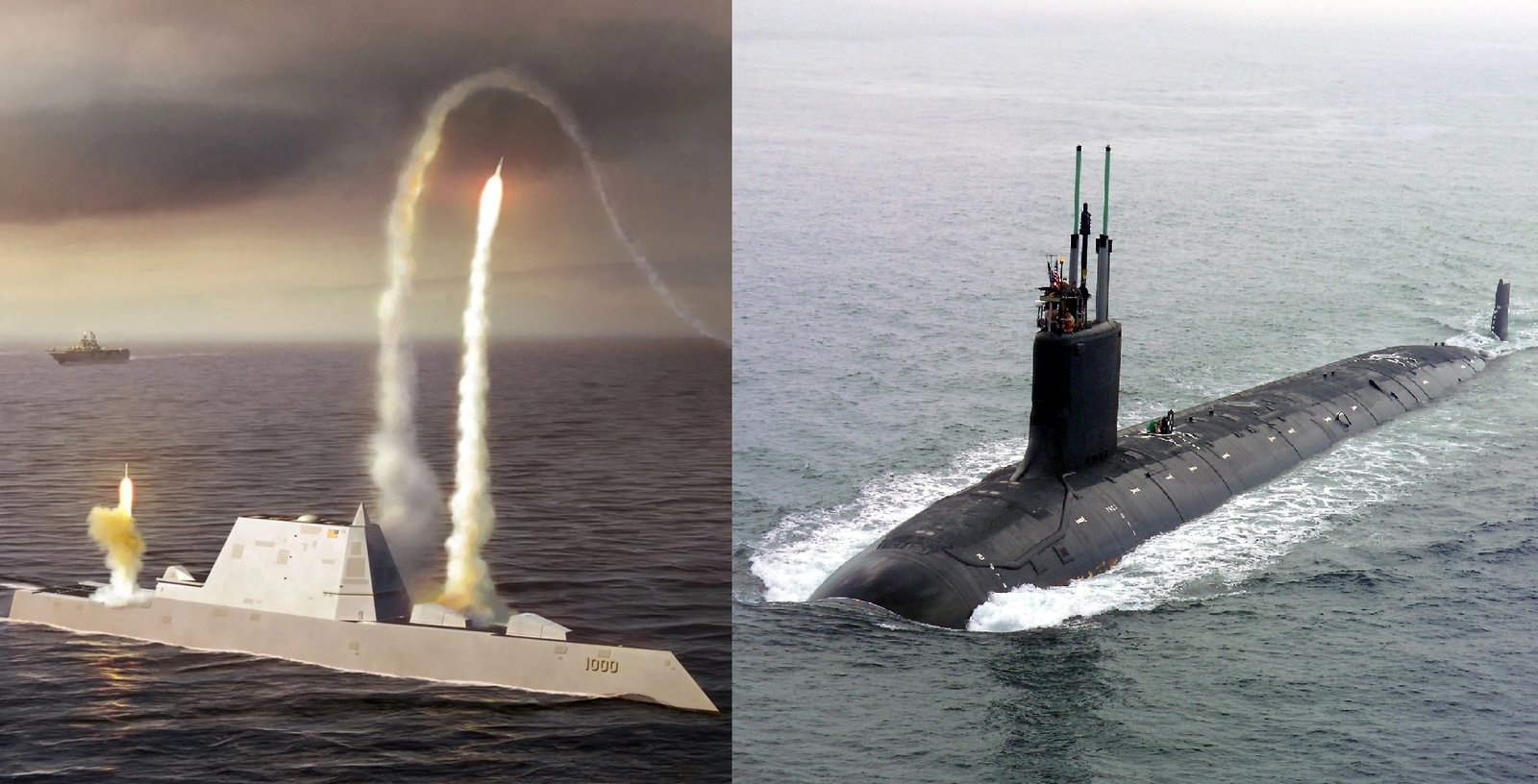
The new AS(X) tenders are designed to support Virginia-class attack submarines, including the larger Block V variant, as well as Columbia-class ballistic missile submarines. Compared with the existing tenders, AS(X) will provide expanded maintenance capacity, modernized systems, and improved support for newer submarine classes with increased displacement and more complex systems.
General Dynamics NASSCO describes AS(X) as a large, floating maintenance facility capable of conducting a wide range of repairs, logistics support, and sustainment functions without requiring submarines to return to continental U.S. shipyards.
AD(X) Destroyer Tender Concept
Building on that baseline, NASSCO’s AD(X) proposal applies the same hull, propulsion, and core ship systems to a surface-focused tender designed to support guided-missile destroyers. The concept emphasizes commonality between the two ship types, with only limited modifications required to adapt the submarine tender design to surface combatant support.
According to NASSCO, the primary distinction between AS(X) and AD(X) would be mission equipment rather than the hull itself. The destroyer tender would be optimized to conduct maintenance and logistics support for Arleigh Burke-class destroyers and to provide a dedicated capability to reload VLS cells while ships are underway or operating in sheltered forward areas.
Company officials argue that expanding the number of ships built on a common hull—either as additional AS(X) units, AD(X) tenders, or a combination of both—would lower program risk and cost. Larger production runs allow suppliers to achieve better economic ordering quantities and enable shipyard workers to gain experience through repetition, improving build efficiency and schedule performance.
Cost and Procurement Considerations
NASSCO has emphasized the potential savings associated with multi-ship or multi-year procurement approaches. By contracting early for common equipment sets across several ships, the Navy could reduce unit costs through bulk purchasing and stabilized production lines.
Company estimates suggest that multi-year procurement savings on major ship programs typically fall in the range of 5 to 7 percent. Applied across a multi-billion-dollar ship program, such savings could be significant, particularly when combined with the benefits of industrial base stability and reduced technical risk.
VLS Reloading as a Key Requirement
A central driver behind the AD(X) concept is the Navy’s growing emphasis on rearming surface combatants forward, rather than relying solely on fixed shore facilities. Current VLS reloading efforts have relied on a combination of auxiliary vessels, including roll-on/roll-off ships and dry cargo and ammunition ships, supported by experimental handling systems.
NASSCO’s AD(X) design would incorporate dedicated VLS reloading capability, with the capacity to support up to four destroyers. The ship would be able to conduct reloading operations while underway or while operating in protected harbors, bays, or atolls, depending on Navy concepts of operations.
The modifications required to enable this mission are described as relatively modest. They include changes to crane reach and configuration to accommodate the wider beam and deck layouts of destroyers, as well as reconfiguration of internal maintenance spaces. Some features required for submarine support, such as radiation shielding, would not be needed on AD(X), potentially offsetting the cost of the added crane capability.
Both AS(X) and AD(X) would be equipped with dynamic positioning systems, allowing the ship to maintain precise station-keeping during maintenance, cargo transfer, or VLS rearming operations. This capability is viewed as essential for safe missile handling outside of traditional pier-side environments.
Ongoing Navy Testing and Evaluation
The Navy is continuing to test and refine its VLS reloading concepts. Additional demonstrations are planned using the Expeditionary Transfer Dock USNS Montford Point in 2026, building on previous exercises that paired auxiliary ships with Arleigh Burke-class destroyers during live rearming evolutions.
Data from those tests are expected to inform future decisions on whether to pursue a purpose-built destroyer tender or continue adapting existing auxiliary platforms. NASSCO’s AD(X) proposal is intended to provide a ready option should the Navy determine that a dedicated class is required to support sustained, high-tempo surface combatant operations in forward theaters.
Outlook
While AS(X) remains the only program currently under contract, NASSCO is positioning AD(X) as a logical extension of the Navy’s investment in common hulls and forward sustainment capability. Any decision to proceed with a destroyer tender program would depend on Navy requirements, budget priorities, and the outcome of ongoing VLS reloading trials.
For now, AD(X) remains a company-funded concept, but one closely aligned with emerging Navy operational and logistical challenges in distributed maritime operations and prolonged forward deployments.
——— End of Article ———