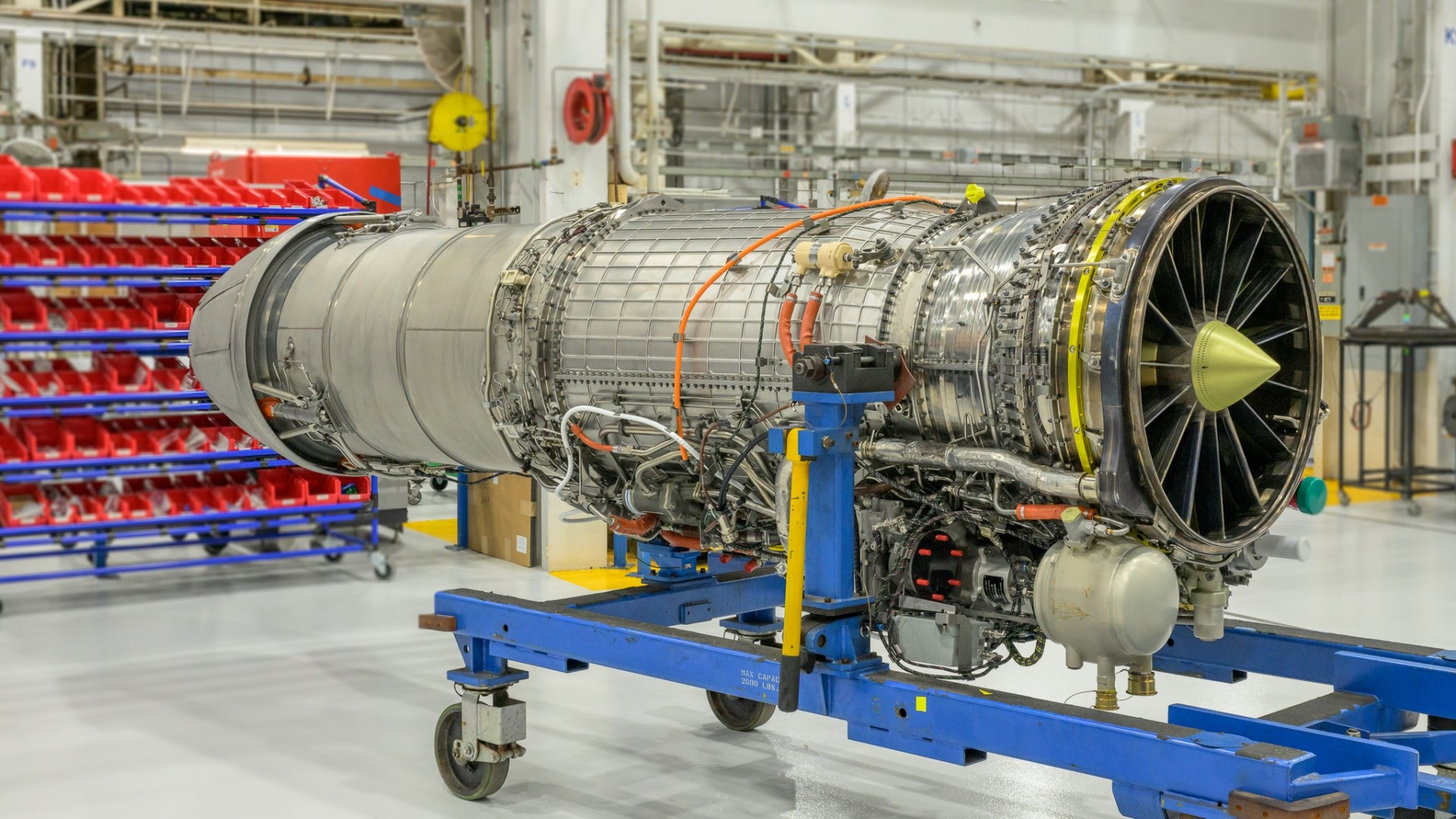
BENGALURU / LYNN (Massachusetts), — April 2, 2026 : GE Aerospace has implemented a series of structural and operational measures to accelerate the production and delivery of F404-IN20 engines to Hindustan Aeronautics Limited (HAL), in support of India’s Light Combat Aircraft (LCA) Tejas Mk1A programme.
The company has established an additional dedicated production line for the F404-IN20 variant, introduced higher levels of automation in engine testing processes, and appointed a new management team to oversee production and delivery timelines. These steps form part of a coordinated ramp-up plan agreed between GE Aerospace and HAL to address supply chain delays and stabilise engine availability.
Delivery Schedule and Production Targets
Under the revised roadmap, HAL is expected to receive 20 engines in the second half of the financial year 2026–27. HAL Chairman and Managing Director D.K. Sunil confirmed that deliveries are projected to increase to 24 engines during FY 2026–27, with further scaling to 30 engines annually from FY 2027–28 onward.
As of early April 2026, GE Aerospace has delivered six engines under the original 2021 contract for 99 F404-IN20 units. Deliveries under this contract began in March 2025 after the production line was restarted. The line had previously been shut down in 2016 following completion of an earlier order of 65 engines.
Initial delays in delivery were attributed to a combination of geopolitical tensions, pandemic-related supply chain disruptions, and the technical challenges associated with restarting a dormant production line.
Follow-on Orders and Programme Expansion
In November 2025, HAL placed a follow-on order for 113 additional F404-IN20 engines, including spares and modules. Deliveries under this contract are scheduled to begin in 2027 and continue through 2032. The order supports the production of 97 additional Tejas Mk1A aircraft approved by India’s Ministry of Defence in September 2025.
To support increased production requirements, GE Aerospace has also invested $14 million in its Pune facility in India. The investment focuses on expanding component manufacturing capacity, incorporating advanced manufacturing technologies, and increasing automation for specific engine parts.
Global Production Outlook and Platform Integration
The F404 engine family, previously considered a mature or legacy platform, has seen its production lifecycle extended by nearly two decades due to renewed demand from multiple aerospace programmes.
Current production timelines for new-build F404 engines are aligned with major platform requirements:
- HAL Tejas Mk1A (India): production expected until approximately 2032
- Boeing T-7A Red Hawk (United States): production expected until approximately 2034
- TAI Hürjet (Turkey): production expected to continue through 2030 and beyond
The Boeing T-7A Red Hawk programme includes plans for more than 350 aircraft for the U.S. Air Force, with initial production deliveries beginning in late 2025 and initial operational capability targeted for 2027.
Turkey’s Hürjet programme has entered mass production, supported by a manufacturing line capable of producing two aircraft per month. A memorandum of understanding signed in July 2025 between Turkish Aerospace Industries (TAI), GE Aerospace, and Turkish Engine Industries (TEI) provides for local assembly, inspection, testing, and maintenance of F404 engines within Turkey.
Additional agreements, including the supply of F404 engine kits to Hanwha Aerospace in South Korea for integration into the FA-50/TA-50 aircraft family—also operated by the Polish Air Force—are contributing to sustained global demand.
Technical Characteristics and Long-Term Support
The F404-IN20 is the highest-thrust variant within the F404 engine family, capable of delivering up to 85 kN of thrust. It incorporates Full Authority Digital Engine Control (FADEC) and advanced single-crystal turbine blade technology designed for modern combat aircraft requirements.
Although the final new-build F404 engines are projected to be produced by the mid-2030s, GE Aerospace plans to continue manufacturing spare parts and critical components until 2050 or later. This extended support framework is intended to maintain operational readiness for global fleets operating F404-powered aircraft, including those in the United States, India, South Korea, and Poland.
Industrial Coordination and Programme Alignment
The production ramp-up is aligned with HAL’s aircraft manufacturing expansion. HAL inaugurated a third Tejas Mk1A production line at its Nashik facility in October 2025 to meet increased aircraft output targets.
GE Aerospace’s additional production line, combined with enhanced automation at its primary facility in Lynn, Massachusetts, and expanded manufacturing capabilities in Pune, is aimed at ensuring consistent engine supply. The company continues to coordinate closely with HAL on supply chain stabilisation measures to support the overall Tejas Mk1A production schedule.
——— End of Article ———