PARIS / VIENNA, — April 9, 2026 : The French Navy has placed a follow-on order for five additional Camcopter S-100 unmanned aerial systems, further expanding its shipborne intelligence, surveillance, and reconnaissance (ISR) capabilities under its broader unmanned aviation program. The procurement is being executed through the Direction Générale de l'Armement (DGA), with Naval Group acting as the prime contractor and Austrian manufacturer Schiebel as the system provider.
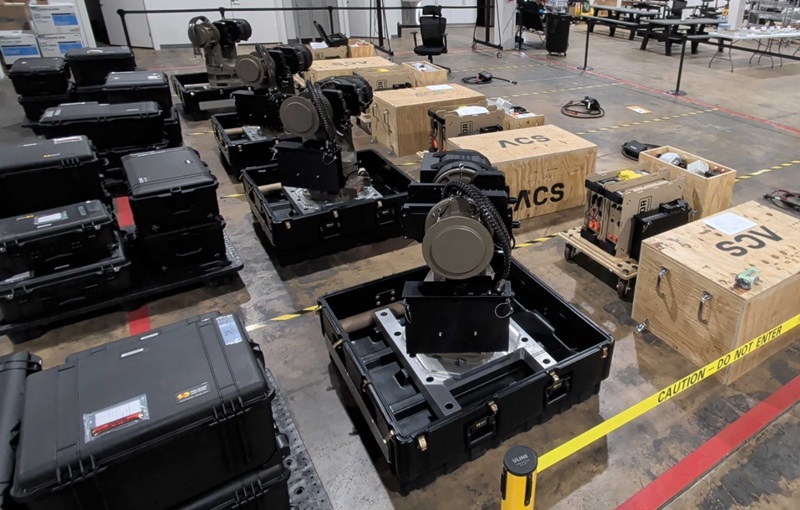
The order brings the French Navy’s planned inventory to a total of eight operational S-100 systems once deliveries are completed. Each system consists of two vertical takeoff and landing (VTOL) unmanned aerial vehicles (UAVs), increasing the Navy’s deployable fleet to 16 UAVs in total. Deliveries are scheduled to begin in 2026 and will be carried out progressively.
Integration with FREMM Frigates
The newly ordered systems are intended for deployment aboard the French Navy’s Frégates Européennes Multi-Mission (FREMM) frigates. Integration will be handled through Naval Group’s Steeris MS mission management system, which enables both physical and functional integration of the UAVs into the ships’ combat architecture.
The Steeris MS system allows direct control of the UAVs from the ships’ Combat Information Center while enabling real-time data fusion with onboard sensors. In addition, operations will be supported by the Steeris Command system, a containerized operational center designed for rapid deployment at sea or ashore.
This integration ensures interoperability between the UAVs and existing naval systems, allowing seamless ISR data sharing across platforms.
Platform Capabilities and Performance
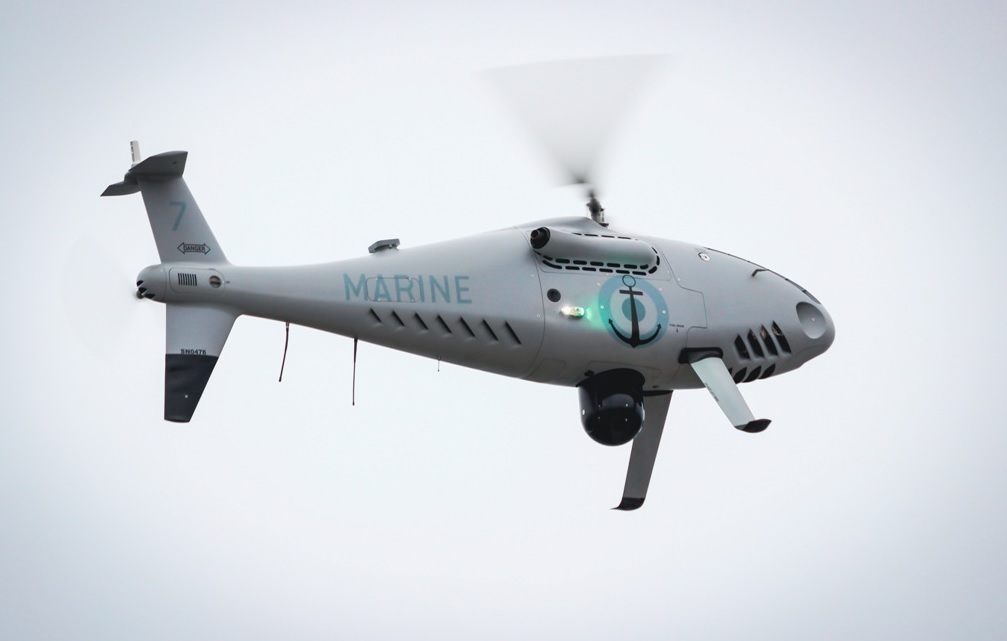
The Camcopter S-100 is specifically designed for maritime operations and does not require dedicated launch or recovery equipment, enabling deployment from a wide range of naval vessels. Its compact dimensions—3.11 meters in length, 1.12 meters in height, and a rotor diameter of 3.4 meters—support flexible integration across ship classes and mission profiles.
The system is capable of operating in challenging environmental conditions, with an operating temperature range from -40°C to +55°C and wind limits of up to 25 knots for takeoff and landing.
Performance specifications include:
- Maximum takeoff weight: 200 kg
- Typical payload capacity: 50 kg
- Endurance: over six hours with a 34 kg payload, extendable beyond 10 hours using an external fuel tank
- Dash speed: 100 knots
- Service ceiling: 5,500 meters
- Operational range: up to 200 kilometers beyond line-of-sight
The UAV supports day and night operations and transmits real-time high-definition imagery and sensor data. Payload options include electro-optical/infrared (EO/IR) cameras, synthetic aperture radar, and other mission-specific systems. It also features autonomous takeoff, waypoint navigation, and landing, supported by redundant inertial navigation and GPS systems, along with data links capable of transmitting up to four simultaneous video feeds.
Operational History and Deployment Timeline
The French Navy has accumulated more than a decade of operational experience with the Camcopter S-100 platform. Initial at-sea operations began in 2012 aboard the Gowind-class offshore patrol vessel L’Adroit.
In 2019, the system was deployed on the Mistral-class amphibious helicopter carrier Dixmude, marking the first operational integration of a rotary-wing unmanned aerial system into a European naval combat management system. This milestone followed a two-year testing phase and required ship modifications carried out by Naval Group to ensure interoperability.
The capability was further expanded in 2020 with the acquisition of two additional systems (four UAVs). These were deployed aboard the Mistral-class vessels Mistral and Tonnerre to enhance ISR operations.
Role within the SDAM Programme
The latest order forms part of the French Navy’s Système de Drone Aérien de la Marine (SDAM) program, which aims to expand unmanned aviation capabilities across multiple ship classes.
Within this framework, the Camcopter S-100F variant serves as a lightweight reconnaissance platform for FREMM frigates, complementing larger unmanned systems such as the VSR700, which are being procured separately for other vessel types.
Industrial Support and Statements
Schiebel supports the French Navy through its French subsidiary, Schiebel Aéronaval SAS, based in Toulon, which handles assembly and maintenance of the S-100 systems.
Lubos Sramek, Director of Schiebel Aéronaval SAS, stated that the follow-on order reflects continued operational confidence in the platform. He noted that the French Navy was among the first European forces to integrate the system into shipborne operations and emphasized that the additional order demonstrates both the maturity of the system and its sustained performance in maritime environments.
Sramek also confirmed the company’s ongoing commitment to supporting the French Navy’s aviation programs and highlighted the platform’s established track record across military, commercial, and humanitarian applications.
Program Significance
The expansion of the Camcopter S-100 fleet reflects the French Navy’s continued investment in unmanned ISR capabilities, particularly for shipborne operations that do not rely on prepared infrastructure. The platform’s ability to operate autonomously and integrate with combat systems provides additional situational awareness and operational flexibility for deployed naval forces.
With deliveries set to begin in 2026, the additional systems will further enhance the Navy’s capacity to conduct persistent surveillance and reconnaissance missions across maritime environments.
——— End of Article ———