Paris / Mediterranean Sea : France has seized a tanker carrying Russian crude oil in the Mediterranean Sea, marking one of Europe’s most forceful maritime enforcement actions since the start of Russia’s full-scale invasion of Ukraine and signaling a potential shift from passive monitoring to direct interdiction of sanction-busting oil shipments.
President Emmanuel Macron announced the operation on Thursday, confirming that the French Navy intercepted a vessel transporting Russian oil that was subject to international sanctions. Writing on X, Macron said the action was carried out with allied support and in “strict compliance with the United Nations Convention on the Law of the Sea,” underscoring Paris’s determination to clamp down on what Western officials describe as Russia’s clandestine oil export network.
“We will not tolerate any violation,” Macron said, adding that the activities of Russia’s so-called “shadow fleet” directly finance the war of aggression against Ukraine.
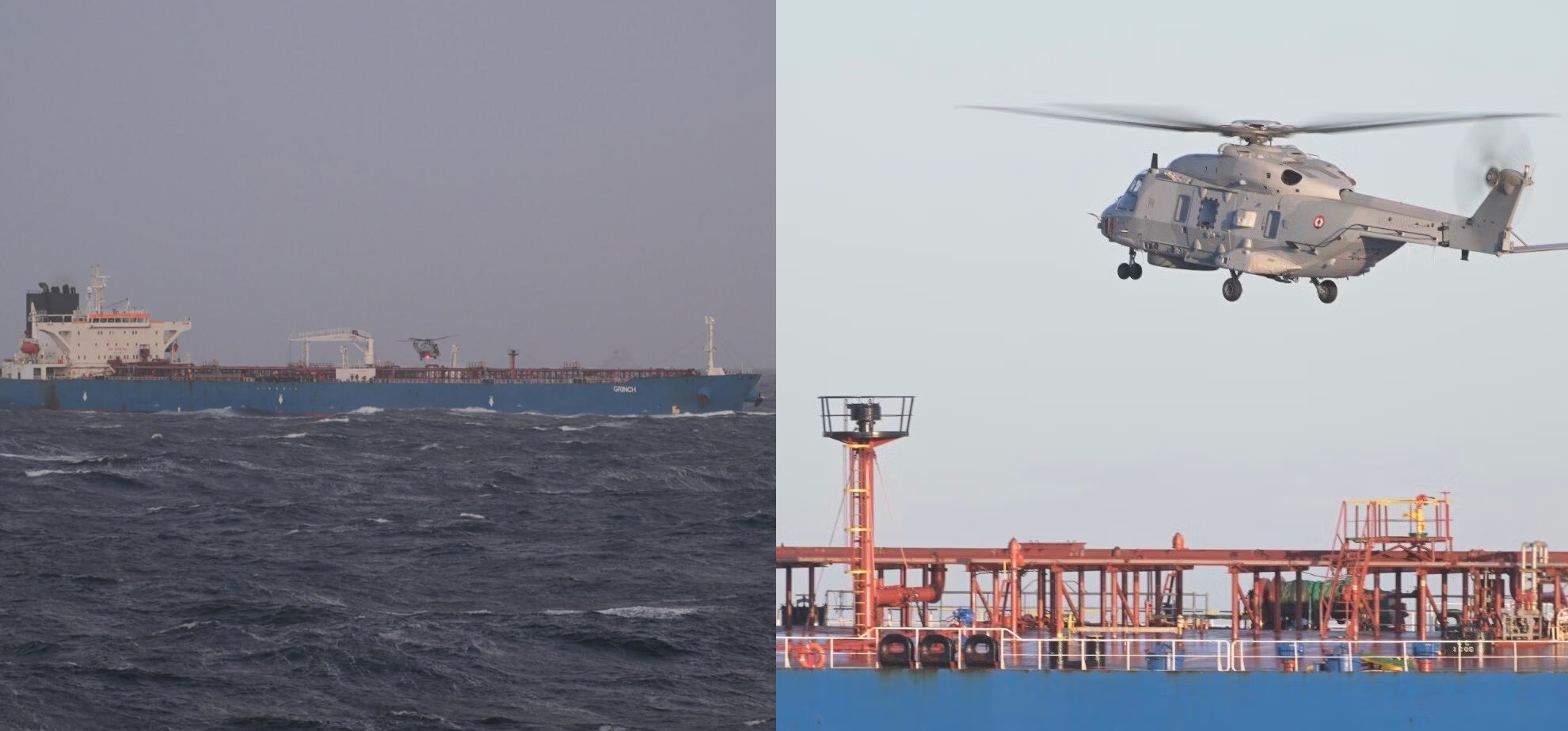
The interception took place in international waters of the Mediterranean, according to French officials. The tanker, identified in maritime tracking data as the Grinch, is reported to have departed from Russia’s Arctic port of Murmansk before heading south toward European waters. Authorities suspect the vessel was operating under a false or misleading flag registration, a tactic frequently used to conceal ownership, insurance status, and the true origin of cargo.
French naval forces boarded the ship after receiving intelligence shared by allied partners, officials said. Following the inspection, the tanker was diverted to a French port, where prosecutors opened a judicial investigation to determine violations of sanctions, maritime law, and potential fraud linked to flagging and ownership structures.
While France has not yet announced the final legal disposition of the cargo, senior officials indicated that confiscation of the oil is under consideration — a step that, if upheld by the courts, would represent a significant legal and political precedent in Europe.
A Rapid Response After Davos
The timing of the seizure has drawn intense attention. It came only hours after Ukrainian President Volodymyr Zelenskyy delivered a forceful address at the World Economic Forum in Davos, where he challenged European governments to move beyond rhetoric and take direct action against Russian oil shipments moving along their coasts.
“Russian oil is transported along European shores. This oil funds the war against Ukraine, and this oil serves to destabilize Europe,” Zelenskyy told the forum. “Therefore, Russian oil must be stopped and confiscated.”
Zelenskyy pointedly questioned why Europe has not matched the more aggressive posture of the United States, which has increasingly targeted tankers, insurers, and intermediaries involved in circumventing sanctions. His remarks were widely interpreted as a call for European navies and courts to test the limits of international maritime law in confronting Russia’s energy revenues.
French officials did not explicitly link the operation to Zelenskyy’s Davos speech, but the rapid sequence of events has fueled speculation that Paris is prepared to take a leading role in hardening sanctions enforcement across European waters.
Cracking Down on the “Shadow Fleet”
Since the imposition of G7 price caps and EU sanctions on Russian oil, Moscow has relied on a sprawling “shadow fleet” of hundreds of aging tankers to keep exports flowing. These vessels often operate with opaque ownership, frequent changes of name and flag, minimal insurance coverage, and limited transparency, making enforcement both legally complex and politically sensitive.
Energy and security analysts say the shadow fleet has enabled Russia to sell oil above the $60-per-barrel price cap, generating billions of dollars that help sustain its military campaign in Ukraine despite Western restrictions.
By targeting a vessel suspected of sailing under a false flag, France has employed a narrow but powerful legal mechanism under international maritime law. Ships that cannot clearly establish nationality or legal registration may be treated as stateless, allowing foreign navies to board and seize them without violating sovereign protections.
“This is one of the few legal doors available to act directly at sea without escalating into a broader confrontation,” said a European maritime law expert familiar with sanctions enforcement. “If upheld in court, it could open the way for more assertive action by other EU states.”
Legal and Political Implications
Until now, most European governments have limited their response to tracking shadow fleet movements, sharing intelligence, and tightening financial and insurance restrictions. Physical seizures have been rare, largely due to concerns over legal challenges, diplomatic escalation, and environmental risks posed by poorly maintained tankers.
France’s move suggests those calculations may be shifting.
As the seized tanker remains under French judicial control, attention is now focused on the courts. If judges authorize the confiscation and eventual sale of the oil — particularly if proceeds are channeled toward Ukraine’s reconstruction or defense — it would mark a watershed moment in Europe’s use of sanctions as an active economic weapon.
President Zelenskyy welcomed the development, praising France’s resolve and reiterating calls for tough, coordinated action against the entire infrastructure supporting Russia’s shadow fleet.
For now, the seizure stands as a clear signal: Europe may be preparing to move from passive enforcement to direct confrontation at sea, targeting the revenues that continue to fuel Russia’s war against Ukraine.
——— End of Article ———