Nicosia, Cyprus — March 3, 2026 : France will deploy advanced anti-missile and anti-drone defense systems to Cyprus and station at least one naval frigate offshore following a drone strike near the United Kingdom’s RAF Akrotiri sovereign base area on March 2, 2026.
The decision was communicated by French President Emmanuel Macron to Cypriot President Nikos Christodoulides during phone discussions earlier this week, according to the Cyprus News Agency and Cypriot government officials. A government spokesperson confirmed that the deployment follows a formal request from Nicosia for additional support measures to strengthen air defense coverage over the island.
Drone Strike at RAF Akrotiri
The move comes after an Iranian-made Shahed-type drone penetrated airspace and struck the runway area at RAF Akrotiri shortly after midnight on March 2. The impact caused limited structural damage and no reported casualties. Two additional drones were intercepted by British air defenses hours later.
Although the base constitutes sovereign British territory, its proximity to populated areas prompted precautionary evacuations in nearby villages. Radar detection of unidentified aerial objects also led to the temporary closure of Paphos International Airport as authorities assessed potential risks to civilian aviation.
Cypriot officials assessed that the drones were likely launched by Hezbollah from Lebanon, describing the strike as directed at British military infrastructure rather than the Republic of Cyprus. Nonetheless, the incident raised concerns regarding airspace control, runway availability, and the island’s exposure to spillover effects from the expanding regional conflict involving U.S.-led forces and Iranian-aligned groups.
French Air Defense Deployment
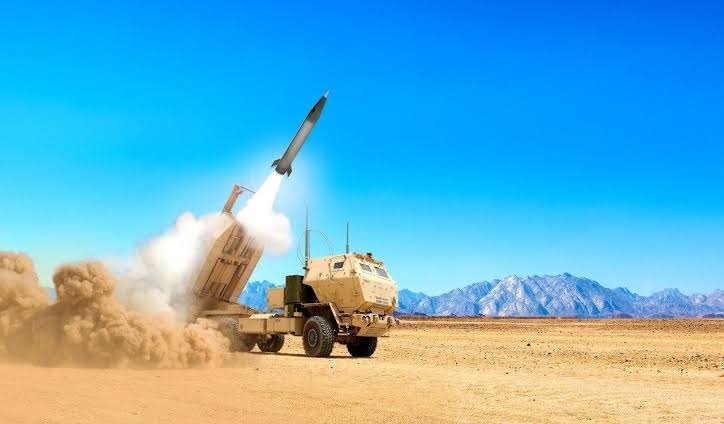
France has not publicly detailed the specific systems to be sent, but references to “anti-missile” capabilities indicate the deployment of high-end interceptor platforms capable of layered coverage.
France’s primary land-based air defense system is the SAMP/T family, developed by the European consortium Eurosam and employing the Aster interceptor missile. In its current configuration, the system provides 360-degree engagement capability against aircraft and missile threats, including ballistic missiles in advanced variants. The Aster 30 interceptor is described as capable of speeds above Mach 4 and engagement ranges exceeding 150 kilometers depending on configuration.
For medium-range coverage, France fields the VL MICA NG surface-to-air missile system, designed for engagements beyond 40 kilometers and optimized to counter low-signature targets such as unmanned aerial vehicles in complex coastal environments.
Close-in protection may include the Mistral 3 very short-range missile system, offering kinetic interception against drones and cruise missiles at ranges exceeding seven kilometers.
In the counter-drone domain, France operates the PARADE modular system, developed by Thales and CS Group, which integrates detection, classification, and neutralization functions for micro- and mini-drones with 24-hour, all-azimuth coverage. Tactical electronic warfare tools such as the NEROD RF jamming rifle produced by MC2 Technologies can disrupt navigation and control links of incoming drones, preserving higher-end interceptors for larger threats.
France is also developing mobile counter-UAS gun platforms, including the SERVAL Counter-UAV concept from KNDS, integrating a 30 mm remotely operated cannon with radar and radio-frequency detection, although deployment of this platform to Cyprus has not been confirmed.
Naval Reinforcement
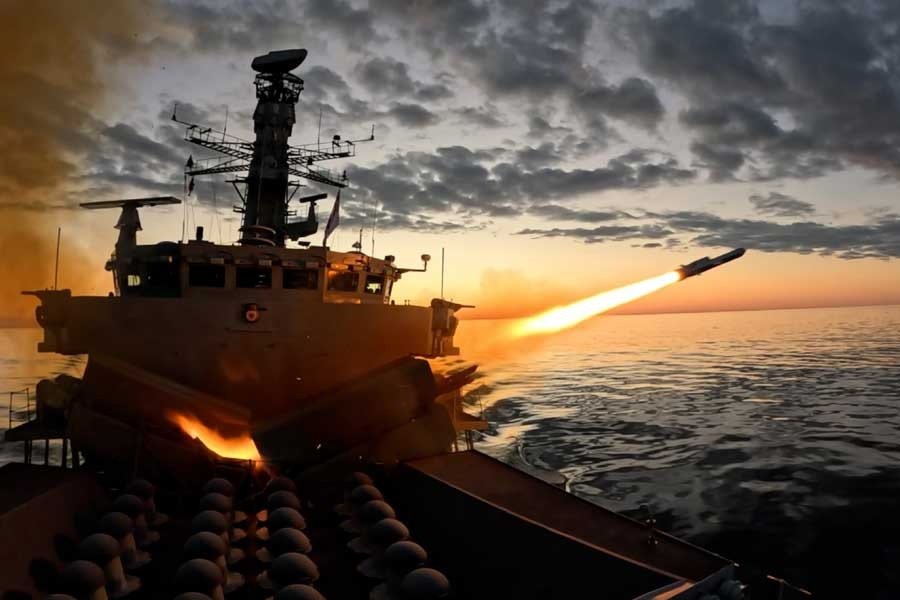
Paris will also dispatch at least one French Navy frigate to waters off Cyprus, with reports indicating that a second vessel may follow. An air-defense-configured frigate equipped with Aster-family missiles would extend radar coverage, provide maritime air defense, and serve as a mobile command-and-control platform.
The naval presence will help secure maritime corridors for reinforcement and commercial shipping while strengthening surveillance coverage across the Eastern Mediterranean. Offshore positioning allows flexible response to potential threats originating from Lebanon or Syria.
Multinational Security Coordination
France joins Greece in expanding European defense support for Cyprus. Athens has deployed four F-16 fighter jets and two naval frigates, including HS Kimon (F-601), which is equipped with the SeaFire AESA radar and Aster 30 missile system. Greece has also provided the Centauros counter-drone jamming system, recently utilized against Houthi threats in the Red Sea.
Germany is reportedly evaluating the dispatch of a frigate following a formal request from Nicosia, although no final decision has been announced.
The United Kingdom confirmed it responded to the drone incident but has not detailed additional deployments. British Prime Minister Keir Starmer stated that UK bases in Cyprus are supporting U.S. defensive operations but are not being used for bomber missions. Reports indicate that the UK is considering sending the destroyer HMS Duncan to the broader region.
Defense Cooperation Framework
France and Cyprus maintain a strategic defense relationship anchored in a 2017 cooperation agreement that entered into force in 2020. The agreement includes regular naval exercises, port access arrangements, and defense-industrial collaboration with the Cypriot National Guard. Cyprus has acquired major French missile systems in recent years, enhancing interoperability between the two countries.
French military deployments elsewhere in the region include Rafale fighter aircraft assigned to protect United Arab Emirates airspace, reflecting broader regional commitments.
Strategic Context
Cypriot President Christodoulides has emphasized that the presence of foreign defense assets on the island is intended for defensive purposes. The government has requested that the United Kingdom limit base operations to humanitarian missions to reduce the risk of further retaliatory strikes affecting Cypriot territory.
The French deployment establishes a multi-layered defensive architecture combining land-based interceptors, electronic counter-drone systems, and naval air-defense coverage. Officials in Nicosia state that the objective is to strengthen airspace security and prevent Cyprus from being drawn further into ongoing regional hostilities.
——— End of Article ———