PARIS — March 16, 2026 : The French government has initiated an urgent high-level response after a rapid decline in national stocks of MBDA MICA air-to-air missiles used by Rafale fighter jets deployed in the Middle East. French Defence Minister Sébastien Lecornu has scheduled a crisis meeting for March 17, 2026 to coordinate measures aimed at stabilizing missile supplies and sustaining ongoing operational commitments.
The issue has emerged following weeks of high-tempo air defense operations conducted by the French Air and Space Force to intercept drones and cruise missiles launched toward the United Arab Emirates. French combat aircraft stationed at Al Dhafra Air Base in Abu Dhabi have been actively engaged in defensive missions since the escalation of regional hostilities on February 28, 2026.
Government officials have described the situation internally as a significant strain on strategic missile reserves, as advanced air-to-air weapons have been used repeatedly against relatively low-cost unmanned aerial systems.
Operational Deployment in the UAE
France maintains a permanent military presence in the UAE under a bilateral defence agreement designed to support regional security and protect critical infrastructure.
Approximately 900 French military personnel are stationed across two key facilities in Abu Dhabi: the naval installation at Mina Zayed Naval Base and the air component operating from Al Dhafra Air Base.
The French air contingent at Al Dhafra has operated continuously since 2016 with a standing deployment of six Dassault Rafale multirole fighter aircraft. As regional tensions increased in late February 2026, France reinforced this presence.
On March 4, 2026, an additional six Rafale aircraft from Escadron de Chasse 1/7 “Provence” were deployed to the UAE, doubling the available French fighter force in theatre.
The mission profile assigned to these aircraft focuses primarily on air defense operations, including the interception of Iranian-supplied drones—particularly the widely used Shahed drone family—as well as cruise missiles launched toward Emirati territory.
According to defence officials, French fighters have intercepted dozens of aerial threats during recent engagements.
MICA Missile Usage and Strategic Impact
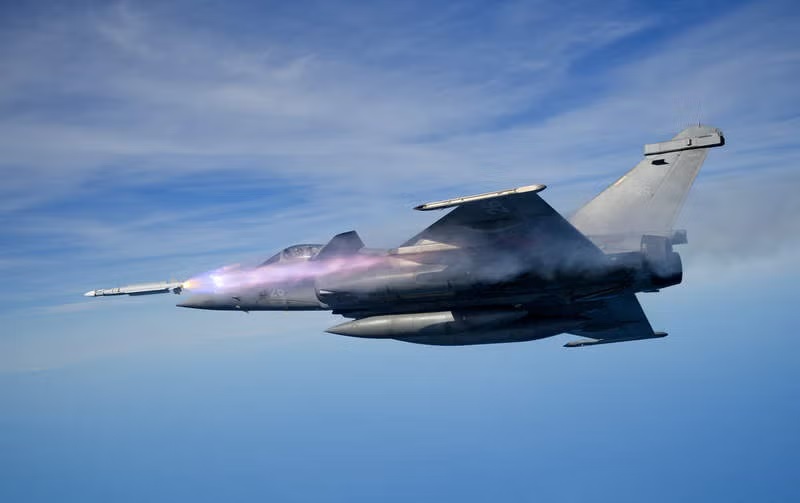
The Rafale’s primary interception weapon for short- and medium-range engagements is the MBDA MICA air-to-air missile, produced by the European missile manufacturer MBDA.
The MICA missile exists in two variants—an infrared-guided version and an active radar-guided version—allowing Rafale aircraft to engage airborne targets under different combat conditions.
French officials report that the Rafale fleet operating from Al Dhafra has maintained a high interception success rate against incoming drones and cruise missiles using these missiles. However, the large number of engagements has resulted in a rapid consumption of missile stocks.
The imbalance between the cost of advanced air-to-air missiles and the relatively inexpensive unmanned targets has been identified as a major factor contributing to the depletion. Shahed-type drones are comparatively low-cost systems, while MICA missiles are sophisticated precision weapons designed for high-value aerial combat scenarios.
Procurement Limits and Production Delays
The current shortage has also been influenced by historical procurement levels and industrial production constraints.
Deliveries of MICA missiles from MBDA’s manufacturing facility in Selles-Saint-Denis in central France are currently running approximately two years behind schedule, according to reporting by the French newspaper La Tribune.
The delays have created tension between several institutions involved in France’s defence procurement structure. These include the French military leadership represented by the État-Major des Armées (General Staff), the procurement authority Direction générale de l’armement (DGA), and MBDA as the industrial manufacturer.
Military officials have reportedly raised concerns regarding the slow pace of developing affordable counter-drone alternatives. MBDA, for its part, has indicated that increasing production capacity requires formal contractual commitments and financial guarantees from the government before manufacturing can be expanded.
Government Crisis Meeting
To address the situation, the French government has scheduled a coordination meeting involving senior representatives from the Ministry of the Armed Forces, the General Staff, the DGA, and MBDA leadership.
The discussions will focus on accelerating missile production, prioritizing delivery schedules, and identifying temporary solutions to maintain operational readiness while replenishing national stocks.
Officials are expected to push for faster industrial output and possible adjustments to procurement frameworks in order to prevent further depletion during ongoing operations.
Interim Measures Under Consideration
Among the options being evaluated is the potential reintroduction of the R550 Magic 2 missile, a short-range infrared air-to-air missile that was officially withdrawn from French service in 2020.
Although retired, surplus Magic 2 stocks still exist within France and may provide a temporary supplement to current missile inventories.
The system has already returned to operational use in another theatre. Ukrainian forces operating Dassault Mirage 2000-5F fighters supplied by France have employed Magic 2 missiles against Russian-supplied drones, including Shahed-type systems, with reported interception effectiveness approaching 98 percent in certain engagements.
France is also evaluating the possibility of reacquiring additional Magic 2 missiles from countries that previously operated the system.
Potential sources include several nations where the missile was exported during earlier decades. European operators include Greece, which used the weapon on Mirage 2000 fighters, and Romania, where the missile was integrated on MiG-21 LanceR aircraft before their retirement.
Other countries that have maintained Magic 2 inventories include Morocco, Peru, and Brazil.
Long-Term Counter-Drone Strategy
Beyond the immediate crisis response, French defence planners are developing new solutions designed specifically to counter large numbers of low-cost unmanned aerial vehicles.
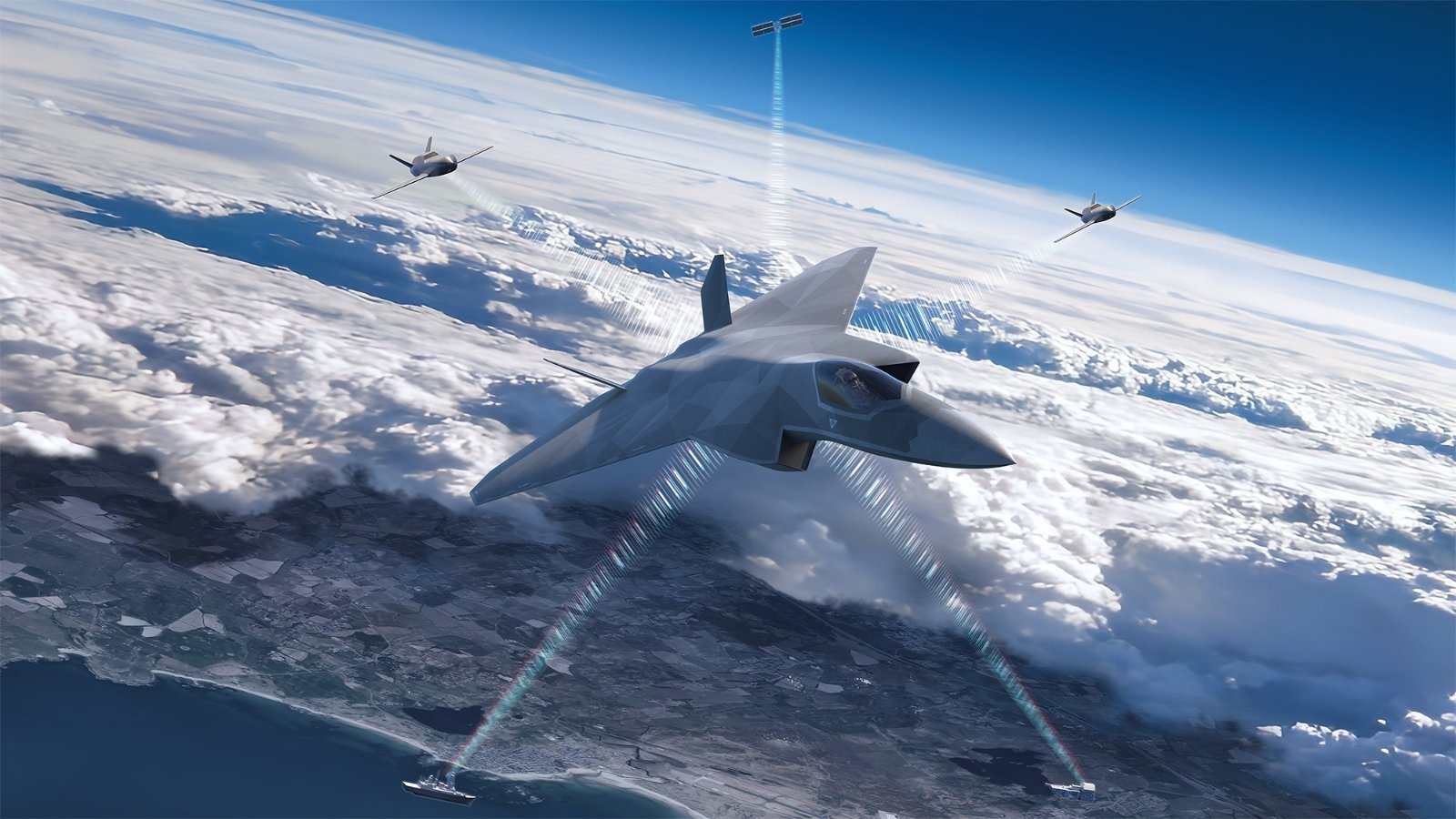
These capabilities are expected to be incorporated into the future Rafale F5 standard currently under development by Dassault Aviation.
Announced during the Paris Air Show 2025, the Rafale F5 upgrade aims to integrate lighter and more economical interception tools, including guided 68-millimeter rockets mounted in multi-tube launch pods. These weapons are intended to provide a cost-effective method of engaging swarms of drones without relying on expensive air-to-air missiles.
The Rafale F5 configuration is currently planned to enter service around 2035. However, the present strain on missile inventories may lead defence planners to accelerate development and integration timelines for these systems.
Strategic Implications
The depletion of MICA missile stocks highlights a broader challenge faced by modern air forces confronting large-scale drone warfare: balancing the use of advanced high-value munitions against increasingly inexpensive aerial threats.
French authorities are expected to prioritize both the rapid replenishment of existing missile inventories and the development of lower-cost interception solutions to ensure that the Rafale fleet can sustain extended air defense operations in future conflicts.
——— End of Article ———