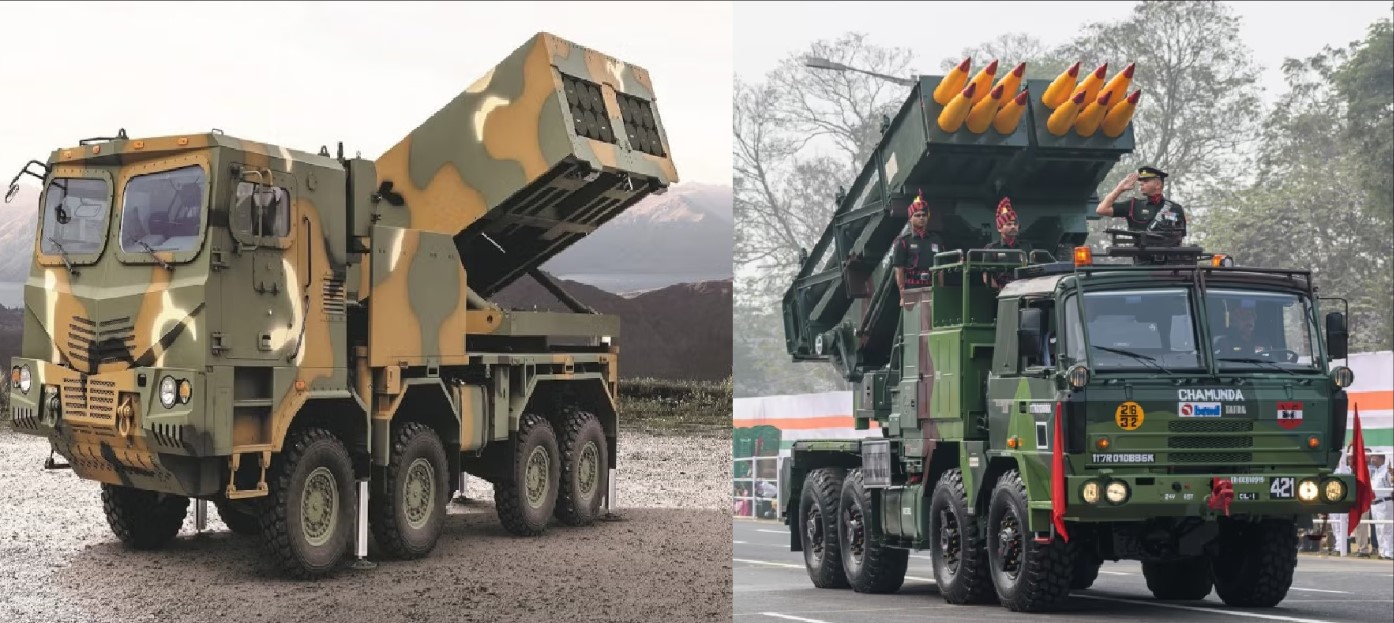
PARIS : The French Army is assessing foreign multiple launch rocket systems (MLRS) as a temporary solution to sustain long-range artillery capabilities until its domestically developed FLP-T (Frappe Longue Portée – Terrestre) system enters service in 2030. Among the systems under evaluation are South Korea’s K239 Chunmoo and India’s Pinaka, alongside previously examined options such as the American M142 HIMARS and Israel’s PULS.
The move follows concerns over the limited availability and aging condition of France’s current LRU fleet, the French designation for the M270 tracked rocket launcher.
Addressing the Capability Gap
French artillery units currently operate a reduced number of LRU (M270) systems, which require extensive maintenance and are increasingly constrained in meeting the demands of high-intensity operations. Defense outlet Opex360 has reported that the aging fleet presents both availability and sustainability challenges.
To prevent a decline in operational readiness before the FLP-T becomes available, the Ministry of Armed Forces has examined off-the-shelf foreign systems capable of rapid induction.
A study by the French Institute of International Relations (IFRI) recommended South Korea’s K239 Chunmoo, produced by Hanwha Aerospace, as a suitable interim option. The Chunmoo integrates rocket launch modules similar in concept to the M270 but mounted on a wheeled chassis, providing enhanced road mobility and simplified logistics compared to tracked systems.
The IFRI assessment highlighted several factors in favor of the Chunmoo:
-
Multi-caliber capability allowing the firing of different types of rockets and missiles
-
Operational flexibility for varied mission profiles
-
Shorter delivery timelines compared to developing a new domestic system
The K239 is already in service or on order with several European countries, including Norway, Estonia, and Poland. Poland has also initiated domestic ammunition production linked to its Chunmoo acquisition, contributing to the development of a European supply chain for compatible munitions.
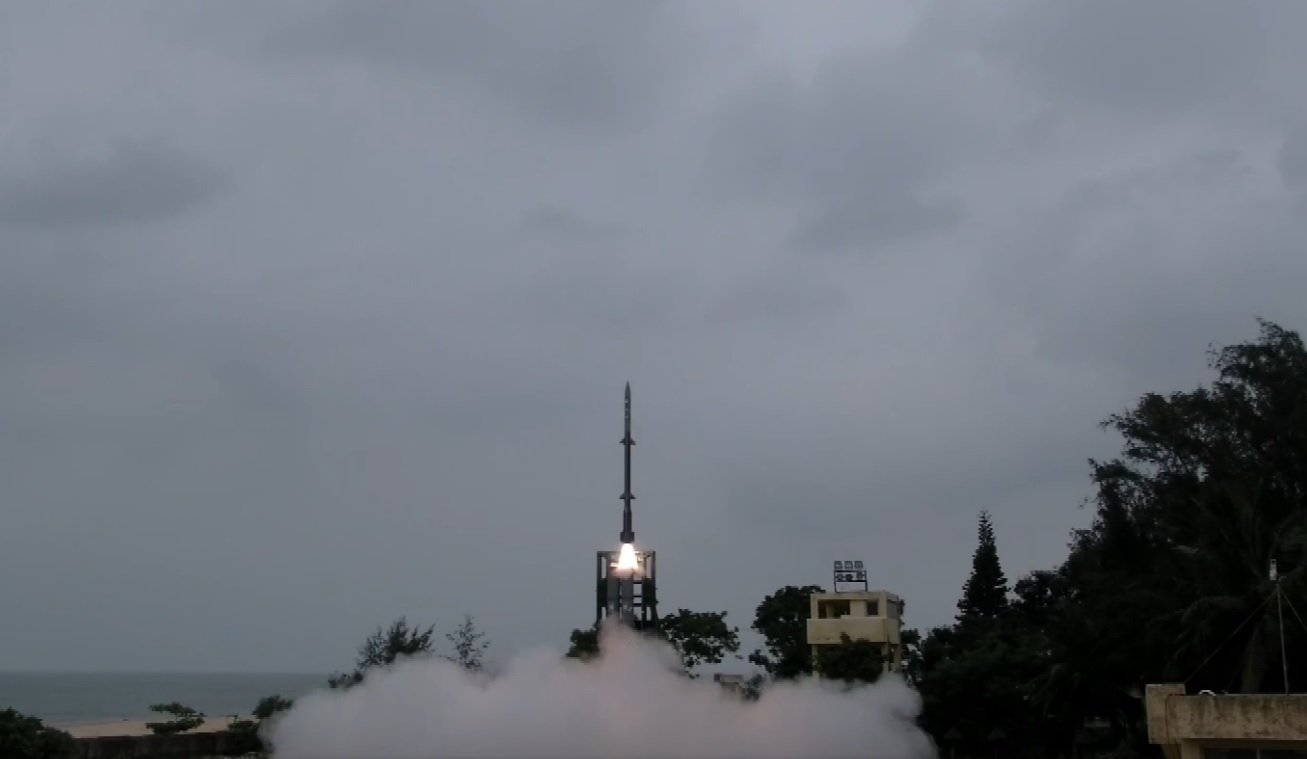
In parallel, France is evaluating India’s Pinaka MLRS as another potential interim system. The Pinaka, developed and produced in India, has undergone successive upgrades and is designed to deliver high-volume rocket fire with modular launcher configurations. It is being considered as a bridging solution pending the operational availability of France’s indigenous program.
Long-Term Objective: The FLP-T Program
Despite the review of foreign platforms, France’s long-term strategy remains centered on sovereign industrial capability under the 2024–2030 Military Programming Law (LPM). The FLP-T program is mandated to replace the M270 LRU with a domestically developed long-range strike system.
According to program targets, the FLP-T must initially achieve a strike range exceeding 150 kilometers at the time of delivery in 2030. A subsequent phased enhancement is planned to extend operational reach to between 500 and 1,000 kilometers.
Two industrial consortiums are currently engaged in parallel development efforts for the FLP-T contract:
-
Safran and MBDA
-
Thales and ArianeGroup
The French government is expected to select the winning industrial team in 2026.
Competing Domestic Proposals
French defense companies have already introduced candidate systems aligned with FLP-T requirements.
In April 2025, at the defense exhibition in Le Bourget, a domestically developed MLRS named Foudre was publicly unveiled. Positioned in the same operational category as the U.S. HIMARS, Foudre has been presented as a fully French-made solution designed to meet national operational requirements.
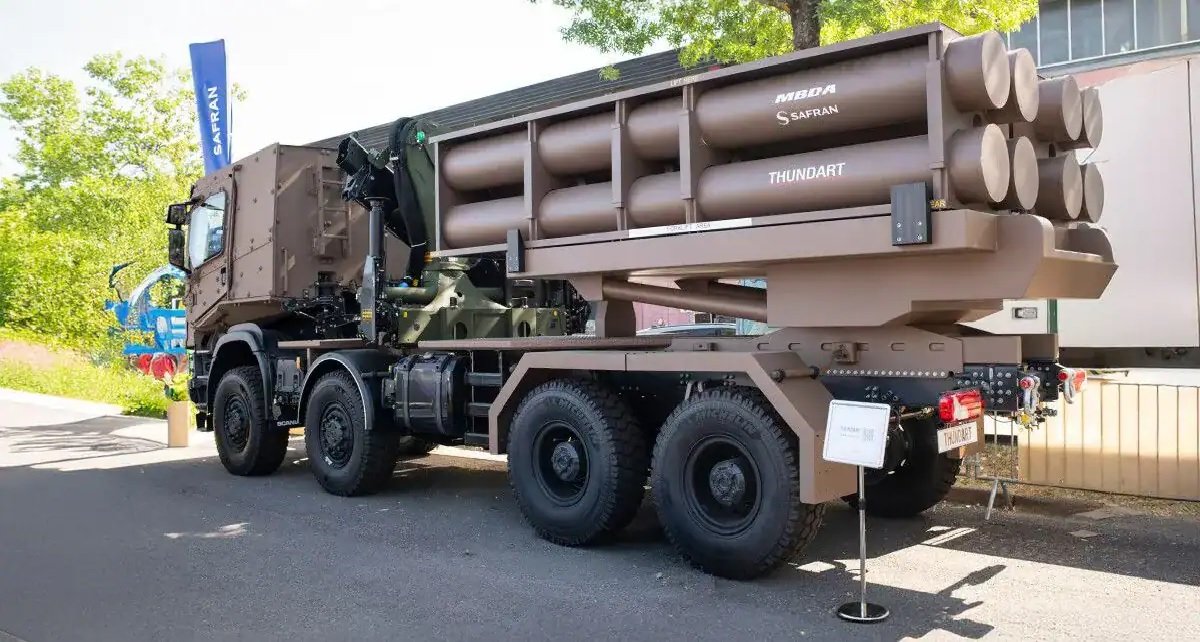
In October 2025, the MBDA–Safran consortium formally introduced the Thundart MLRS. The system has been developed specifically to compete for the French Army’s upcoming tender and is structured to comply with the initial range objectives of the FLP-T program. The consortium has emphasized European supply chain autonomy as a core component of its proposal.
Industrial and Strategic Considerations
France’s evaluation of interim foreign systems reflects a dual-track approach: maintaining near-term operational readiness while advancing long-term industrial sovereignty.
The interim procurement, if approved, would serve as a temporary capability bridge until domestic serial production under the FLP-T program begins. At the same time, the 2024–2030 LPM framework reinforces France’s objective of ensuring strategic autonomy in long-range ground-based strike systems.
A final decision on interim acquisitions has not yet been publicly announced. The selection of the FLP-T prime contractor is expected in 2026, with system induction planned for 2030.
——— End of Article ———