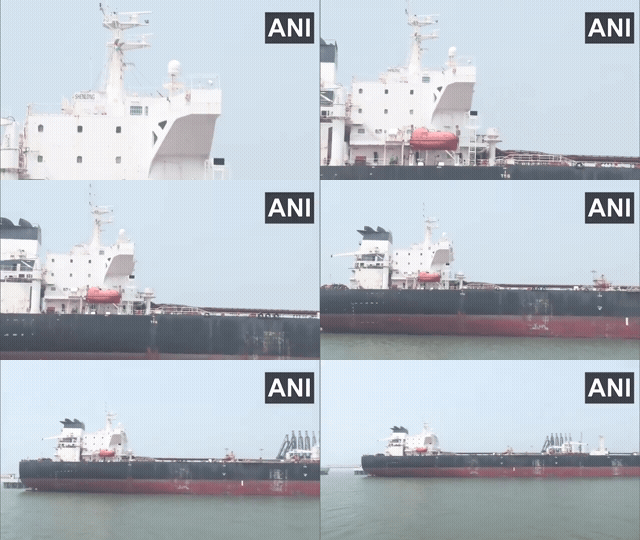
MUMBAI — March 12, 2026 : The Liberia-flagged Suezmax crude oil tanker Shenlong has successfully arrived at Mumbai Port carrying 135,335 metric tonnes of Saudi Arabian crude oil after transiting the Strait of Hormuz, becoming the first non-Iranian crude tanker bound for India to complete the passage since regional maritime traffic through the chokepoint was disrupted in late February.
Port authorities confirmed that the vessel berthed at the Jawahar Dweep terminal at Mumbai Port at 6:06 p.m. on March 11, after arriving earlier in the day. Discharge operations for the crude cargo have begun, with the shipment destined for refining facilities located in Mahul in eastern Mumbai.
Voyage from Saudi Arabia to India
According to maritime shipping data, the tanker loaded its cargo at Saudi Arabia’s Ras Tanura oil terminal, one of the world’s largest crude export facilities, on March 1 before departing several days later. The vessel entered the Strait of Hormuz on March 8 while en route to India.
During its passage through the narrow waterway, the tanker briefly deactivated its Automatic Identification System (AIS) transponder, a practice sometimes used by shipping operators navigating high-risk areas to limit vessel tracking. The ship later resumed AIS transmissions after exiting the strait and continued its voyage across the Arabian Sea toward India.
The tanker ultimately arrived at Mumbai Port on March 11, completing a journey of roughly ten days from the Saudi loading terminal.
Vessel Specifications and Ownership
The Shenlong (IMO 9379210) is a Suezmax-class crude oil tanker measuring 274 meters in length with a beam of 48 meters. Built in 2009, the vessel has the capacity to transport around one million barrels of crude oil, consistent with the cargo delivered during this voyage.
The ship is owned by Shenlong Shipping Ltd. and is managed by Athens-based Dynacom Tanker Management Ltd. It sails under the Liberian flag and is commanded by an Indian national captain, Sukshant Singh Sandhu. The crew consists of 29 seafarers, including personnel from India, Pakistan, and the Philippines.
Diplomatic Coordination for Safe Passage
The tanker’s transit through the Strait of Hormuz occurred after diplomatic engagement between India and Iran aimed at ensuring the continued movement of Indian-bound energy shipments through the strategically important maritime corridor.
India’s External Affairs Minister S. Jaishankar held multiple discussions with Iranian Foreign Minister Abbas Araghchi in recent weeks, including conversations on March 10, to address shipping safety concerns in the region.
Indian government sources confirmed that Iranian authorities agreed to provide safe passage arrangements for tankers carrying cargoes destined for India through the strait.
An Indian official familiar with the discussions stated that the vessel’s arrival reflects the cooperation between the two countries.
“I would say it is a matter of great satisfaction and reflects the good relations between India and Iran, which came to our support,” the official said.
Impact of Regional Shipping Disruptions
Shipping traffic through the Strait of Hormuz had been affected following regional tensions beginning February 28, which led many commercial vessels to remain in safer waters in the Arabian Sea while awaiting security assurances.
The Strait of Hormuz is one of the world’s most critical maritime oil transit routes, with more than 20 million barrels of crude oil passing through the corridor each day, representing roughly one-fifth of global petroleum consumption.
Indian authorities have continued to monitor the situation closely. The Ministry of Ports, Shipping and Waterways has established a 24-hour monitoring and coordination system to track vessels connected to India operating in the Persian Gulf and surrounding waters.
Government officials indicated that more than 20 tankers carrying cargoes bound for India are currently under review for similar safe-passage arrangements through the strait.
Port Operations and Cargo Discharge
Mumbai Port Authority confirmed that the Shenlong was safely secured at the Jawahar Dweep offshore oil terminal, the primary crude oil receiving facility for Mumbai’s refining complex.
Unloading operations began shortly after berthing and are expected to continue for approximately 36 hours before the cargo is transferred to pipelines supplying refineries in the Mahul industrial zone.
Port officials reported that no incidents occurred during the vessel’s transit or docking procedures, and normal port operations remain underway.
——— End of Article ———