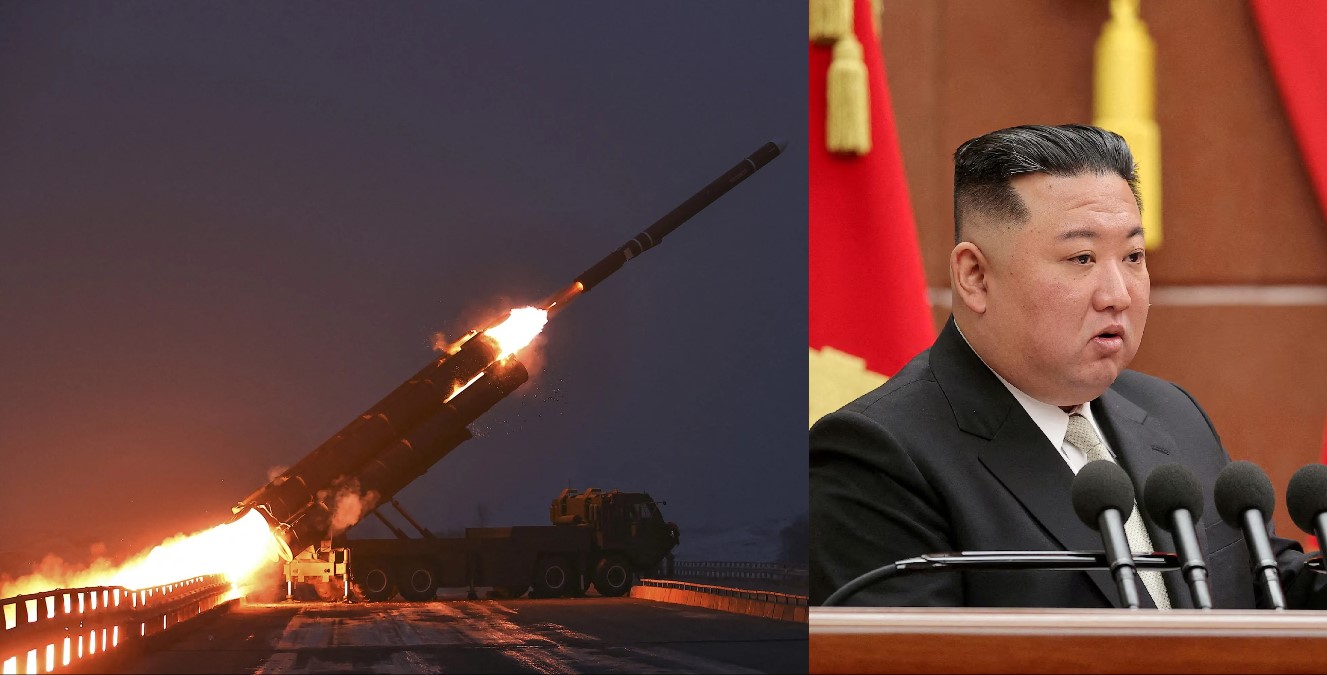
Pyongyang / Seoul / Tokyo / Beijing: North Korea sharply escalated regional tensions on Sunday by firing multiple ballistic missiles into the Sea of Japan, just hours after a controversial U.S. military operation in Venezuela and amid fiery warnings from North Korean leader Kim Jong Un that the crisis could push the world toward a new global war.
South Korea’s military said it detected several projectiles, believed to be ballistic missiles, launched from the vicinity of Pyongyang at approximately 7:50 a.m. local time. According to Seoul, the missiles travelled about 900 kilometers (559.2 miles) before splashing down in the sea. Japanese authorities later confirmed that two missiles reached an altitude of roughly 50 kilometers, flying distances of 900 and 950 kilometers respectively.
The launch marked North Korea’s first ballistic missile test of the year and its first such activity since November, when Pyongyang conducted a test shortly after U.S. President Donald Trump approved South Korea’s plan to develop a nuclear-powered submarine.
Venezuela Flashpoint Triggers Pyongyang’s Warning
The missile launches followed reports of a U.S. operation in Venezuela that allegedly resulted in the detention of Venezuelan President Nicolás Maduro—a move described by Pyongyang as a “barbaric act” and a direct example of Washington’s long-feared regime-change strategy.
In a rare and unusually personal statement, Kim Jong Un publicly aligned himself with Maduro, declaring:
“Nicolás Maduro is my friend. Release him immediately.”
Kim accused Washington of hypocrisy, saying the United States had committed an act “unworthy of a country that claims to defend democracy,” and warned that continued pressure could place the world “on the brink of a world war.”
North Korea and Russia are believed to purchase or handle nearly 95 percent of Venezuelan oil exports, giving Pyongyang both strategic and economic reasons to view events in Caracas as a direct threat to its broader alliance network.
Seoul and Tokyo Condemn ‘Provocative Act’
South Korea’s National Security Council convened an emergency meeting shortly after the launch. In a statement, the presidential office said the missile firing “constitutes a provocative act and a clear violation of United Nations Security Council resolutions.”
Japan echoed that assessment. Japanese Defence Minister Shinjiro Koizumi said North Korea’s actions were “absolutely intolerable,” warning that Pyongyang’s missile and nuclear programs directly threaten regional and international stability.
Both South Korea and the United States confirmed they are closely analysing the missiles’ specifications, while maintaining full military readiness.
China Condemns U.S. Use of Force
China also weighed in on the unfolding crisis, condemning Washington for what it described as a “blatant use of force” in Venezuela. Beijing’s reaction underscored growing unease among major powers that the Venezuelan episode could trigger cascading security responses far beyond Latin America.
The timing of the missile launch was particularly sensitive, coming just hours before South Korean President Lee Jae Myung departed for Beijing for talks with Chinese President Xi Jinping. Seoul hopes China—North Korea’s most important economic backer—might help restrain Pyongyang and revive stalled inter-Korean engagement.
Strategic Message to Washington
Analysts believe the missile test was intended as a direct signal to the United States.
Hong Min of the Korea Institute for National Unification said the U.S. operation in Venezuela likely influenced Pyongyang’s decision.
“They fear that if Washington chooses, it could launch a precision strike at any time,” he said. “The underlying message is that attacking North Korea would not be as simple as acting against Venezuela.”
A former senior North Korean diplomat, Lee Il-kyu, who defected to South Korea in 2023, offered a stark interpretation. In a social media post, he said Pyongyang should remember Maduro’s fate as a warning about misjudging U.S. intentions.
Missile Expansion Ahead of Party Congress
The launch also comes as North Korea prepares for a major ruling Workers’ Party congress, its first in five years. Defence policy and economic strategy are expected to dominate the agenda.
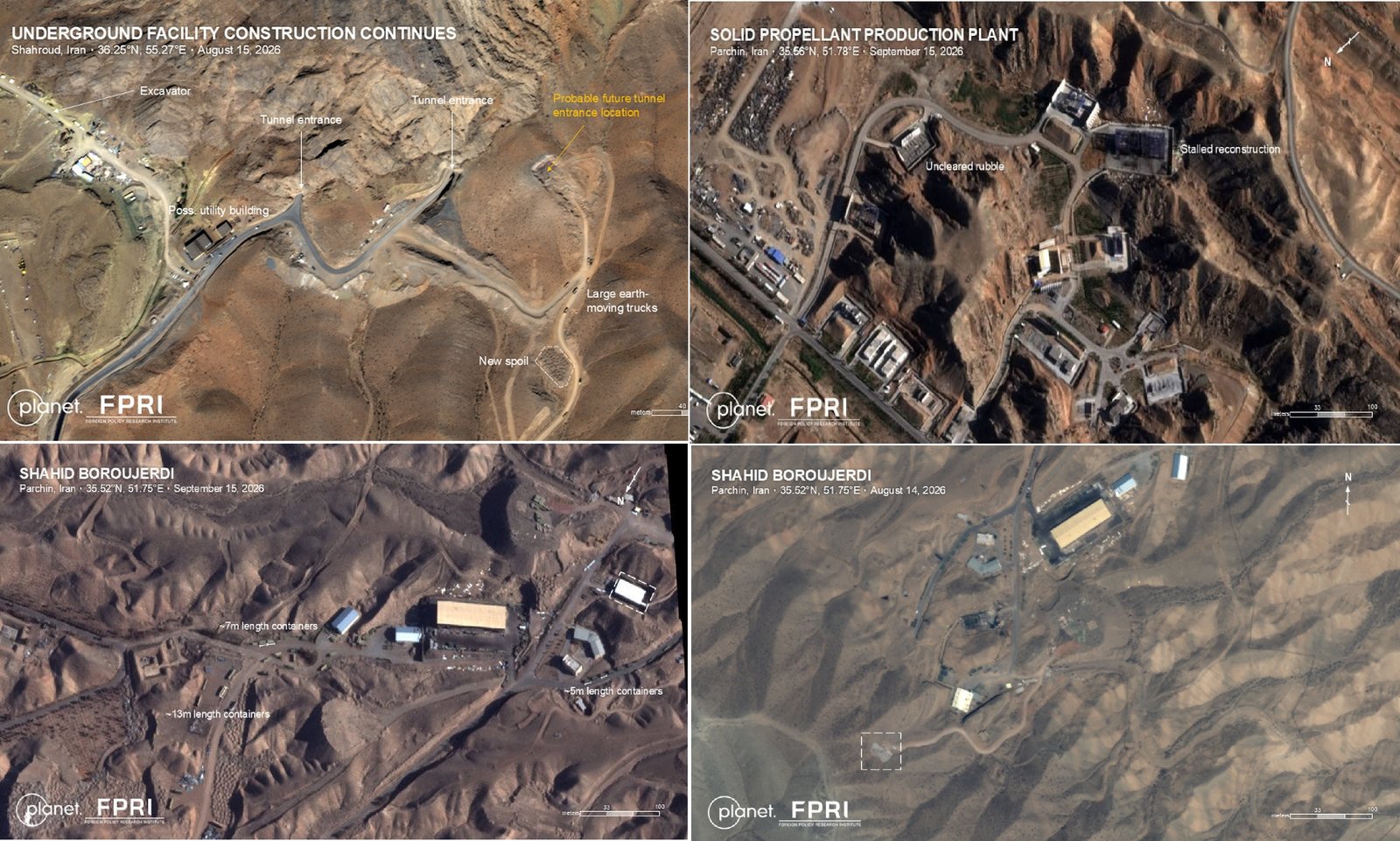
State media reported that Kim Jong Un recently inspected a tactical guided-weapons facility, ordering a 250 percent expansion in missile production capacity and the construction of additional factories to meet what Pyongyang described as growing demand.
Analysts say the accelerated testing campaign is aimed at improving precision-strike capability, deterring the United States and South Korea, and potentially exporting advanced weapons systems to Russia.
A Widening Global Crisis
With ballistic missiles flying in Northeast Asia, a volatile confrontation in Venezuela, and sharp rhetoric from Washington, Pyongyang, Beijing, and Moscow, diplomats warn that the current crisis risks spilling across regions.
As Kim Jong Un bluntly warned, the convergence of these flashpoints may no longer be a regional issue—but a global test of restraint in an increasingly polarized world.
——— End of Article ———