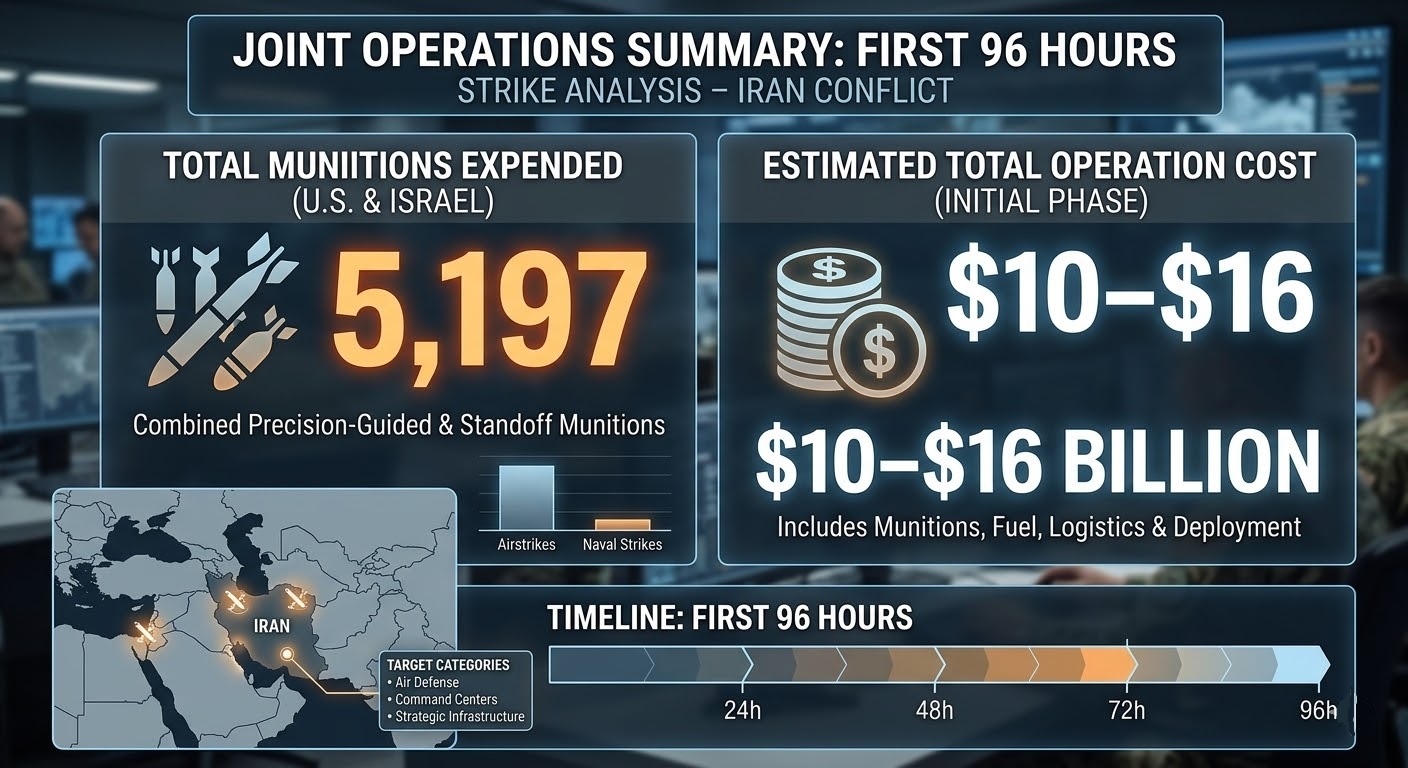
Philadelphia, Pennsylvania — March 17, 2026 : A newly published analysis by the Foreign Policy Research Institute (FPRI) provides one of the most detailed assessments to date of the opening phase of Operation Epic Fury, the ongoing U.S.-led military campaign against Iran. The report concludes that approximately 5,197 munitions across 35 different weapon types were expended during the first 96 hours of operations, underscoring both the scale of modern high-intensity warfare and the limitations of current defense industrial capacity.
The study, titled “Over 5,000 Munitions Shot in the First 96 Hours of the Iran War,” estimates that replacing these munitions alone would cost between $10 billion and $16 billion. When additional battlefield losses—including aircraft, drones, and advanced radar systems—are included, the total cost for the initial four-day period rises to approximately $20 billion.
Methodology and Comparative Estimates
The analysis is based on a proprietary ledger developed by the Payne Institute for Public Policy, combining open-source conflict tracking with expert validation. The dataset provides a more granular breakdown of munition types and usage rates than previous estimates.
Earlier cost assessments varied significantly. The Center for Strategic and International Studies (CSIS) estimated $3.7 billion for the first 100 hours of operations, while Anadolu Agency reported $5.82 billion including asset losses. The Penn Wharton Budget Model projected a total cost of $40 billion to $95 billion over a two-month conflict.
According to FPRI, these earlier estimates did not fully account for the composition and replacement complexity of the munitions expended.
Equipment Losses and Operational Impact
As of March 10, 2026, the report documents several significant losses in coalition military infrastructure and assets.
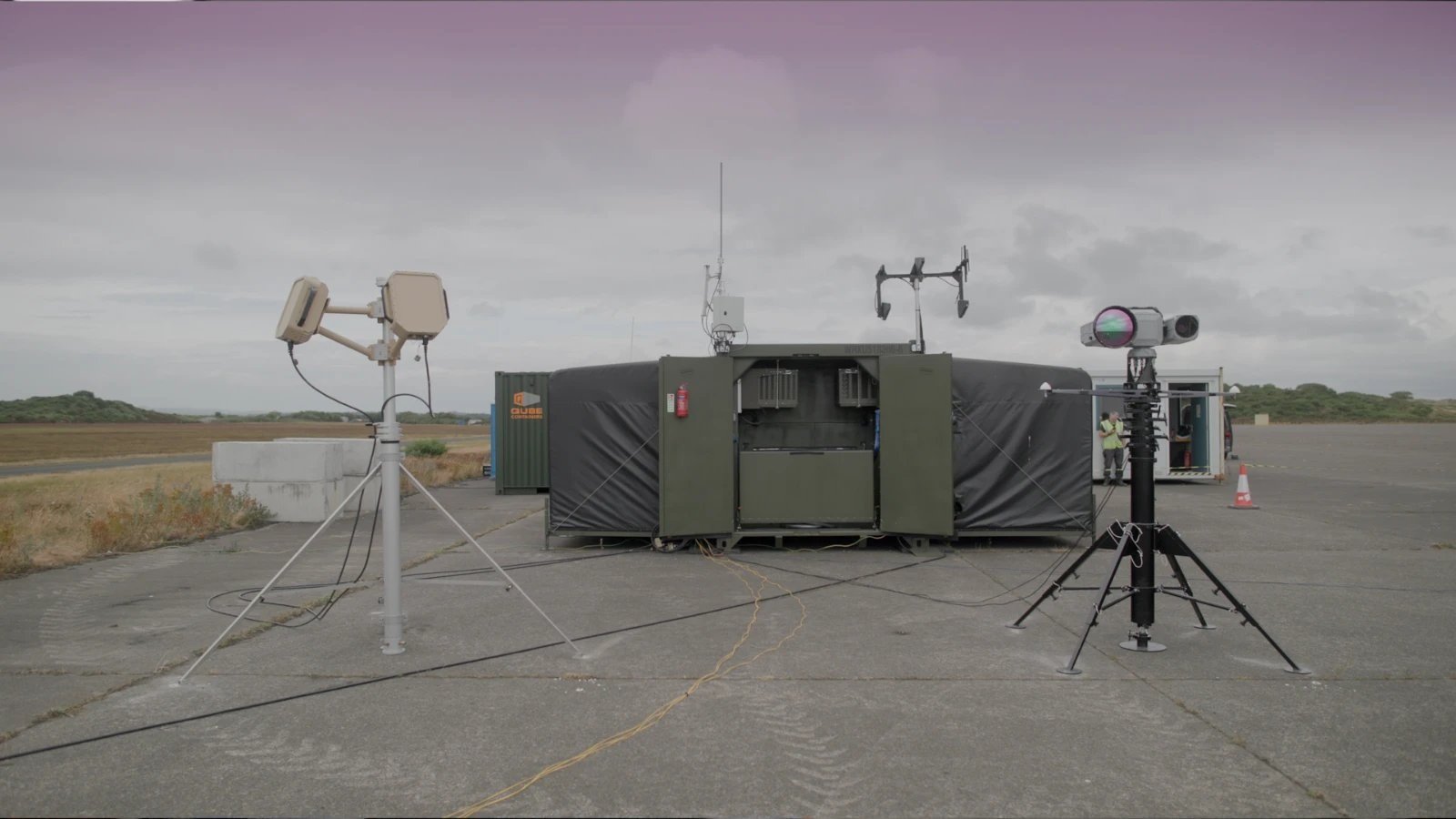
Among the most notable were advanced radar systems, including one AN/FPS-132 early warning radar in Qatar, multiple AN/TPY-2 THAAD radars across Jordan, Kuwait, Saudi Arabia, and the United Arab Emirates, and an AN/TPS-59 tactical radar in Bahrain. These systems play a central role in missile detection and air defense coordination.
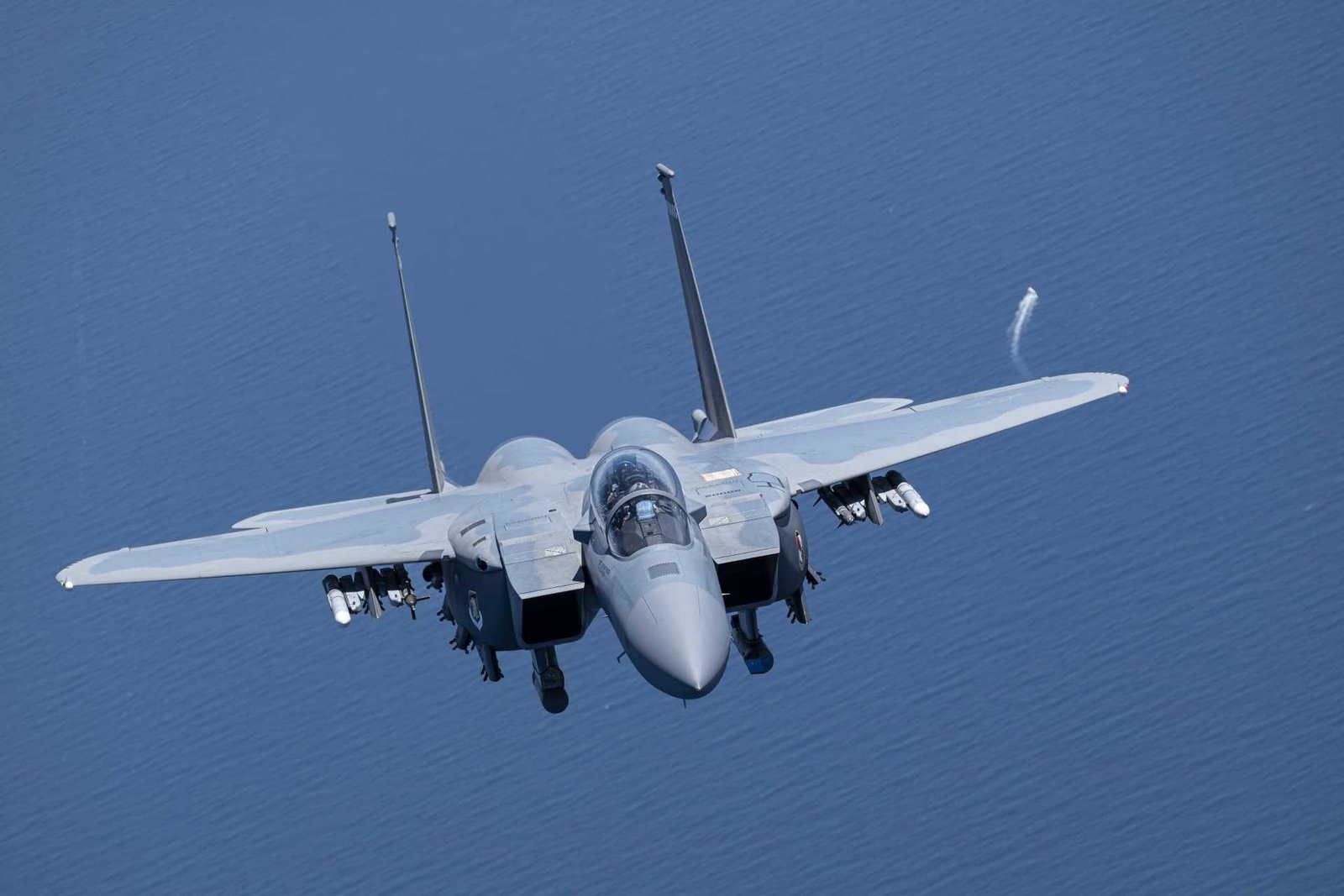
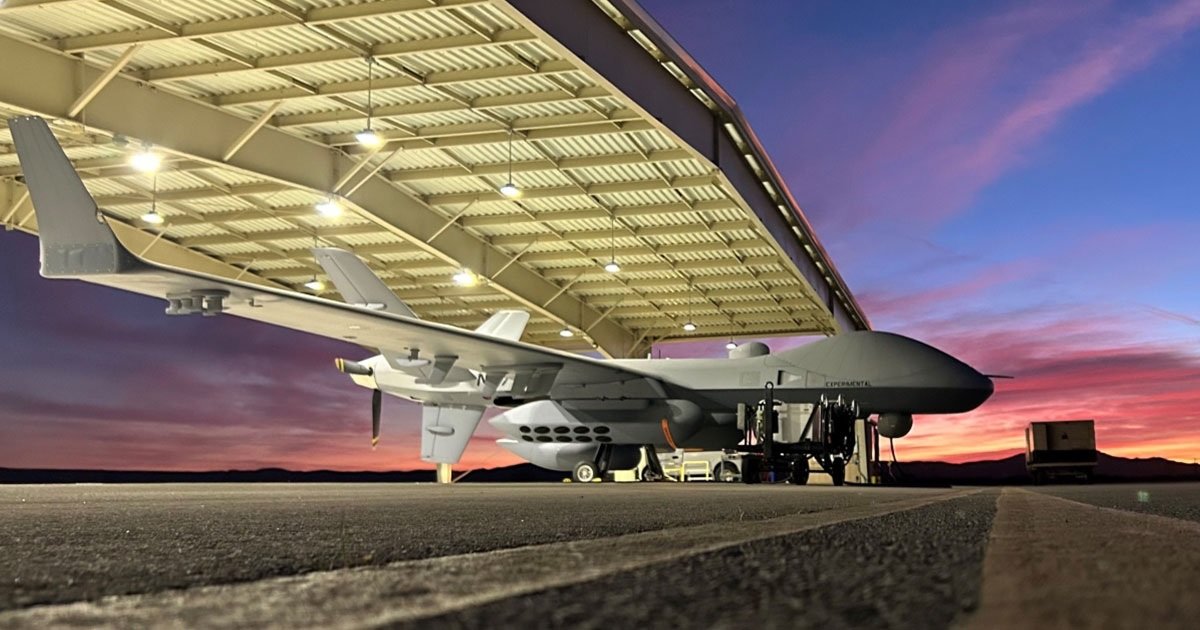
Aircraft losses included three U.S. F-15E Strike Eagles, which were downed in a friendly-fire incident involving a Kuwaiti F-18. In addition, Iranian forces shot down 11 MQ-9 Reaper drones during the same period.
The report does not include additional operational costs such as fuel consumption, logistics, or damage to bases and infrastructure, indicating that total expenditures are higher than reported figures.
Munition Usage and Depletion Rates
The report categorizes the 35 munition types into two groups: 21 systems with sufficient inventory and production capacity, and 14 systems experiencing critical strain.
Air defense interceptors and long-range strike munitions were among the most heavily affected. Israeli Arrow interceptors were reduced by more than 50 percent, with replenishment estimated to take approximately 32 months at current production rates.
U.S. ground-launched missile systems, including ATACMS and PrSM, were depleted by roughly one-third. The legacy ATACMS production line is currently inactive, further complicating replenishment.
Partner-nation THAAD interceptor inventories declined by more than one-third. Meanwhile, U.S. and Gulf-operated Patriot systems fired 943 interceptors, consuming the equivalent of 18 months of production from the Lockheed Martin and Boeing manufacturing line, which produces approximately 620 units annually.
Long-range strike capabilities were also significantly impacted. A total of 375 Tomahawk cruise missiles were used, with replacement expected to take up to 53 months at current production rates of 85 units per year.
The report also notes the use of eight GBU-57 Massive Ordnance Penetrators, representing nearly one-quarter of the remaining U.S. stockpile. These weapons can only be delivered by the 20-aircraft B-2 Spirit fleet, and replenishment is not expected before 2028.
Iranian Attack Patterns and Operational Shifts
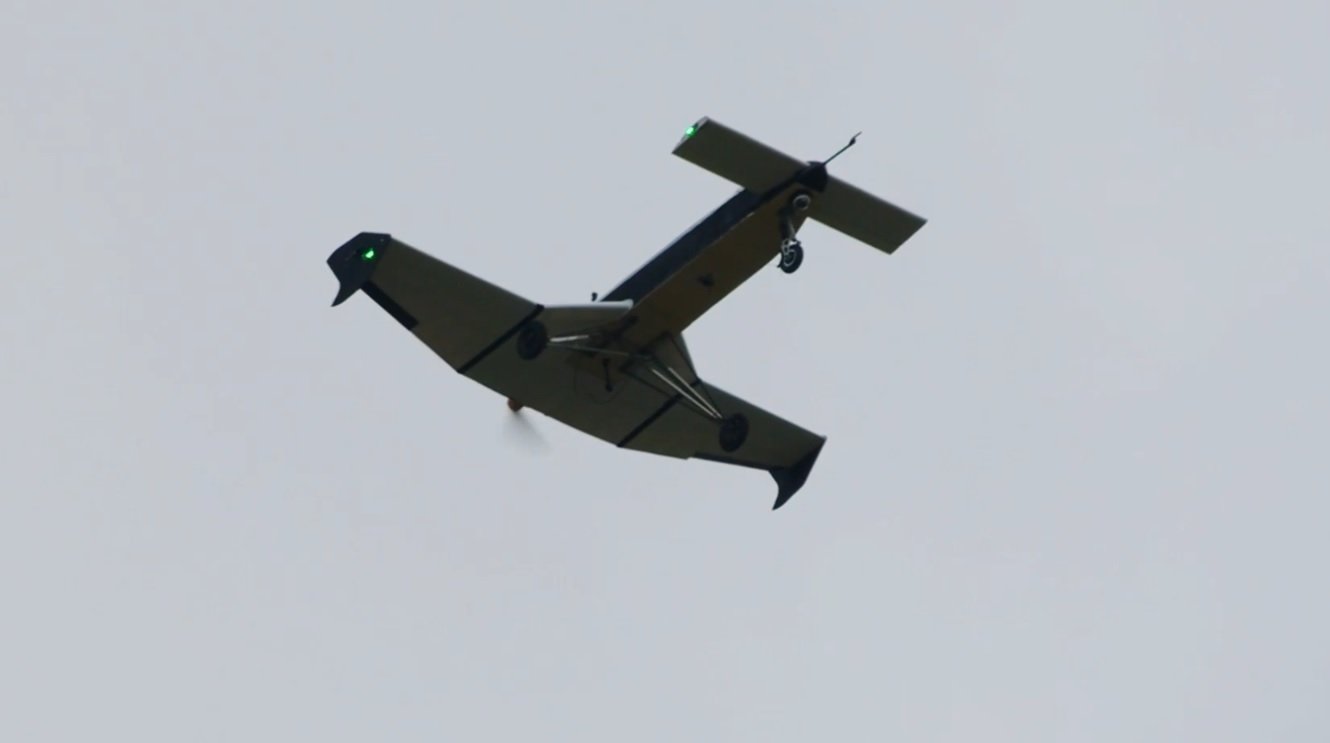
The analysis indicates that Iran employed a strategy of saturating coalition defenses using relatively low-cost, mass-produced munitions. This approach forced the coalition to expend large numbers of high-cost interceptors during the initial phase of the conflict.
Following the first 96 hours, Iranian drone attacks decreased by approximately 83 percent, while missile launches declined by 90 percent. The report interprets this reduction as a shift after achieving initial operational objectives tied to resource depletion.
Industrial Bottlenecks and Supply Chain Constraints
A central finding of the report is the identification of critical bottlenecks within the U.S. defense industrial base.
Ammonium perchlorate, a key oxidizer used in solid rocket motors for systems such as Patriot, THAAD, Arrow, and ATACMS, is produced at a single U.S. facility. The 600 tons required to replace munitions expended in the first 96 hours would account for 6.7 percent of the facility’s annual capacity.
High explosives RDX and HMX are produced exclusively at the Holston Army Ammunition Plant in Tennessee, making it the sole domestic supplier.
Another constraint is the Williams International F107 turbofan engine, which powers several key missile systems including Tomahawk, JASSM, JASSM-ER, and LRASM. The engine is produced by a single manufacturer, creating a potential production bottleneck.
Mineral Dependencies and Strategic Risks
The report highlights the role of critical minerals in munition production, noting significant reliance on supply chains dominated by China.
Replenishing the expended munitions would require approximately 92 tons of copper, 137 kilograms of neodymium, 18 kilograms of gallium, 37 kilograms of tantalum, 7 kilograms of dysprosium, and 600 tons of ammonium perchlorate.
China controls 98 percent of global gallium production, 90 percent of neodymium processing, and 99 percent of dysprosium processing. These dependencies present constraints on rapid scaling of production.
The report emphasizes that replacing destroyed radar systems presents an even greater challenge. A single AN/FPS-132 radar contains approximately 75 kilograms of gallium, significantly more than the total gallium required for all 5,197 munitions.
“Command of the Reload” and Strategic Implications
FPRI introduces the concept of “Command of the Reload” to describe a shift in military strategy. For decades, U.S. doctrine emphasized “Command of the Commons,” defined as the ability to project power globally without significant constraint.
The report argues that sustained operations in high-intensity conflict are now determined by industrial capacity, production timelines, and supply chain resilience rather than initial firepower.
This shift is reflected in what the report describes as a “second-theater tax.” The Pentagon has already begun redeploying air defense systems from the Indo-Pacific to the Middle East, indicating limitations in supporting simultaneous large-scale operations across multiple regions.
Gulf partner nations, which fired a substantial share of Patriot interceptors, are expected to face extended replenishment timelines due to Foreign Military Sales procedures.
Historical Comparison and Strategic Outlook
The report concludes that the first 96 hours of Operation Epic Fury represent the most intensive opening air campaign in modern military history. By comparison, the 2011 Libya intervention saw 735 munitions used in its first three days and approximately 20,000 munitions over the entire campaign through October 2011.
FPRI states that the current conflict serves as a stress test for the Western defense industrial base, highlighting structural vulnerabilities including reliance on single-source suppliers, an aging workforce, and dependence on externally controlled mineral supplies.
The analysis emphasizes that in high-end conflicts, the stockpiles available at the outset are likely to define operational limits, as replenishment timelines for critical systems extend into years rather than months. This assessment is presented as relevant not only to the ongoing conflict with Iran but also to potential future contingencies, including scenarios in the Indo-Pacific region.
——— End of Article ———