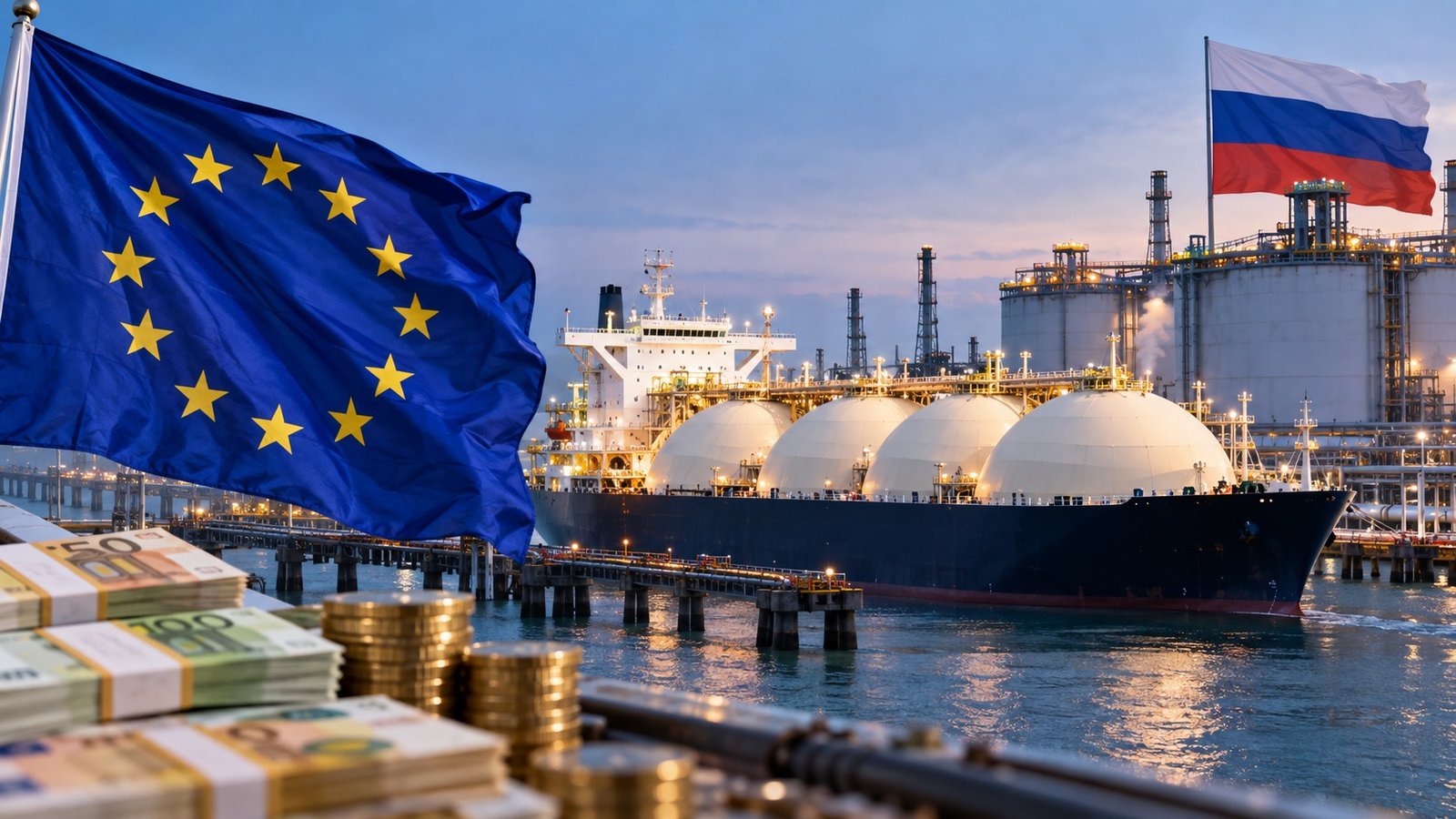
Europe — European Union countries paid an estimated €7.88 billion for liquefied natural gas (LNG) from Russia’s Yamal project between January and September 2026, even as the bloc prepares to end Russian gas imports under its phase-out policy. The figures come from an analysis by German environmental organisation Urgewald, based on shipping data from Kpler.
European ports received a record 12.18 million tonnes of Yamal LNG across 167 cargoes during the first nine months of the year, a 9.5% increase compared with the same period in 2025. The EU accounted for 85% of the project's recorded worldwide deliveries, despite a 1.3% decline in the project's overall global shipments.
The figures highlight a gap between Europe's commitment to reduce its dependence on Russian energy and its continued purchases of Russian gas.
France leads EU purchases in September
France was the largest destination for Russian LNG delivered to the EU in September, receiving nearly three-quarters of the month's shipments. The ports of Dunkirk and Montoir together handled 571,716 tonnes.
The Netherlands received 146,461 tonnes, while Portugal imported 74,263 tonnes. No Yamal LNG cargoes were recorded at Spanish ports or Belgium's Zeebrugge terminal during the month.
Estimated payments totalled €2.88 billion in the first quarter, €3.08 billion in the second quarter and €1.92 billion in the third quarter. Third-quarter deliveries amounted to 2.21 million tonnes, down 13.6% compared with the same period in 2025.
For September, Urgewald estimated the value of deliveries at approximately €818 million, slightly above the figure for September 2025.
The payment estimates were calculated using delivered tonnage, an energy conversion factor of 13.7 megawatt-hours per tonne and the relevant monthly European TTF benchmark gas price. They represent indicative gross values rather than verified net revenue received by Russian companies, as they do not account for contract discounts, transport costs, regasification fees, taxes or subsequent resales.
What do EU restrictions mean for Russian LNG?
The EU has adopted a phased prohibition on Russian natural gas imports, including LNG. Under the rules, restrictions on imports under qualifying existing short-term LNG contracts took effect on 25 April 2026, while the prohibition on imports under qualifying existing long-term LNG contracts is scheduled to apply from 1 January 2027.
The continued deliveries therefore need to be understood in the context of the transition arrangements and the contracts governing the trade. The import figures alone do not establish that every cargo violated EU sanctions.
Urgewald sanctions campaigner Sebastian Rötters said the limited effect of the short-term contract restrictions was expected because much of Yamal's export capacity remains tied to long-term contracts. Seasonal maintenance and changes in shipping routes also affect delivery volumes.
Yamal LNG is located in Russia's Arctic region and relies on specialised Arc7 ice-class tankers to transport gas through Arctic waters. Europe remains a major nearby market for these shipments.
Does Europe indirectly help Russia finance the war?
Yes, continued purchases provide Russia with an economic benefit and can indirectly support its ability to finance the war against Ukraine. However, the LNG figures alone cannot establish how much of this money was ultimately spent on military operations.
There are three important points:
-
Revenue from energy exports: Russian LNG producers earn money from selling gas. These earnings support companies, workers, suppliers and the wider Russian economy, while taxes and other payments can contribute to government revenue.
-
Continued access to a major market: With the EU accounting for 85% of Yamal LNG's recorded deliveries, European demand remains commercially important to the project.
-
The effect on sanctions: Continued purchases weaken the immediate economic pressure that a complete energy cutoff would create. However, they do not mean that all EU sanctions against Russia have been abandoned.
The distinction is important: buying Russian gas does not mean European governments are deliberately funding Russia's military campaign. It does mean that their energy purchases can sustain economic activity that benefits Russia while the war continues.
What about sanctions against Russia?
The EU has imposed extensive sanctions on Russia, including restrictions on energy imports, financial activities and entities connected with the Russian economy. But sanctions are not the same as a complete embargo on every Russian product.
25 April 2026 — Short-term LNG contracts
The EU's prohibition on Russian LNG imports under qualifying existing short-term contracts took effect, subject to the regulation's conditions and exceptions.
1 January 2027 — Long-term LNG contracts
The EU's prohibition on imports under qualifying existing long-term LNG contracts is scheduled to take effect.
United States — Additional sanctions authority
The Lindsey O. Graham Sanctioning Russia and Iran Act of 2026 became US Public Law 119-111 on 18 September 2026. Its enactment does not mean every Russian LNG vessel has automatically been sanctioned; the effects depend on the law's provisions and subsequent implementation.
Why does Europe continue buying Russian gas?
The main issue is the balance between energy security and economic pressure on Russia. European buyers must maintain gas supplies while existing contracts are phased out and alternative suppliers are used.
That helps explain the transition period, but it does not remove the contradiction: Europe is seeking to reduce Russian energy dependence while continuing to pay substantial sums for Russian LNG.
The bottom line: Europe is imposing sanctions on Russia while some European companies and countries continue to purchase Russian energy under arrangements permitted during the phase-out period. Those purchases provide economic support to Russia and may indirectly strengthen its capacity to sustain the war. The €7.88 billion figure is an estimate of the value of the gas delivered, not a calculation of Russian military funding.
——— End of Article ———