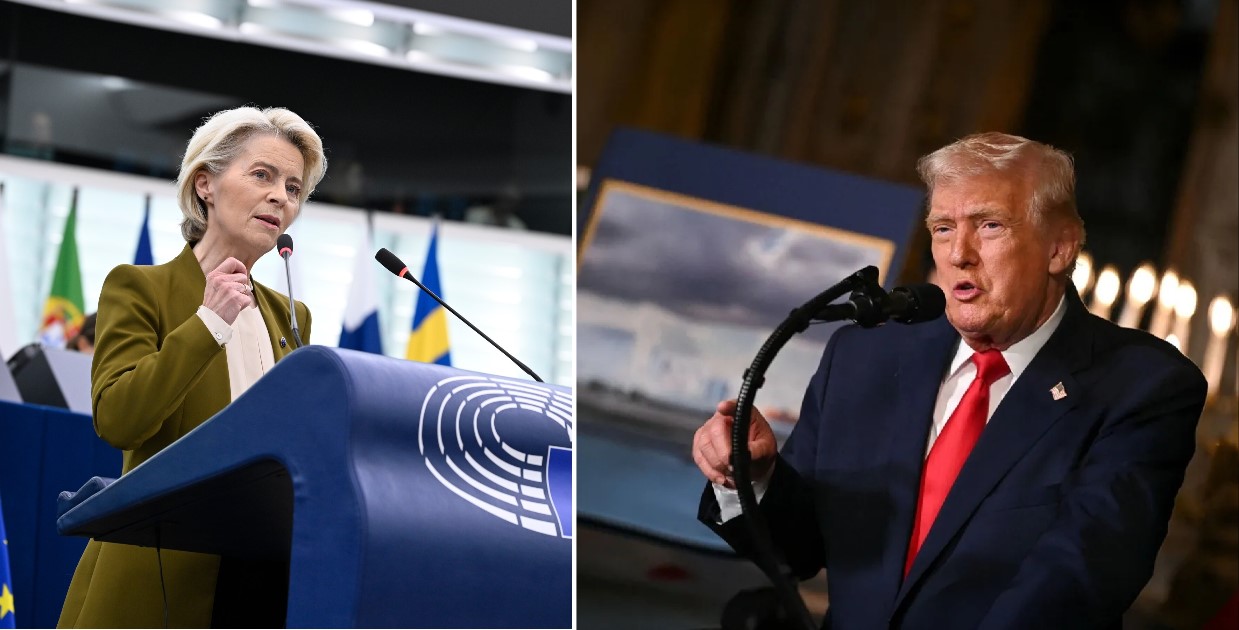
Europe / Washington : The European Union is preparing a wide-ranging retaliation strategy that could directly affect major American technology companies, banks and financial institutions if the United States refuses to withdraw its renewed claims over Greenland, according to officials and media reports familiar with the matter.
The move highlights a sharp escalation in transatlantic tensions, as European leaders close ranks behind Denmark and Greenland’s autonomous government, warning that any challenge to the island’s status would violate international law, undermine the NATO alliance, and create a destabilizing geopolitical precedent.
Sanctions Blueprint Under Discussion
According to diplomatic sources, Brussels is examining a sanctions-style response designed to target sectors where the EU holds substantial leverage over the US economy. These include potential restrictions on the activities of American technology giants such as Google, Microsoft and X, along with possible limits on the operations of US banks and financial firms within the EU’s single market.
Officials stress that no measures have yet been formally approved. Instead, the proposals are being developed as a contingency plan, intended for use only if Washington continues to apply pressure on Copenhagen or escalates its stance on Greenland’s future.
Extreme Options Floated Behind Closed Doors
In addition to economic tools, officials acknowledge that more extreme measures have been mentioned in informal political discussions. Among them is the idea of reassessing the presence of US military bases in Europe, including calls—described as highly unlikely and politically explosive—to expel American forces from certain European facilities.
Such actions would mark an unprecedented fracture within NATO, where US military deployments have long been viewed as central to European security. EU officials emphasize that these ideas remain theoretical and are not part of any formal policy planning.
Europe Closes Ranks Around Denmark And Greenland
Publicly, the EU has emphasized unity and diplomacy rather than confrontation. European leaders have repeatedly stated that Greenland’s sovereignty is not negotiable, insisting that decisions about the island’s future belong exclusively to its people and to Denmark.
Denmark has sought to reinforce this position by announcing increased Arctic defense spending and expanded cooperation with allies, while firmly rejecting any discussion of transferring sovereignty.
Why Greenland Matters
Greenland’s strategic importance is rooted in its geographic location, military relevance and natural resources. Positioned between North America and Europe, the island plays a crucial role in missile early-warning systems, Arctic surveillance and emerging shipping routes, while also possessing reserves of critical minerals vital for advanced technologies.
As global competition intensifies in the Arctic, Greenland has become a focal point in the broader struggle for strategic influence in the region.
EU officials insist that sanctions remain a last resort, with diplomacy still the preferred course. However, the development of a retaliation framework sends a clear message that Brussels is prepared to defend the territorial integrity of a member state and its partners, even at the cost of heightened economic confrontation with Washington.
As one European diplomat remarked, “This is not only about Greenland. It is about whether alliances are governed by law and consent, or by pressure and power.”
——— End of Article ———