Brussels / Kyiv : European intelligence agencies are assuming a significantly larger role in supporting Ukraine’s military operations, as the United States reduces its direct intelligence engagement. The shift is reshaping Ukraine’s access to battlefield information, altering alliance dynamics, and accelerating long-term European efforts to build independent surveillance and intelligence capabilities.
French President Emmanuel Macron stated on January 15 that France now supplies roughly two-thirds of the intelligence Ukraine receives. That claim has been contested. Kyrylo Budanov, who became President Volodymyr Zelenskyy’s chief of staff in December, said Ukraine remained “critically dependent” on the United States, particularly for satellite imagery and early-warning systems. A Western official told that Ukraine’s reliance on U.S. intelligence could be “largely reduced within months,” while acknowledging the transition was still incomplete.
The debate intensified following Washington’s decision in March 2025 to pause intelligence sharing with Kyiv. The move prompted a reassessment within NATO and the European Union over the reliability of long-standing U.S. security guarantees. Steven Everts of the EU Institute for Strategic Studies said the discussion had shifted from burden-sharing to a broader question of trust in U.S. commitments.
Battlefield Impact and the U.S. Intelligence Gap
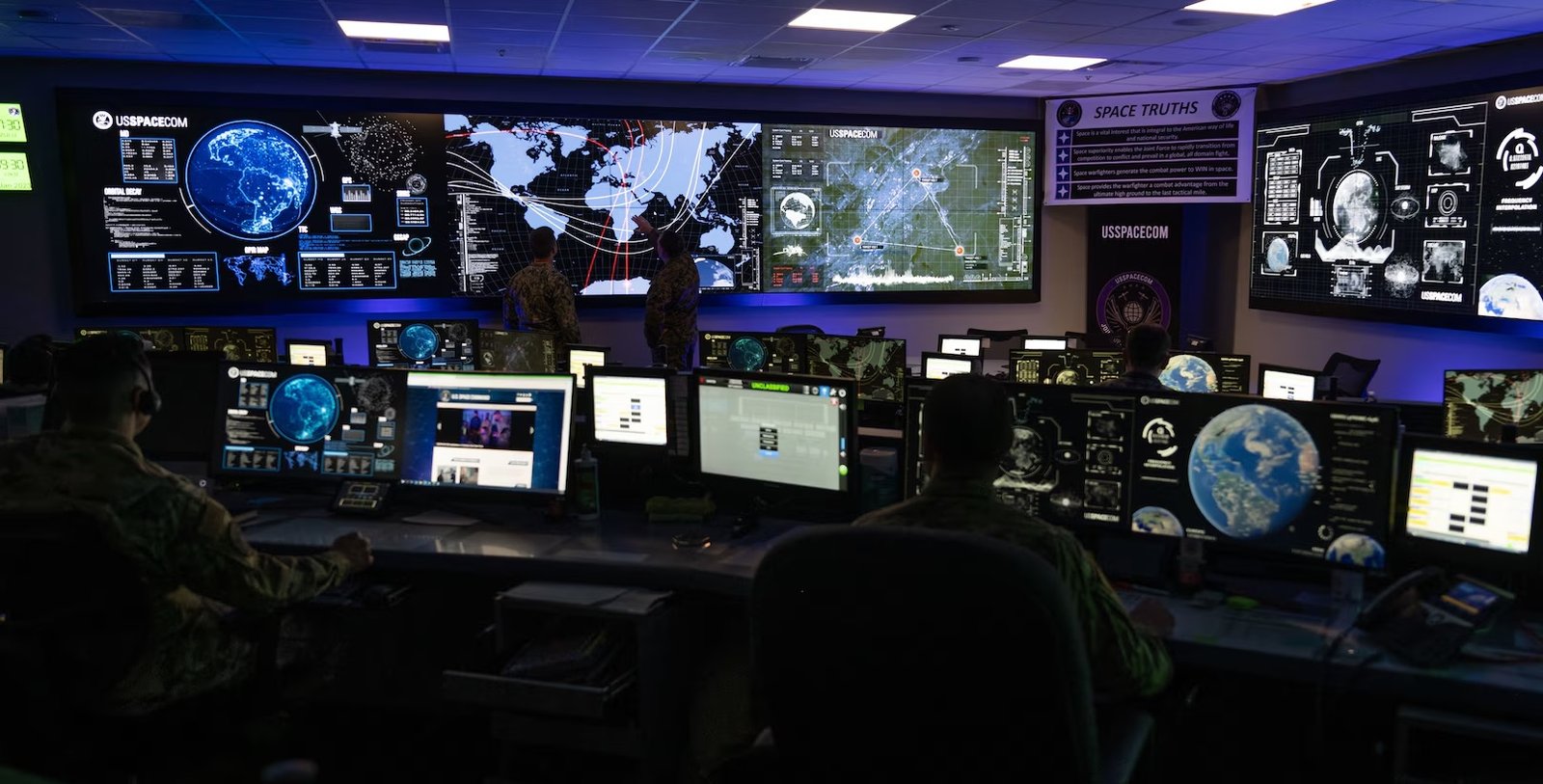
U.S. intelligence has been central to Ukraine’s war effort since 2022. Real-time satellite imagery and signals intelligence have enabled Ukrainian commanders to track Russian troop movements, identify ammunition depots, and map air-defense networks. This information underpins Kyiv’s long-range strike capability and operational planning.
When the United States suspended intelligence sharing in March 2025, the impact extended beyond government-to-government channels. Commercial satellite providers, including Maxar, were also affected, highlighting the breadth of American leverage across both public and private intelligence ecosystems.
The pause accelerated Ukrainian efforts to diversify intelligence sources. Ukraine’s military intelligence agency (HUR) established a dedicated analytical platform to process imagery from France’s CSO-3 military satellite. The satellite was launched in March 2025, following a bilateral agreement signed in February, before the U.S. pause took effect.
Japan also expanded its involvement, agreeing to provide synthetic aperture radar (SAR) imagery to Ukraine’s intelligence services. This marked the first time Tokyo has shared such high-resolution geospatial intelligence with a foreign country.
Despite these developments, Budanov cautioned European partners against excessive reliance on technical intelligence alone. In comments to RBC-Ukraine, he emphasized the continued importance of human intelligence networks, arguing that many European countries had allowed such capabilities to atrophy.
European Intelligence Contributions
Following the U.S. decision to pause intelligence sharing, the United Kingdom and France reaffirmed their commitments to support Ukraine. The UK operates three RC-135 Rivet Joint aircraft, which conduct signals-intelligence missions aimed at intercepting Russian communications. According to The National Interest, data from these flights has directly supported Ukraine’s defensive operations.
France contributes through its CERES satellite constellation, designed for space-based signals interception. Germany and Italy provide radar-based satellite imagery, complementing optical systems and offering coverage regardless of weather or lighting conditions.
At the multilateral level, NATO has advanced the Allied Persistent Surveillance from Space Initiative (APSS). Operational since 2025 under the codename “Aquila,” the program pools data from surveillance satellites operated by 18 nations. With an estimated cost of $1 billion, APSS represents NATO’s largest multinational space-based intelligence project to date.
Role of Commercial and Dual-Use Systems
Private-sector capabilities are playing an increasingly important role. Finland-based ICEYE has emerged as a key provider of SAR imagery. The company detected Russian troop movements ahead of the February 2022 invasion and now operates a constellation of 54 SAR satellites.
ICEYE has signed contracts with several European governments, including the Netherlands, Poland, Finland, and Portugal. In Germany, defense firm Rheinmetall has formed a joint venture with ICEYE to manufacture SAR satellites domestically, reflecting efforts to localize production and reduce reliance on non-European suppliers.
Long-Term Intelligence Balance
European analysts caution against framing the intelligence transition as a direct replacement of U.S. capabilities. Carlo Masala, professor of international politics at Bundeswehr University Munich, said matching U.S. intelligence capacity would likely take more than a decade. Instead, he argued, the more realistic objective is to maintain a qualitative advantage over Russian forces.
Masala estimates that Europe could reach this threshold within three to four years if current levels of investment and coordination are sustained. For Ukraine, the immediate challenge remains whether European intelligence systems can mature quickly enough to provide consistent, actionable support under wartime conditions.
As the intelligence landscape evolves, Ukraine is managing a complex transition—balancing continued dependence on U.S. capabilities, expanding European support, and rebuilding traditional intelligence networks alongside advanced technological systems.
——— End of Article ———