A long-running effort by France, Germany and Spain to jointly build Europe’s next-generation fighter aircraft suffered another major setback this week after defence ministers from the three countries failed to break a political and industrial deadlock over the Future Combat Air System (FCAS). Officials emerging from the meeting acknowledged that delivering a common fighter by 2040 is now considered highly unlikely, casting fresh doubt over one of Europe’s most ambitious defence projects.
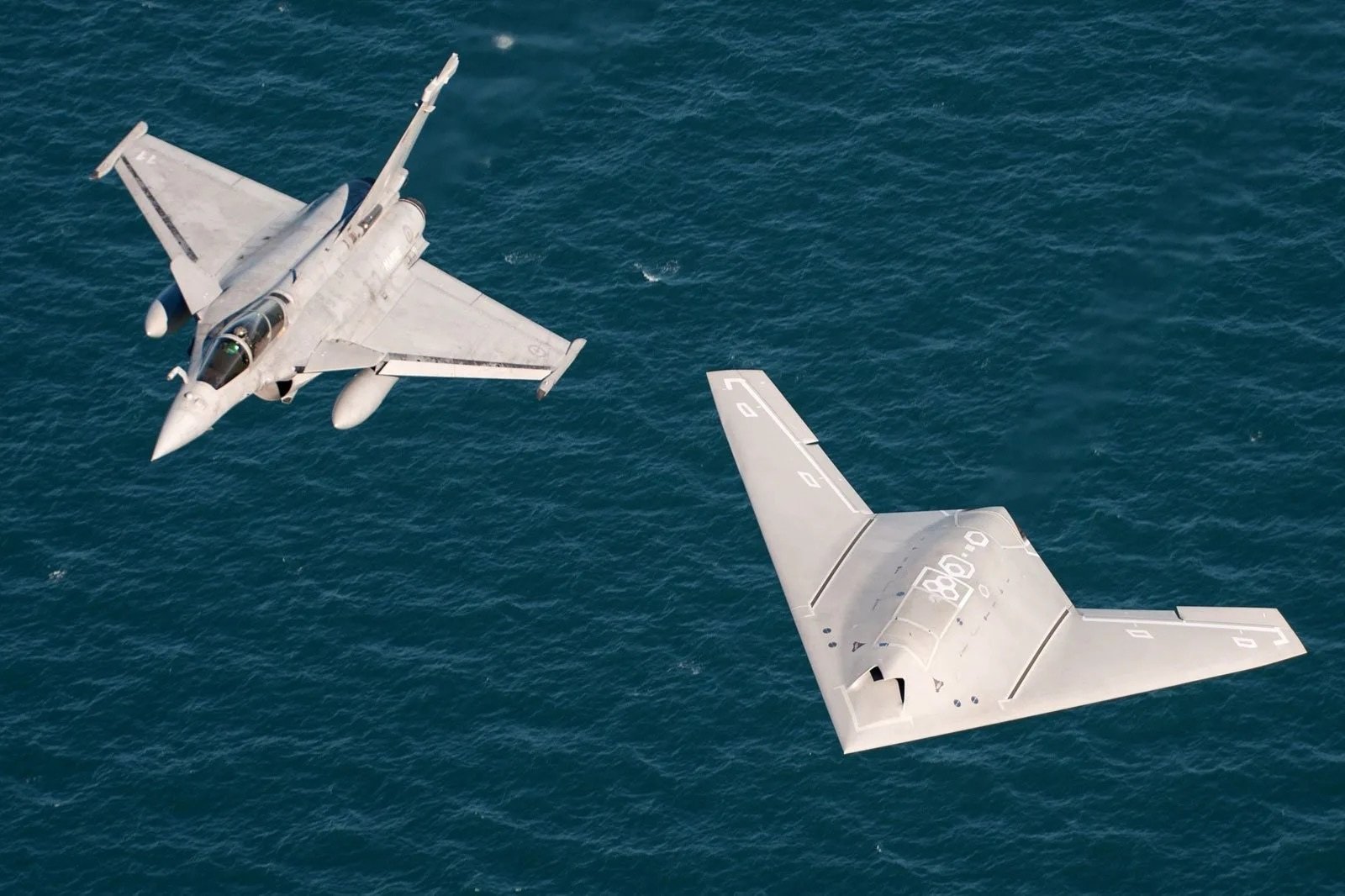
Launched with the promise of safeguarding Europe’s strategic autonomy, FCAS was designed to replace France’s Rafale and the Eurofighter Typhoon operated by Germany and Spain. The programme was envisioned not as a single aircraft but as a “system of systems”, combining a manned sixth-generation fighter, uncrewed combat drones and a secure digital combat cloud linking air, land and naval forces. Over its lifetime, development and production costs are estimated at around €100 billion.
No breakthrough in Berlin
The meeting of defence ministers was intended to unblock months of paralysis ahead of decisions on the programme’s next development phase. Instead, talks ended without agreement on governance, industrial leadership or timelines. According to officials familiar with the discussions, the gap between national positions remains too wide to justify immediate progression, with France favouring a slower, more controlled approach while Germany has been pushing for clearer commitments and deadlines.
The lack of progress means that key milestones originally expected before the end of the year have now been pushed back, with any decisive political decision likely slipping into 2026 at the earliest.
Industrial rivalry at the core
At the heart of FCAS’s troubles lies an unresolved struggle over industrial roles. Dassault Aviation, France’s lead fighter aircraft manufacturer, has insisted on being the prime contractor for the new fighter jet, arguing that fragmented leadership would undermine efficiency and technical coherence. Germany and Spain, whose interests are largely represented by Airbus Defence and Space, have resisted this model, seeking a more balanced distribution of authority and workshare.
These disputes have been compounded by disagreements over intellectual property rights, export controls and access to sensitive technologies — issues that strike at the commercial and strategic interests of all three partners.
Diverging military requirements
Beyond industrial politics, the partners’ military requirements differ significantly. France wants an aircraft capable of operating from aircraft carriers and fulfilling its nuclear deterrence role, requirements that add complexity and cost. Germany, which does not operate aircraft carriers and has different nuclear arrangements, has questioned the necessity of designing the platform around French-specific needs.
There are also disagreements over the maturity and scope of advanced elements such as autonomous “remote carrier” drones and the combat cloud, both of which are central to the FCAS vision but remain technologically challenging.
Strategic consequences for Europe
The uncertainty surrounding FCAS comes at a sensitive time for European defence. Russia’s war in Ukraine has underscored the need for credible air power and closer military cooperation, while rising defence budgets have renewed debates about whether Europe should prioritise indigenous systems or rely more heavily on U.S. platforms.
A failure of FCAS would risk further fragmentation of Europe’s fighter aircraft landscape and could push individual countries toward national solutions or alternative defence partnerships. Analysts warn that this would ultimately increase costs, weaken interoperability and undermine the original goal of reducing dependence on non-European technologies.
What happens next
Despite the bleak outlook, officials insist the programme has not been cancelled. Discussions are expected to continue at technical and political levels, with some policymakers advocating a partial salvage strategy that would preserve work on shared technologies such as the combat cloud and uncrewed systems, even if agreement on a common fighter airframe proves impossible.
For now, however, FCAS stands at a crossroads. What was once promoted as a flagship symbol of European defence unity now risks becoming a case study in the political, industrial and strategic divisions that continue to complicate large-scale military cooperation on the continent.
——— End of Article ———