HAIFA, Israel — March 18, 2026 : Elbit Systems has secured contracts from the Israeli Ministry of Defense (IMOD) for the development and supply of airborne high-power laser (HPL) systems designed for integration on combat aircraft and helicopters, marking a significant step in the company’s expansion into directed-energy technologies.
The contracts, obtained during 2025 and publicly disclosed on March 17, 2026 by President and CEO Bezhalel Machlis, were announced alongside the release of Elbit’s full-year financial results, which showed record annual revenue of $7.94 billion, representing a 16.3 percent increase compared to 2024.
Airborne High-Power Laser Development
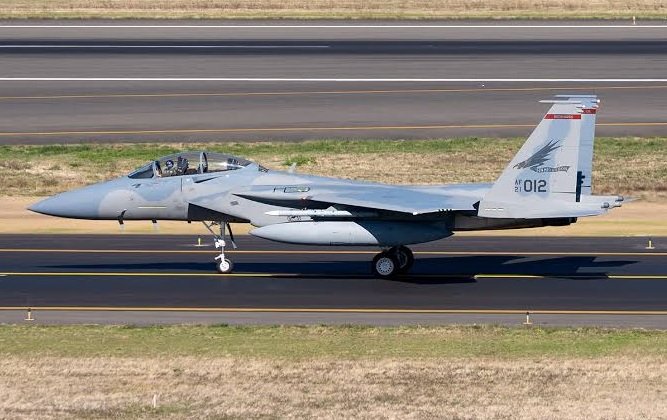
Elbit Systems is serving as the prime contractor for airborne HPL programs that include podded laser systems for fighter jets such as the F-16 Fighting Falcon and F-15 Eagle, as well as a separate high-power laser configuration for helicopters. Conceptual renderings released by the company show a centerline-mounted pod configuration on the F-15 platform.
The systems are designed to intercept a wide range of aerial threats, including drone swarms, rockets, and ballistic missiles. According to company officials, the airborne configuration enables simultaneous engagement of multiple targets while reducing reliance on traditional kinetic interceptors.
Operating at altitude provides several operational advantages compared to ground-based systems. These include reduced interference from weather conditions such as clouds, dust, and atmospheric turbulence, as well as extended detection and engagement ranges. The elevated operating environment also allows interception of threats at greater distances from national borders and populated areas.
Machlis stated that the system remains in advanced stages of development and is expected to reach operational maturity in the future. He noted that the technology could also support additional applications beyond defensive interception.
Elbit has prior experience in directed-energy systems as a supplier to Rafael Advanced Defense Systems for the ground-based Iron Beam program. Earlier testing milestones included successful airborne laser interception demonstrations conducted in 2021 using a modified civilian aircraft platform.
Financial Performance and Market Expansion
Elbit Systems reported full-year 2025 revenue of $7.9386 billion, up from $6.8279 billion in 2024. The company’s order backlog increased by $5.5 billion to reach a record $28.1 billion, providing long-term revenue visibility. Approximately 72 percent of this backlog originates from international customers.
Quarterly revenue exceeded $2 billion for the first time in the company’s history, reaching $2.15 billion in Q4 2025.
Profitability metrics included GAAP net income of $534 million and non-GAAP net income of $598 million. GAAP earnings per share were reported at $11.39, with non-GAAP EPS at $12.75.
Regional revenue distribution showed Israel accounting for 32.1 percent of total sales, followed by Europe at 27 percent and North America at 20.9 percent. European sales surpassed $2 billion for the first time, with the company identifying the region—particularly Germany—as a primary growth driver.
To support expanding demand, Elbit invested more than $500 million in research and development, including programs focused on artificial intelligence integration across its platforms. The company is also increasing capital expenditures to expand production capacity.
Operational Environment and Supply Chain Adjustments
Elbit’s recent growth has been influenced by heightened defense demand linked to regional conflicts, including Israel’s ongoing military operations such as Operation Roaring Lion and broader tensions involving Iran and Hezbollah.
The company reported increased operational pressures associated with these conditions. These include supply chain disruptions caused by attacks on commercial shipping in the Red Sea, particularly by Houthi forces, which have led to higher transportation costs and shipment delays.
Workforce availability has also been affected by the mobilization of reservists for the Israel Defense Forces (IDF). In addition, Elbit cited external challenges such as restrictions from certain countries, as well as protests and security incidents affecting some of its global facilities.
To address these issues, the company is restructuring its supply chain and increasing vertical integration with support from the Israeli government. Machlis stated that capacity expansion and reduced dependency on external suppliers are central to the company’s long-term strategy.
Outlook for Directed Energy Systems
The airborne HPL programs are expected to position the Israeli Air Force as a potential first operator of airborne laser-based interception systems. Elbit Systems anticipates that directed-energy solutions will contribute to a new revenue stream as development progresses and systems reach operational deployment.
With over 20,000 employees operating across multiple regions, Elbit continues to expand its global footprint while focusing on advanced technologies to address evolving aerial threat environments.
——— End of Article ———