NEW DELHI, — March 3, 2026 : India’s Defence Procurement Board (DPB) has approved the acquisition of 60 units of the indigenous Ghatak Unmanned Combat Aerial Vehicle (UCAV), marking the first formal procurement step for the stealth combat drone developed under the Defence Research and Development Organisation (DRDO).
The approval covers an initial batch intended for deployment across the Indian armed forces. While the platform is primarily aligned with requirements of the Indian Air Force, interest has also been noted from the Indian Navy regarding potential deck-based variants. Details regarding contract value, production schedules, and lead production agencies will be determined in subsequent stages of the defence acquisition process.
Programme Background and Development Structure
The Ghatak UCAV, previously referred to as the Indian Unmanned Strike Air Vehicle (IUSAV) and Autonomous Unmanned Research Aircraft (AURA), is being developed by the Aeronautical Development Establishment (ADE), a laboratory under DRDO. Overall design responsibility is managed by the Aeronautical Development Agency (ADA).
The programme followed completion of the AURA feasibility study in April 2013. In 2016, the Ministry of Defence sanctioned initial funding of Rs 231 crore for design and critical technology development, with certain technology streams shared with the Advanced Medium Combat Aircraft (AMCA) programme.
Development and fabrication activities include public and private sector participation, with companies such as Larsen & Toubro involved in structural and system integration work.
Design Configuration and Airframe Characteristics
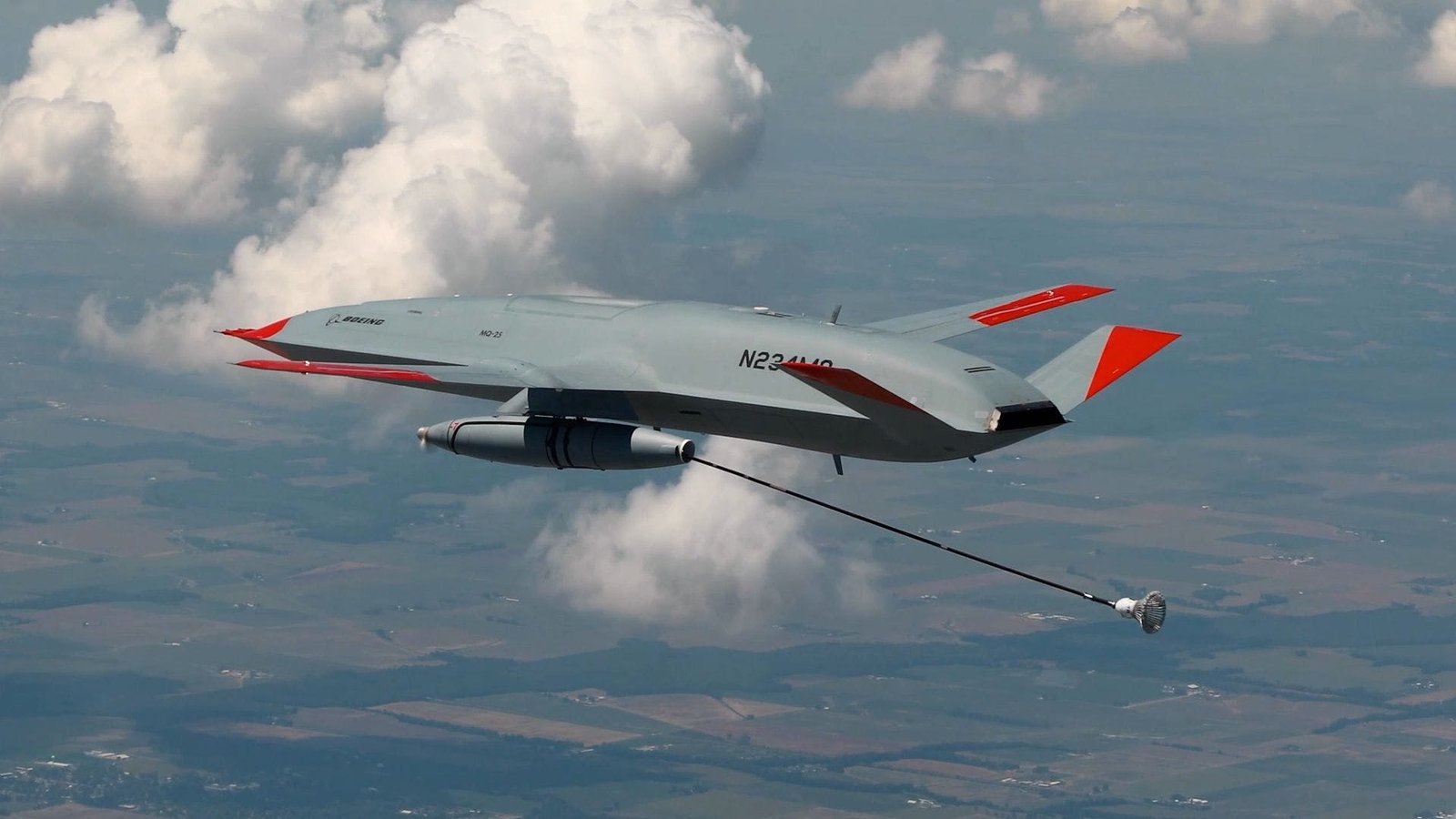
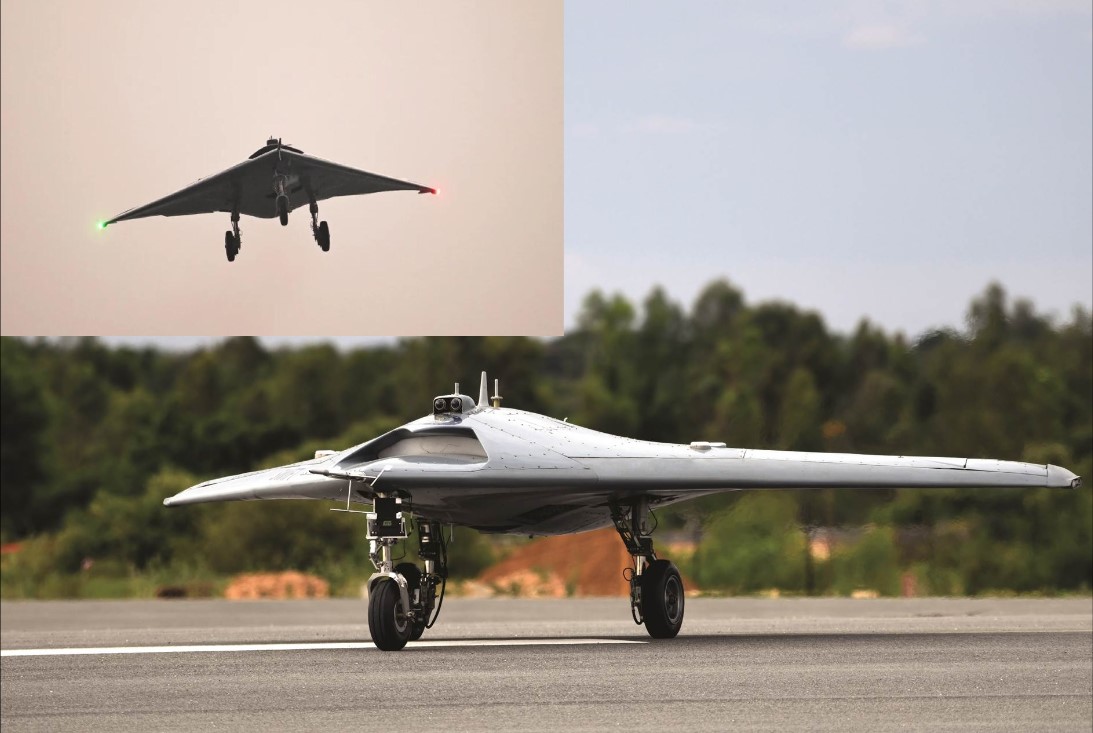
The Ghatak employs a flying-wing configuration, eliminating conventional vertical and horizontal tail surfaces to reduce radar cross-section. The platform’s stealth characteristics are derived primarily from airframe geometry, accounting for approximately 70 percent of its signature reduction, supplemented by radar-absorbent materials and coatings contributing the remaining 30 percent.
The airframe is constructed using lightweight carbon composite materials and incorporates integrated structural health monitoring systems. The flying-wing layout provides increased internal volume for fuel and payload compared to conventional fuselage-and-tail configurations.
The full-scale UCAV is expected to have a maximum takeoff weight of approximately 13 tonnes, with overall weight under 15 tonnes. It is designed to operate at high-subsonic speeds and at operational altitudes of up to 30,000 feet.
Propulsion and Powerplant Development
The Ghatak will be powered by a dry (non-afterburning) variant of the indigenous Kaveri turbofan engine, producing thrust in the range of 46–52 kN. The Ministry of Defence has targeted certification of the dry Kaveri engine for 2026.
Weapons and Payload Capability
To maintain low observability during combat operations, the UCAV features an internal weapons bay with a payload capacity of up to 1.5 tonnes. Armaments are rail-launched from the internal bay to preserve the aircraft’s radar profile.
The platform is designed to carry a mix of precision-guided munitions, bombs, and air-to-air missiles. Variants under consideration include dedicated strike and air-superiority configurations. The air-superiority variant is expected to integrate air-to-air missiles such as Astra Mk-1 or Astra Mk-2.
Avionics, Autonomy and Operational Roles
The Ghatak is designed as an autonomous system capable of waypoint navigation, target identification, and mission execution with minimal human intervention. Its onboard systems include mission computers, fire control radars, identification friend-or-foe (IFF), data links, and collision avoidance systems.
While capable of autonomous operations, the UCAV includes a ground override capability allowing human operators to assume control during complex mission phases. The aircraft is also intended to support manned-unmanned teaming roles, operating as a loyal wingman alongside crewed fighter aircraft.
Operational roles include deep-penetration strike missions, suppression of enemy air defences (SEAD), intelligence, surveillance and reconnaissance (ISR), and potential air-superiority missions depending on configuration.
Technology Demonstration and Flight Testing
Core aerodynamic and autonomous flight control technologies were validated through a scaled-down technology demonstrator known as the Stealth Wing Flying Testbed (SWiFT). The approximately one-tonne demonstrator, with a wingspan of about five metres and length of four metres, conducted its maiden flight on July 1, 2022, at the Chitradurga Aeronautical Test Range.
SWiFT has since completed multiple autonomous sorties, including taxi trials, high-speed automatic takeoff and landing, and its seventh flight in December 2023. Testing validated flight control laws, stealth shaping, and GAGAN-based autonomous landing capability.
Fabrication of the full-scale prototype has progressed, with flight trials of the complete system expected during 2025–2026. Developmental testing will follow before entry into full-rate production, which is currently targeted for the late 2030s, subject to successful trials and acceptance.
Procurement Significance
The DPB approval for 60 units formalizes the transition of the Ghatak programme from technology demonstration to acquisition planning. The platform shares technologies in stealth materials, avionics, and systems integration with the AMCA programme, supporting broader indigenous capability development in advanced aeronautics.
Further details on contract structuring, phased induction, and production timelines are expected to be finalized as the acquisition process advances.
——— End of Article ———