NEW DELHI — India’s long-term combat aviation strategy appears to be entering a new phase following recent remarks by Defence Minister Rajnath Singh indicating that the country must begin advancing toward sixth-generation fighter technologies. The statement, delivered during his visit to the Defence Research and Development Organisation (DRDO)’s Gas Turbine Research Establishment (GTRE) in Bengaluru, has prompted discussion across defence and industry circles regarding whether India will pursue an indigenous sixth-generation program or explore participation in an existing multinational consortium such as the UK-led Global Combat Air Programme (GCAP) or the European Future Combat Air System (FCAS).
The Directive for 6th-Generation Advancement
The discussion was triggered by the Defence Minister’s public remarks emphasizing the need to move beyond fifth-generation aero-engine development and initiate research into sixth-generation capabilities.
During his visit to GTRE, Singh stated:
“हमें future की तरफ भी देखना होगा। हम सिर्फ 5th generation के engines तक सीमित नहीं रह सकते। 6th generation की, advanced technologies का development भी, हमें जल्द से जल्द start करना होगा। उस पर research, समय की माँग है। जैसे-जैसे दुनिया में technology बदल रही है, Artificial Intelligence, Machine Learning और New Materials का प्रयोग बढ़ रहा है, हमें उनमें आगे रहना होगा।”
(Translation: “We also have to look towards the future. We cannot remain limited only to 5th-generation engines. We must start the development of 6th-generation advanced technologies as soon as possible. Research on this is the need of the hour. As technology is changing in the world, and the use of Artificial Intelligence (AI), Machine Learning (ML) and New Materials is increasing, we must stay ahead in them.”)
The reference to Artificial Intelligence (AI), Machine Learning (ML) and advanced materials indicates that the Ministry of Defence is positioning sixth-generation development as a technology-driven evolution rather than a platform-only program. The focus on propulsion through GTRE further signals that next-generation engine capability will be central to future combat aircraft design.
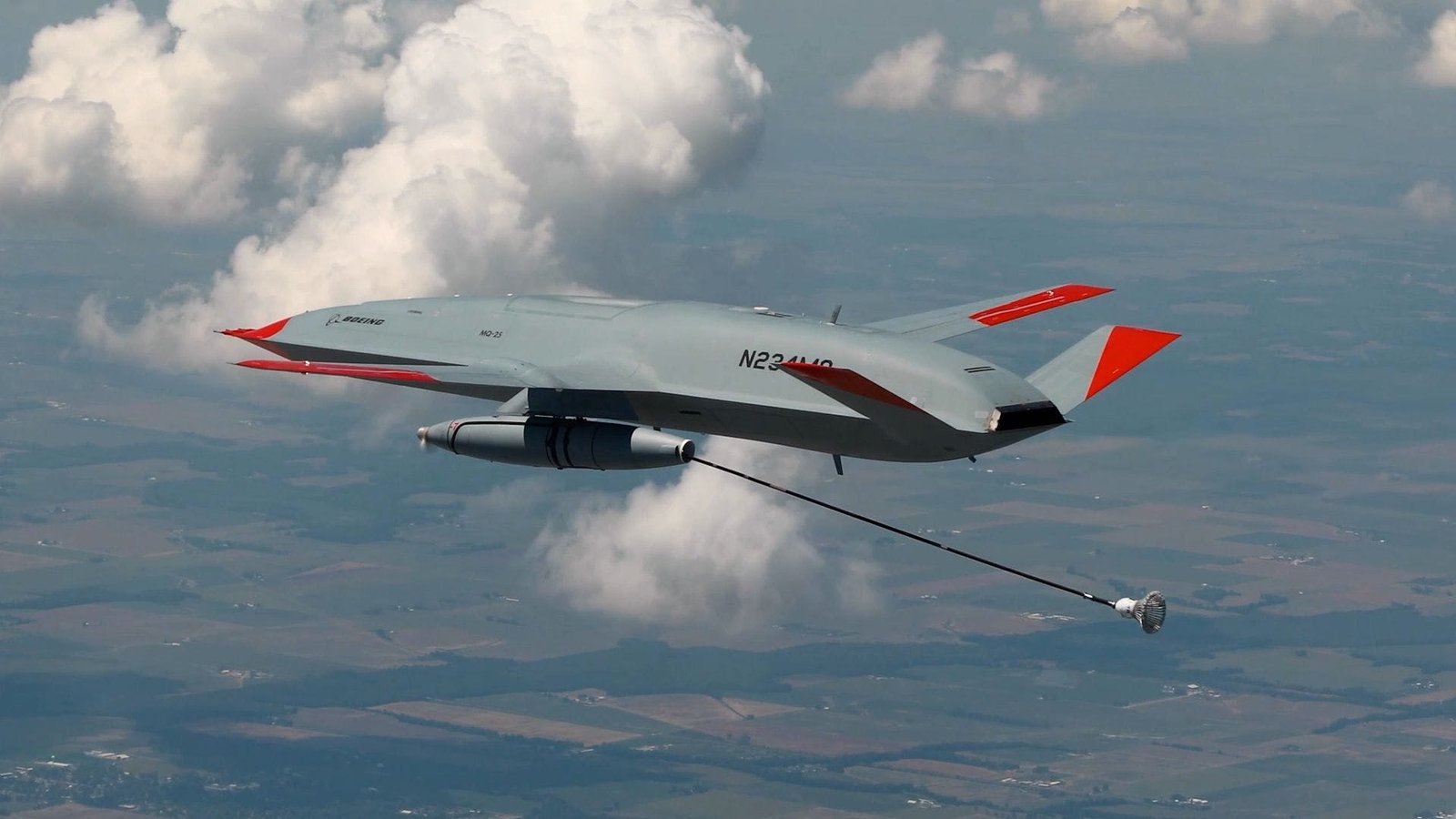
Sixth-generation fighter concepts globally are expected to incorporate adaptive cycle engines, enhanced thrust-to-weight ratios, improved thermal management, advanced stealth coatings, integrated sensor fusion, optionally manned configurations, and networked system-of-systems architectures including unmanned loyal wingman platforms.
Global Sixth-Generation Programs: GCAP and FCAS
At present, the Western aerospace sector is organized around two principal multinational sixth-generation combat aircraft programs.
The Global Combat Air Programme (GCAP) — formerly known as Tempest — is a trilateral partnership between the United Kingdom, Italy, and Japan. The program aims to field a sixth-generation stealth fighter by 2035. GCAP focuses on advanced propulsion, integrated sensor systems, artificial intelligence-driven mission systems, and collaborative combat aircraft (unmanned systems operating alongside manned fighters). The United Kingdom has previously engaged India in exploratory discussions, including delegations from the UK Ministry of Defence and industry representatives such as BAE Systems, to assess potential Indian participation, particularly in software, digital systems, and AI domains.
The Future Combat Air System (FCAS) is a European initiative involving France, Germany, and Spain, led industrially by Dassault Aviation and Airbus. FCAS targets operational capability around 2040 and is structured as a “system of systems.” In addition to a next-generation fighter, the program includes remote carrier drones, cloud-based combat networks, and advanced data fusion platforms.
Both programs require substantial financial investment, technological depth, and industrial coordination across multiple nations.
The 5th-Generation Dynamic: India’s Distinct Position
India’s potential entry into either GCAP or FCAS presents a unique strategic dynamic. None of the core partner nations leading GCAP or FCAS have independently developed a native fifth-generation stealth fighter. The United Kingdom, Italy, and Japan currently fulfill their fifth-generation requirements through procurement of the American F-35. France, Germany, and Spain have not fielded a fifth-generation aircraft domestically and continue to operate advanced 4.5-generation platforms such as the Rafale and Eurofighter Typhoon.
India, in contrast, is actively developing its indigenous fifth-generation Advanced Medium Combat Aircraft (AMCA). The Cabinet Committee on Security (CCS) approved the AMCA program for prototype development, marking a significant milestone in India’s domestic stealth fighter initiative.
The AMCA program involves DRDO, Hindustan Aeronautics Limited (HAL), and private-sector industry partners. The aircraft is expected to incorporate stealth shaping, internal weapons bays, advanced avionics, sensor fusion, and phased development of indigenous propulsion systems.
This positions India as one of the few countries currently executing a ground-up fifth-generation program while simultaneously considering sixth-generation research pathways.
Strategic and Industrial Implications of Potential Participation
If India were to join either GCAP or FCAS, the partnership would reshape both the industrial and geopolitical balance within those consortiums.
For the multinational programs, India would bring substantial development funding, a large projected procurement requirement from the Indian Air Force, and an extensive software and IT ecosystem capable of supporting AI-driven mission systems and digital architecture development. A larger production base would also contribute to economies of scale, potentially lowering per-unit costs.
For India, participation would provide access to advanced propulsion research, stealth material science, directed-energy weapon integration studies, and collaborative combat aircraft development. Shared technological risk and cost distribution could accelerate timelines compared to a fully independent sixth-generation program.
Conditions and Lessons from the FGFA Program
Defence analysts note that any multinational participation would require clearly defined conditions related to workshare, domestic manufacturing, and technology transfer.
India’s previous experience with the Fifth Generation Fighter Aircraft (FGFA) program with Russia remains a significant reference point. India partnered in the co-development of a derivative of the Su-57 but withdrew from the program in 2018 due to concerns regarding limited technology transfer, unequal workshare allocation, delays, and restricted access to critical source codes and stealth technologies.
To avoid similar outcomes, any future sixth-generation agreement would likely include mandatory provisions for domestic production within India, full participation of Indian public and private sector firms, protection of intellectual property rights, and equitable development status rather than a buyer-supplier arrangement.
Policy Direction and Next Steps
At present, the Ministry of Defence has not announced formal negotiations with either GCAP or FCAS. The Defence Minister’s directive appears to signal the initiation of research and capability planning rather than an immediate procurement decision.
India’s expanding defence budget, modernization requirements for the Indian Air Force, and emphasis on indigenous capability development under national defence industrial policies will influence the trajectory of any future sixth-generation initiative.
Whether through an independent program, multinational partnership, or a hybrid model combining domestic development with international collaboration, the policy direction articulated by the Defence Minister indicates that sixth-generation aerospace technologies are now formally entering India’s long-term strategic planning framework.
——— End of Article ———