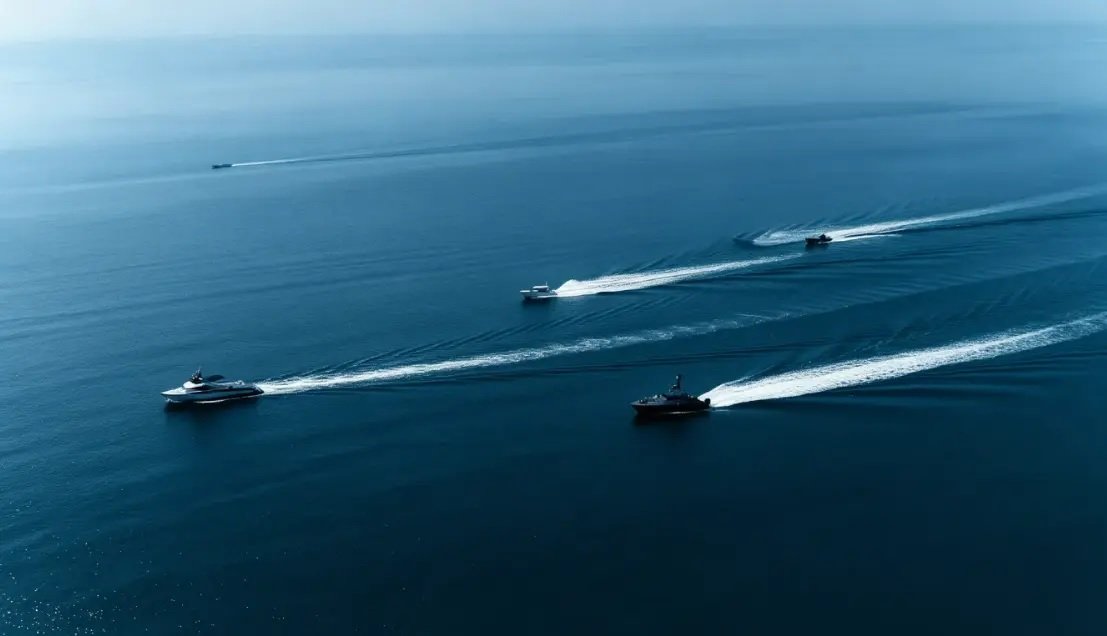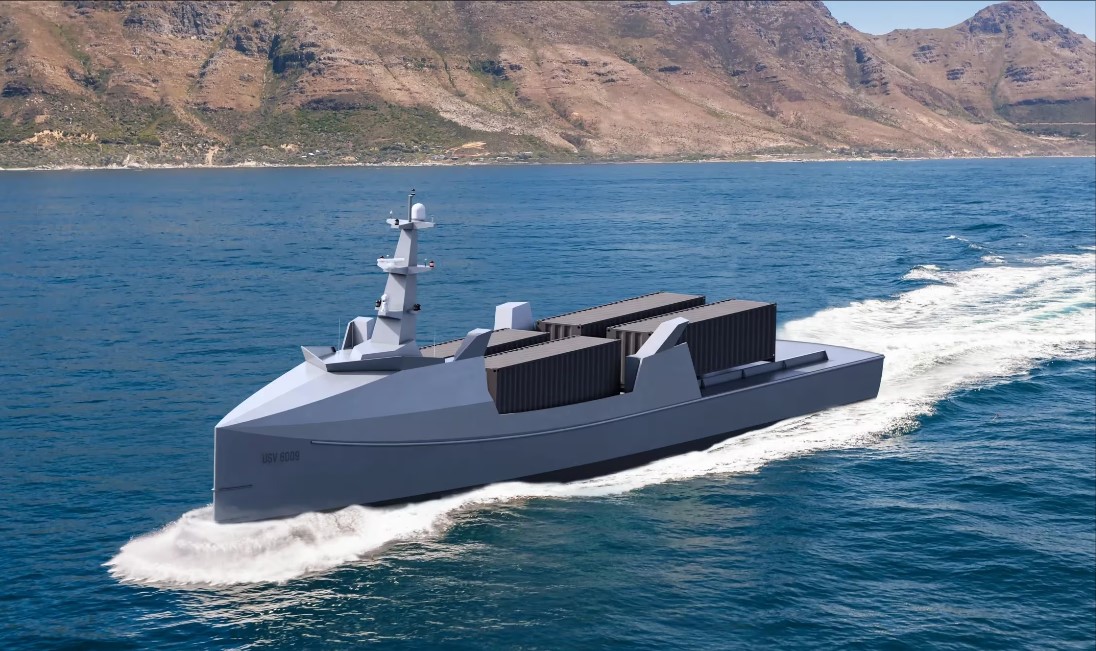
NEW ORLEANS, Louisian : Damen Shipyards Group, based in the Netherlands, has signed a strategic licensing agreement with Boston-based maritime technology firm Blue Water Autonomy to construct the U.S. Navy’s first “Liberty Class” autonomous surface vessel, marking a structured step toward scalable, unmanned maritime operations.
Under the agreement, Damen will license its proven Stan Patrol 6009 platform for adaptation into a 60-meter steel-hulled autonomous vessel. Construction of the first ship is scheduled to begin in March 2026 at Conrad Shipyard in Louisiana. The vessel is expected to be delivered to the U.S. Navy later in 2026 under a formal programme of record focused on integrating unmanned systems alongside traditional crewed fleets.
Design Framework and Platform Selection
The Liberty Class has been jointly designed by Damen Shipyards Group and Blue Water Autonomy, drawing from the existing Damen Stan Patrol 6009 hull form. The use of a commercially proven patrol platform is intended to reduce development timelines and enable production scalability using established industrial infrastructure.
Damen’s role includes licensing the design and supporting adaptation of the hull for autonomous operations. Blue Water Autonomy is responsible for re-engineering core ship systems to enable long-duration unmanned deployment.
Mark Honders, Design and Licence Manager at Damen, said the adaptation of the Stan Patrol 6009 demonstrates how commercial ship designs can be modified to support emerging maritime mission requirements.
Technical Specifications and Operational Profile
The Liberty Class autonomous vessel is configured for extended, independent missions in open-ocean conditions. According to project specifications, the vessel will feature:
-
Length: 60 meters
-
Operational Range: Over 10,000 nautical miles
-
Payload Capacity: More than 150 tonnes
-
Cargo Configuration: Capability to carry four 40-foot containers
-
Mission Compatibility: Integration of missile systems, advanced sensor packages, and logistics modules
-
Endurance: Designed for deployments lasting several months without onboard crew
The vessel’s internal architecture has been significantly modified to enable full autonomous operation. Blue Water Autonomy redesigned the internal layout, including a complete reconfiguration of the engine room. Fault-tolerant propulsion systems have been incorporated to allow continued operation in the event of component failures.
Mechanical and electrical systems are engineered to maintain automated control during long transoceanic deployments, reducing the need for human intervention. The objective is to support sustained naval operations without requiring a permanently embarked crew.
Rylan Hamilton, Chief Executive Officer of Blue Water Autonomy, stated that adapting an existing hull while re-engineering internal systems enables extended crewless operations while aligning with Navy production timelines.
Axe Bow Hull Technology
A central structural feature of the Liberty Class is Damen’s patented “Axe Bow” hull design, developed in collaboration with Delft University of Technology in the Netherlands.
The Axe Bow features a vertical stem engineered to cut through waves rather than ride over them. The design reduces hull slamming—impact forces generated when the hull re-enters the water after pitching in heavy seas—and improves wave re-entry performance.
More than 300 vessels worldwide currently utilize the Axe Bow configuration. Damen Shipyards Group holds exclusive patent rights. Licensing revenues from the technology are reinvested into maritime research through the Collaborative Axe Bow Fund at Delft University of Technology.
Production Plan and Industrial Capacity
The Liberty Class vessels will be constructed at Conrad Shipyard in Louisiana. The shipyard operates five facilities and employs approximately 1,100 workers. It utilizes automated panel production lines and advanced welding processes to support serial ship construction.
Conrad Shipyard currently produces more than 30 vessels annually across multiple categories. According to company leadership, existing infrastructure is capable of supporting scaled production of the Liberty Class following initial delivery.
Cecil Hernandez, President and CEO of Conrad Shipyard, indicated that the facility is prepared for serial production once the first vessel is completed and validated.
Blue Water Autonomy has outlined a production target of 10 to 20 vessels per year after the initial unit enters service, depending on U.S. Navy procurement decisions and programme requirements.
Programme Structure and Naval Integration
The Liberty Class is being developed under a formal U.S. Navy programme of record, aligning with broader naval modernization efforts focused on integrating unmanned surface vessels (USVs) into fleet operations.
The vessels are intended to complement crewed warships by providing distributed maritime capability, including missile deployment, sensor operations, and logistics support. The approach leverages commercial shipbuilding supply chains and established yard capacity to accelerate production timelines.
Historical Reference: Liberty Class Designation
The designation “Liberty Class” references the Liberty Ships of World War II, which were mass-produced using standardized designs and commercial shipyard infrastructure to meet national security requirements.
The modern Liberty Class follows a similar production model, utilizing an existing hull design and domestic shipbuilding capacity to deliver scalable operational capability.
Construction of the first unit is scheduled to begin in March 2026, with delivery planned later in the year, marking the initial phase of the Navy’s expansion of autonomous maritime platforms.
——— End of Article ———