BENGALURU : The Defence Research and Development Organisation (DRDO) has formally initiated the process to induct a private-sector partner for the co-development and manufacture of a high-thrust indigenous military jet engine, marking a major shift in India’s aero-engine development approach. The Gas Turbine Research Establishment (GTRE), DRDO’s Bengaluru-based propulsion laboratory, has issued an Expression of Interest (EoI) to identify a Development-cum-Production Partner (DcPP) for the Advanced High Thrust Class Engine (AHTCE) programme.
The EoI invites qualified Indian defence and aerospace companies to participate in a long-term programme covering design support, manufacturing, assembly, integration, testing and certification of a next-generation indigenous aero gas turbine engine. GTRE will retain design authority and programme ownership, while the selected DcPP will assume responsibility for industrial execution across the engine’s full lifecycle.
Shift to an Industry-Anchored Model
The AHTCE initiative represents a structural shift from a laboratory-centric development model to an industry-anchored propulsion ecosystem. Under this framework, the DcPP will not function as a conventional vendor but as the primary industrial execution agency. Responsibilities will include design translation, tooling, precision manufacturing, system integration, quality assurance, configuration control and long-term product support.
The programme is being pursued in collaboration with an international engine house, enabling access to global best practices while progressively transferring manufacturing depth and execution capability to Indian industry. Design ownership and intellectual control remain with the Government of India, with intellectual property generated under the programme owned by the government or jointly with the development partner, as determined by DRDO-GTRE.
Programme Scope and Engine Architecture
The AHTCE programme covers the complete architecture of a modern military turbofan engine. The scope includes manufacturing and assembly of major turbomachinery modules such as the low-pressure compressor, high-pressure compressor, combustor, high-pressure turbine, low-pressure turbine, afterburner, exhaust cone and exhaust nozzle. It also includes rotor support systems and critical accessories and subsystems, including gearboxes, oil and fuel systems, actuators and Full Authority Digital Engine Control (FADEC) integration units.
Under the development phase, the DcPP is required to deliver 18 complete, flight-worthy engines over a 10-year period. In addition, the partner must manufacture nearly 2,300 components, sub-assemblies and modules, progressively building capability from individual parts to full engine build-up, validation and sustainment.
Four-Phase Execution Framework
GTRE has defined a four-phase execution model to manage technical risk and ensure controlled industrial capability development.
In the design phase, the DcPP will support GTRE through detailed engineering activities, including preparation of 2D drawings, 3D models, tooling concepts and manufacturing routings. Engineering teams from the partner will work alongside GTRE personnel on design iterations and configuration updates driven by test feedback.
The manufacturing planning phase focuses on industrial readiness. This includes development of master process sheets, digital mock-ups, assembly layouts, inspection strategies and resource loading plans. All processes must align with aero-engine quality management systems and NADCAP-approved standards.
The manufacturing phase covers physical production of components, sub-assemblies and modules. Responsibilities include raw material procurement, management of bought-out items, first-article inspection, non-destructive testing, dimensional validation and statistical quality control.
The assembly and integration phase places primary responsibility on the DcPP for establishing engine assembly bays, defining build sequences, conducting rotor balancing, integrating modules and subsystems, and completing final engine build-up. These activities will be carried out in coordination with GTRE and certification agencies.
Infrastructure and Technology Requirements
The EoI specifies extensive infrastructure requirements that go beyond conventional aerospace manufacturing. The DcPP must possess or establish capabilities in multi-axis CNC machining for large casings and blisks, high-precision electrical discharge machining, electron beam welding, laser processing, advanced heat treatment and vacuum furnace operations.
Special processes required under the programme include thermal barrier coatings, plasma spraying, electron-beam physical vapour deposition, vacuum brazing, diffusion bonding, nitriding, carburising and powder metallurgy. These processes must be qualified under NADCAP or equivalent international regimes.
Inspection and quality assurance requirements include turbine-class coordinate measuring machines, ultrasonic testing, radiography, eddy current inspection, fluorescent penetrant testing, surface metrology and hardness testing. The EoI makes clear that the DcPP must function as a full-spectrum aero-engine manufacturing entity rather than a build-to-print supplier.
Financial and Eligibility Criteria
To ensure financial robustness and execution capacity, GTRE has set stringent eligibility benchmarks. Applicant companies must demonstrate a minimum consolidated annual turnover of ₹1,500 crore and a minimum consolidated net worth of ₹1,500 crore. Firms must show at least 3 percent consolidated revenue growth in three of the last five financial years and hold a minimum credit rating of BBB+ (Stable) or equivalent. Companies under insolvency proceedings are not eligible.
Eligibility is restricted to Indian defence and aerospace companies with demonstrated experience in aero-engine or turbomachinery manufacturing, advanced materials such as titanium and nickel alloys, and certified aerospace quality systems aligned with AS9100, AQMS and national airworthiness frameworks.
Certification and Institutional Framework
GTRE will continue as the design authority, providing engineering data, materials support, instrumentation philosophy and coordination with airworthiness agencies. The DcPP will be responsible for production engineering, tooling, fixtures, assembly systems, quality assurance and configuration control.
The programme framework integrates GTRE, the international engine house, certification bodies such as CEMILAC and DGAQA, and the industrial partner into a coordinated execution structure. The DcPP will also manage documentation, traceability and lifecycle data in support of certification and operational sustainment.
Delivery Timeline and Future Production
According to the EoI, initial engine deliveries are expected to begin around the seventh year following contract signature, with a gradual ramp-up thereafter. This phased delivery approach reflects the complexity of aero-engine industrialisation and the need to stabilise quality and repeatability.
While the immediate contract is limited to development and delivery of 18 engines, the Ministry of Defence has indicated intent to place a separate production order for up to 200 engines following successful certification. The selected DcPP must formally agree to support serial production, integrated logistics and product support for the engine’s full operational life.
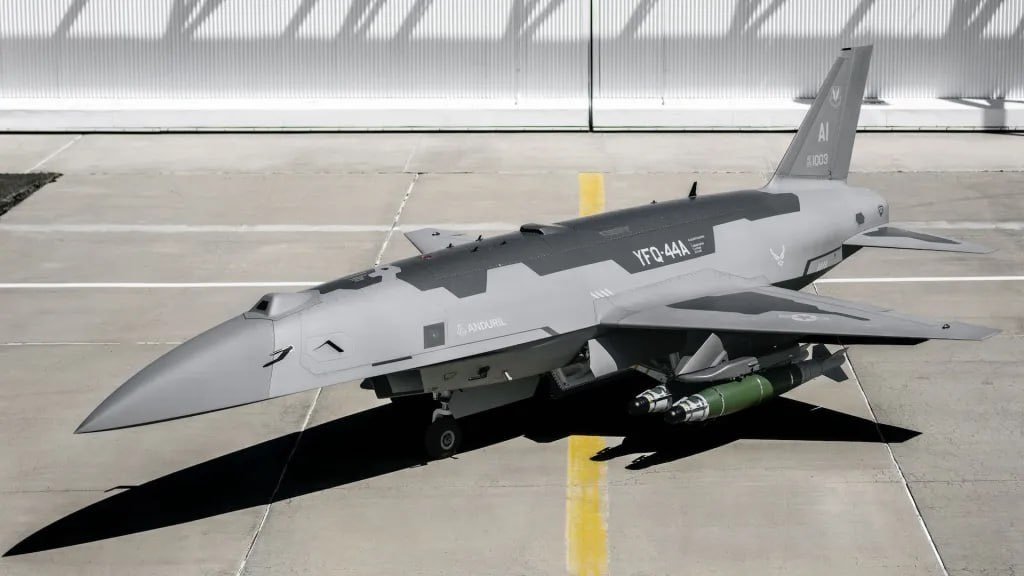
The AHTCE is widely viewed as a potential powerplant for future Indian military platforms, including next-generation fighter aircraft and unmanned combat systems, although specific platform allocations have not been formally announced.
Strategic Context
The AHTCE Development-cum-Production Partner programme is one of the most comprehensive propulsion initiatives undertaken by DRDO. By transferring substantial manufacturing and assembly responsibility to the private sector while retaining design control, GTRE aims to establish a sustainable national aero-engine ecosystem encompassing materials, processes, inspection, digital manufacturing, assembly engineering and long-term sustainment.
The EoI underscores India’s intent to build sovereign capability in one of the most complex and strategically sensitive areas of defence technology, addressing a long-standing gap in the country’s aerospace industrial base without altering established ownership or control structures.
——— End of Article ———