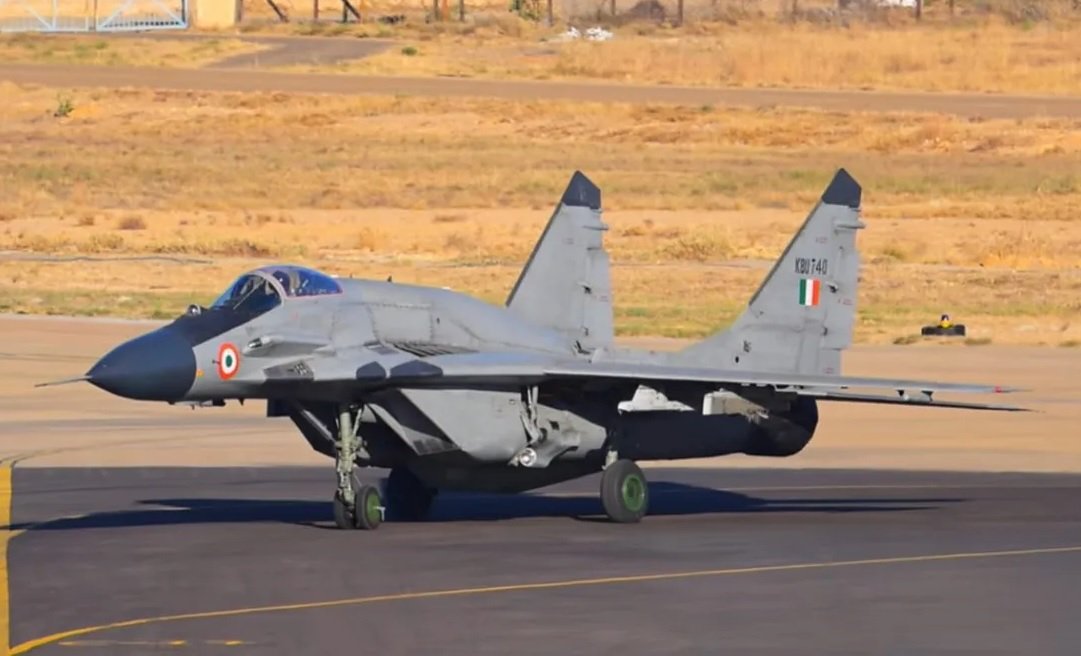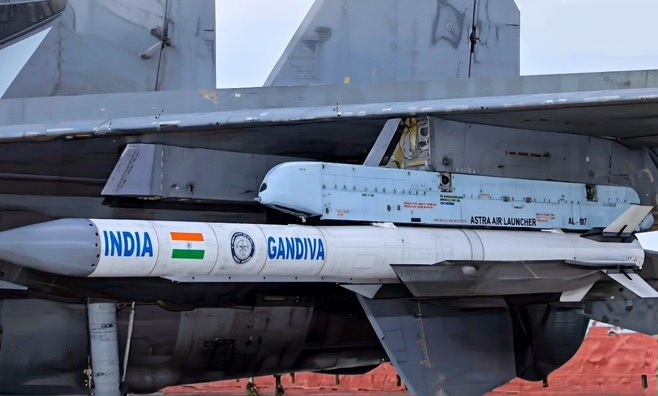
CHANDIPUR, ODISHA : India has entered a new phase in the development of its long-range air-to-air missile capability, with the Defence Research and Development Organisation (DRDO) commencing integration and captive flight trials of the Astra Mk-III (Gandiva) on the Indian Air Force (IAF) Su-30MKI fighter aircraft.
The trials are being conducted from the Integrated Test Range (ITR), Chandipur, marking the first physical integration of a Solid Fuel Ducted Ramjet (SFDR)–powered Beyond Visual Range Air-to-Air Missile (BVRAAM) with an operational fighter platform. This phase follows the SFDR propulsion flight demonstration on February 3, 2026, which validated sustained supersonic combustion and thrust control in flight conditions.
Integration and Captive Flight Trial Phase
Captive flight trials involve mounting an inert, non-explosive missile on one of the Su-30MKI’s external hardpoints. The missile is dimensionally, structurally and aerodynamically identical to the operational weapon but remains electrically and electronically isolated from the aircraft’s avionics, radar and weapon control systems.
The objective of this phase is to validate structural compatibility, ensure aerodynamic loads remain within design limits, and assess the vibrational environment experienced by the missile during representative flight conditions. Test sorties include straight-and-level flight, high-g manoeuvres, altitude transitions, and speed variations across the aircraft’s operational envelope.
Engineers are also analysing the impact of missile carriage on aircraft handling, drag, and fuel consumption. Data collected during these flights will be used to refine mounting hardware, pylon interfaces, and structural margins before progressing to separation trials and live firing tests.
Only after successful completion of captive trials will the missile proceed to electronic integration with the aircraft’s mission computer and radar, followed by separation trials to evaluate safe missile release.
Missile Design and Technical Characteristics
The Astra Mk-III Gandiva represents a major advancement over earlier Astra variants through the adoption of an air-breathing propulsion system in place of a conventional solid rocket motor. The missile is powered by a Solid Fuel Ducted Ramjet (SFDR) that uses atmospheric oxygen to sustain combustion during flight.
This configuration enables continuous thrust over a longer portion of the trajectory, allowing the missile to retain high energy and manoeuvrability at extended ranges.
Programme data indicate an engagement range exceeding 350 kilometres, speeds between Mach 3 and Mach 4.5, and engagement altitudes of up to approximately 20 kilometres. The missile is designed to engage fighter aircraft as well as high-value targets such as airborne early warning platforms and aerial refuelling aircraft.
Operational Implications of SFDR Technology
The primary operational advantage of SFDR propulsion is the significant expansion of the missile’s no-escape zone (NEZ). Unlike conventional missiles that lose energy in the terminal phase, continuous thrust allows the Gandiva to sustain high speed deeper into the engagement envelope, improving interception probability against evasive targets.
This capability is particularly relevant in environments where adversary aircraft employ advanced electronic countermeasures and long-range air-to-air weapons. The Gandiva is expected to provide the IAF with a counter to contemporary regional BVRAAM systems, including China’s PL-15 and PL-17 .
Programme Background and Future Roadmap
Development of the SFDR-based missile programme began in 2013, followed by extensive ground testing, booster trials, and subsystem validation. These efforts culminated in the recent propulsion flight demonstration.
With the start of captive trials on the Su-30MKI, the programme has transitioned to full weapon integration. Subsequent phases will include electronic integration, separation trials, and guided flight tests.
The Astra Mk-III is planned for integration across multiple IAF platforms, including the Su-30MKI, Tejas Mk-1A, Tejas Mk-2, and the Advanced Medium Combat Aircraft (AMCA). Once operationally cleared, the missile will form a key element of India’s long-range air combat capability.
——— End of Article ———