TEHRAN / WASHINGTON, — March 26, 2026 : The Islamic Revolutionary Guard Corps (IRGC) has claimed responsibility for shooting down a U.S. Navy Boeing F/A-18E/F Super Hornet on March 25, marking a new point of contention in the ongoing U.S.-Israel–Iran conflict. However, the United States Central Command (CENTCOM) has firmly denied the claim, stating that no U.S. fighter aircraft have been lost in the incident.
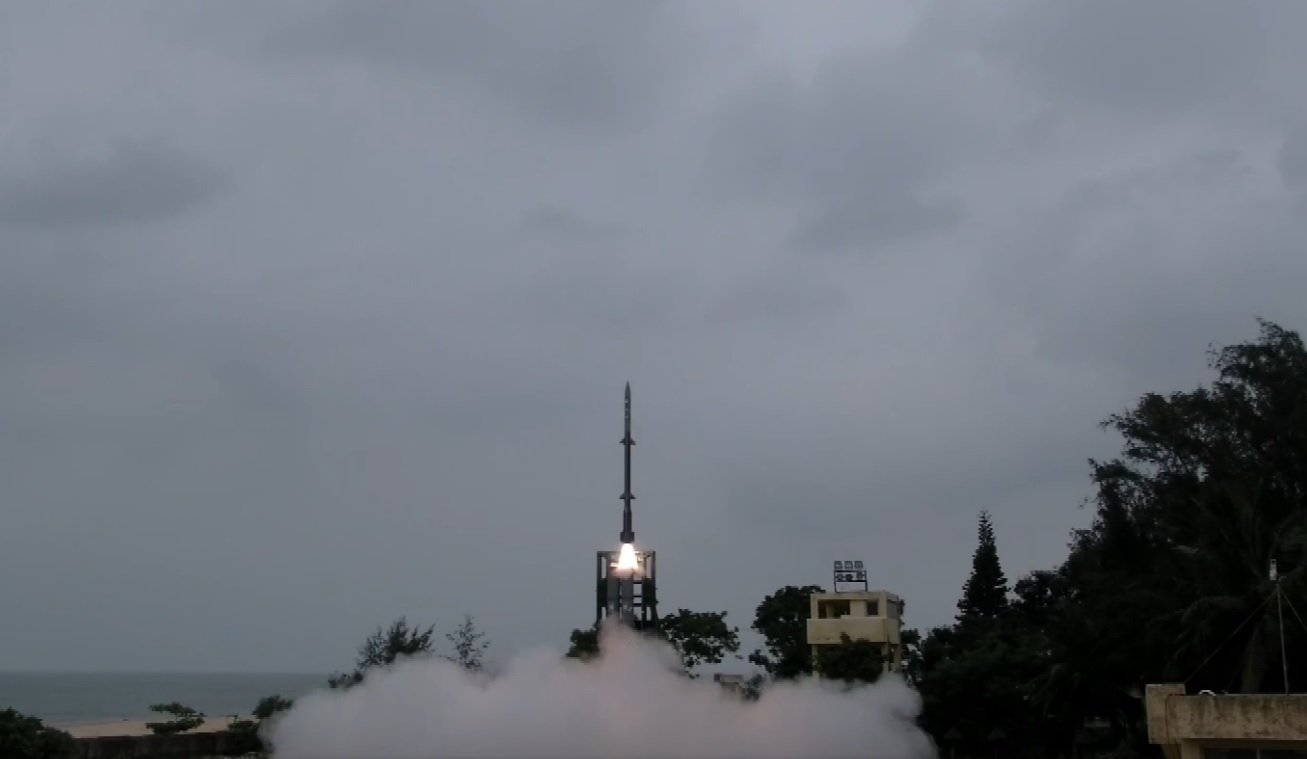
According to Iranian state media and IRGC statements, the carrier-based fighter was engaged by a short-range surface-to-air missile over Chabahar County, with debris reportedly falling into the Indian Ocean, where U.S. naval forces are currently concentrated. Footage released by Iranian sources appears to show a missile intercept and aerial explosion.
Video footage circulating on social media appears to confirm that a missile was fired at the F/A-18, with a proximity blast occurring near the aircraft. However, the aircraft is seen continuing flight without visible fire, smoke, or major structural breakup in the available clips. Based on this footage, analysts assess that while the aircraft may have sustained limited or minor damage, the video does not clearly indicate a shootdown.
In contrast, U.S. officials rejected the claim shortly after it surfaced. Initial independent open-source intelligence assessments of the released footage suggest the possibility of a near-miss involving a man-portable air-defense system (MANPADS), where a proximity detonation occurred but the aircraft may have remained operational.
Expanding Claims Amid Intensifying Air Campaign
The reported incident comes amid a broader air campaign that began on February 28, when U.S. and Israeli forces launched coordinated strikes against Iranian targets under the reported designation “Operation Epic Fury.”
Iranian officials state that the alleged F/A-18 shootdown represents the fourth manned aircraft downed by domestic air defense systems since the start of hostilities. Previous claims include:
- A U.S. Air Force F-15E Strike Eagle reportedly shot down on March 22 in southern Iranian airspace
- An Israeli F-16 Fighting Falcon claimed downed on March 21
- Another Israeli F-16 reportedly hit on March 20 in central Iran
Iranian-aligned paramilitary groups in Iraq have also claimed responsibility for additional shootdowns over Iraqi territory. Analysts note that Iran’s layered air defense network may include foreign-supplied systems such as the S-300PMU-2 and Tor-M2, alongside indigenous platforms.
Impact of Earlier Strike on U.S. F-35 Operations
These developments follow a confirmed March 19 incident in which a U.S. Air Force F-35 Lightning II was struck by a surface-to-air missile while operating over Iran. The aircraft sustained damage sufficient to force an emergency landing, and the pilot suffered shrapnel injuries.
Iranian sources assess that the incident led to a reduction in deep penetration strike missions by U.S. and Israeli aircraft. Defense analysts suggest that constraints in air-launched cruise and ballistic missile inventories may be increasing reliance on glide bomb strikes delivered from within Iranian airspace, exposing aircraft to higher risk from ground-based defenses.
Heavy Losses Reported Among Unmanned Systems
In parallel with contested claims regarding manned aircraft, Iranian sources report significant losses among U.S. and Israeli unmanned aerial vehicles (UAVs). Estimates indicate that nearly 200 drones have been destroyed since the start of hostilities.
These losses range from low-cost one-way attack drones valued under $100,000 to high-end systems such as the MQ-9 Reaper, which can exceed $150 million per unit. Iranian reports claim that more than a dozen MQ-9-class systems have been lost.
Military analysts attribute the higher attrition rate among unmanned systems to their frequent use in high-risk, deep penetration missions, in contrast to more cautious deployment patterns for manned aircraft.
The Role and Limitations of the F/A-18E/F Fleet
The F/A-18E/F Super Hornet has served as the backbone of the U.S. Navy’s carrier-based fighter fleet for nearly two decades. Originally introduced as an enhanced fourth-generation platform, it was intended to bridge the gap between legacy aircraft such as the F-14, F/A-18C/D, A-6, and A-7, and next-generation systems like the F-35C and future F/A-XX.
Due to delays in the F-35C program, Super Hornet production was extended by approximately 12 years beyond 2015. The U.S. Navy currently operates over 700 aircraft, including the electronic warfare variant E/A-18G Growler.
While a limited number of aircraft have been upgraded to the Block 3 configuration—with advanced active electronically scanned array (AESA) radar and updated avionics—most of the fleet remains older. Defense experts note that these earlier variants are less suited to high-intensity environments involving advanced integrated air defense systems, despite their relatively low maintenance requirements and operational costs.
Maritime Tensions and Economic Implications
Beyond aerial engagements, the conflict is also affecting maritime security and global energy markets. Iran has reportedly begun imposing fees on commercial vessels transiting the Strait of Hormuz, a critical corridor for global oil shipments.
The move has added pressure to international shipping and contributed to volatility in energy markets. U.S. officials have discussed the possibility of forming a multinational naval framework to ensure freedom of navigation and stabilize transit through the region.
Ongoing Dispute and Lack of Independent Confirmation
As of March 26, there is no independent confirmation of the alleged F/A-18E/F shootdown. The incident remains disputed, with Iran maintaining its claim and the United States denying any aircraft loss.
The evolving situation reflects the broader information contest surrounding the conflict, where battlefield claims, counter-claims, and limited verifiable evidence continue to shape the operational narrative.
——— End of Article ———