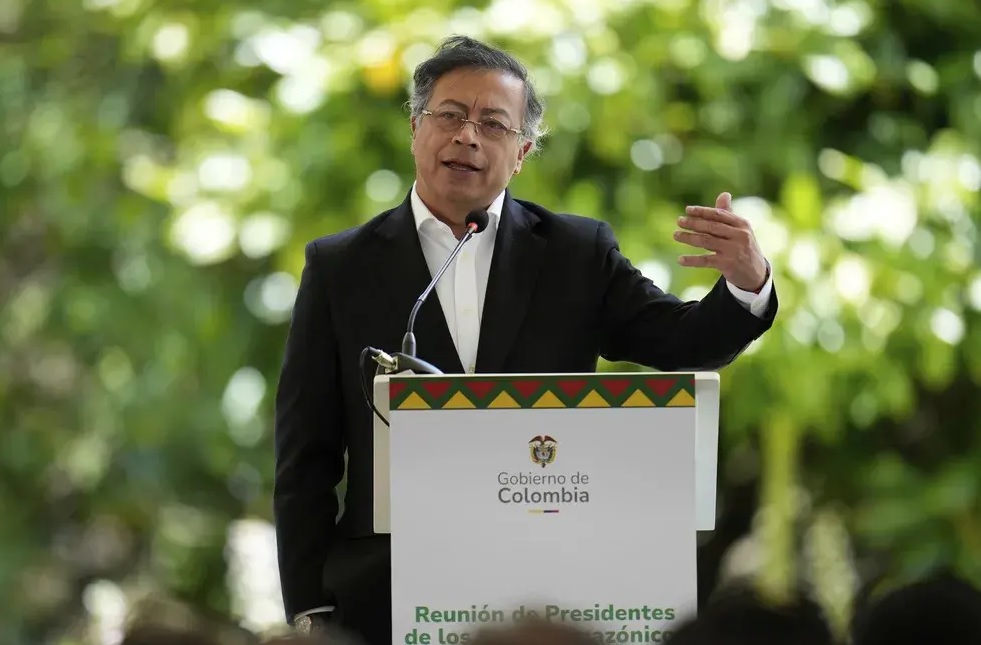
Colombian President Gustavo Petro on Saturday issued a sharp rebuke of the United States, accusing it of violating Colombia’s sovereignty and committing what he called an “act of murder” during a recent anti-drug-trafficking military operation in the Caribbean Sea.
In a statement posted on the social media platform X (formerly Twitter), Petro alleged that U.S. military forces operating in Colombian territorial waters were responsible for the death of Alejandro Carranza, a Colombian fisherman who, according to Petro, had no connection to narcotics trafficking or criminal organizations.
“U.S. government officials have committed murder and violated our sovereignty in our territorial waters. Fisherman Alejandro Carranza had no ties to drug traffickers and his daily activity was fishing,” the Colombian president wrote.
Incident Details
The incident reportedly occurred in September 2025, when U.S. forces were conducting a maritime interdiction operation targeting drug-smuggling vessels in the Caribbean. According to video testimony from Carranza’s family members—shared by Petro on X—the fisherman’s boat was struck during a nighttime assault by a U.S. aircraft or ship operating under anti-narcotics authority.
Family members stated that Carranza, a long-time fisherman from the northern Caribbean coast, was returning from a routine fishing trip when the strike occurred. His body was later recovered by local fishermen, who alerted authorities.
Colombian officials have reportedly demanded a formal explanation from Washington regarding the operation and its legal basis within Colombian waters. The Colombian Navy has also opened an investigation to verify the exact coordinates of the strike and to determine whether it indeed occurred within the country’s Exclusive Economic Zone (EEZ) or inside recognized territorial waters—a crucial distinction in international maritime law.
Diplomatic Tensions Rising
The allegations come amid growing friction between Bogotá and Washington over security cooperation and the U.S. role in Latin America’s anti-drug operations. President Petro, Colombia’s first leftist leader, has been a vocal critic of the traditional U.S.-led “War on Drugs”, calling it a failure that has devastated local communities while doing little to curb drug demand in North America.
In recent months, Petro has sought to redefine Colombia’s counter-narcotics strategy, emphasizing social investment, crop substitution, and rural development rather than heavy militarization. His administration has also increased scrutiny of foreign military presence and operations in Colombian territory and waters.
Washington Yet to Respond
As of Sunday, the U.S. Embassy in Bogotá and the Pentagon had not issued an official statement addressing Petro’s accusations. However, U.S. officials in past briefings have defended such Caribbean operations as part of multinational efforts to interdict cocaine shipments bound for North America, often conducted in coordination with partner nations under joint agreements.
If confirmed, the incident could strain U.S.–Colombia relations, which have traditionally been among the strongest in the region. Colombia has long been one of Washington’s key allies in South America, receiving billions in military and development assistance under Plan Colombia and its successor programs.
A Test for Bilateral Relations
Analysts suggest the killing of Carranza—if proven to have occurred within Colombian jurisdiction—could force a reevaluation of bilateral military cooperation and lead to new discussions over rules of engagement and accountability in joint anti-narcotics missions.
President Petro’s firm response signals his intent to assert national sovereignty and civilian oversight over foreign military activity in Colombian territory. “Colombia is not a U.S. colony,” Petro has said in previous speeches, emphasizing that his administration will not tolerate unilateral actions that violate international law.
As investigations continue, the death of Alejandro Carranza threatens to become not just a local tragedy but a symbolic flashpoint in the ongoing debate over U.S. interventionism and Latin American sovereignty in the name of counter-narcotics operations.
——— End of Article ———