BEIJING/TOKYO, — April 2, 2026 : A recent full-page report published by the People’s Liberation Army’s official newspaper, PLA Daily, has drawn attention to Japan’s separated plutonium reserves, stating that the country held approximately 44.4 metric tonnes of unirradiated plutonium as of the end of 2024. The publication assessed that this quantity could theoretically support the production of around 5,500 nuclear warheads, based on international standards for fissile material requirements.
The report has contributed to renewed discussion regarding nuclear latency and strategic stability in East Asia, particularly as regional security dynamics continue to evolve.
Verified Stockpile and Storage Distribution
Official data published by the Japanese government and monitored under the safeguards of the International Atomic Energy Agency (IAEA) confirms that Japan’s total separated plutonium inventory stood at approximately 44.4 metric tonnes at the end of 2024. This represents a slight decrease from 44.5 tonnes recorded a year earlier and marks the fourth consecutive annual decline.
The stockpile is geographically divided between domestic and overseas facilities. Approximately 8.6 tonnes are stored within Japan under strict security and regulatory oversight. The remaining 35.8 tonnes are held in Europe, reflecting earlier arrangements under which spent nuclear fuel from Japanese reactors was reprocessed abroad. Of this overseas inventory, around 21.7 tonnes are located in the United Kingdom and approximately 14.1 tonnes in France.
Civilian Nuclear Program and Safeguards
Japan’s plutonium originates entirely from its civilian nuclear fuel cycle programme. The country reprocesses spent nuclear fuel to extract plutonium for use in Mixed Oxide (MOX) fuel, a practice commonly referred to as “pluthermal” generation. This fuel is intended for use in selected commercial nuclear reactors.
The material remains under comprehensive IAEA safeguards and is declared for exclusively peaceful purposes. Japan is also a signatory to the Nuclear Non-Proliferation Treaty (NPT) as a non-nuclear-weapon state and adheres to its long-standing “Three Non-Nuclear Principles,” which prohibit the possession, production, or introduction of nuclear weapons on its territory.
To ensure transparency, Japan submits annual reports detailing its plutonium management and utilisation plans under international guidelines.
Quantitative Assessment and Technical Context
Under IAEA definitions, approximately eight kilograms of plutonium constitutes a “significant quantity” sufficient for a basic nuclear explosive device. Based on this benchmark, Japan’s total stockpile of 44.4 tonnes corresponds to a theoretical capacity of roughly 5,500 such devices.
Independent assessments, including those by the Japan Atomic Energy Commission and the International Panel on Fissile Materials, confirm both the scale and composition of the stockpile. The plutonium is classified as reactor-grade material, which, while less optimal than weapons-grade material, is still considered technically usable in a nuclear explosive device.
For comparison, estimates from the Stockholm International Peace Research Institute (SIPRI) indicate that Russia, which maintains the world’s largest nuclear arsenal, possesses approximately 5,400 warheads.
Capability Versus Policy Position
Japan does not possess nuclear weapons and maintains that its nuclear activities are strictly civilian. However, analysts note that the country’s advanced technological base, industrial capacity, and scientific expertise place it in a position of “nuclear latency,” meaning it has the capability to develop nuclear weapons within a relatively short timeframe if a political decision were made.
Multiple expert evaluations suggest that Japan could assemble a basic nuclear device within six to twelve months under such circumstances. Some analyses indicate that a limited operational arsenal could be developed within three to five years, depending on factors such as fissile material utilisation and delivery system integration.
This distinction between technical capability and political intent continues to shape international assessments of Japan’s nuclear posture.
PLA Daily Assessment and Chinese Position
The PLA Daily report characterizes Japan’s plutonium accumulation as a matter of international concern, arguing that the scale of the stockpile, combined with evolving defense policies, could have implications for regional security.
The publication asserts that Japan’s expanding defense initiatives—including increased investment in advanced technologies and recent policy adjustments allowing for enhanced long-range strike capabilities—should be evaluated alongside its latent nuclear potential.
It also referenced Japan’s allocation of 17.5 billion yen (approximately $109.6 million) in 2025 for research programs focused on adapting advanced civilian technologies for potential military applications, representing a significant increase compared to 2022 levels.
Chinese officials have previously called for greater international scrutiny of Japan’s plutonium reserves, emphasizing the potential for rapid nuclear armament under changing policy conditions.
Industrial Constraints and Stockpile Trends
The accumulation of Japan’s plutonium stockpile is primarily attributed to structural and operational challenges within its nuclear energy sector rather than weapons-related objectives.
Following the Fukushima Daiichi nuclear disaster in 2011, the majority of Japan’s nuclear reactors were shut down, significantly reducing the consumption of MOX fuel. At the same time, long-standing technical delays at the Rokkasho Reprocessing Plant have limited the country’s ability to process and utilize plutonium domestically.
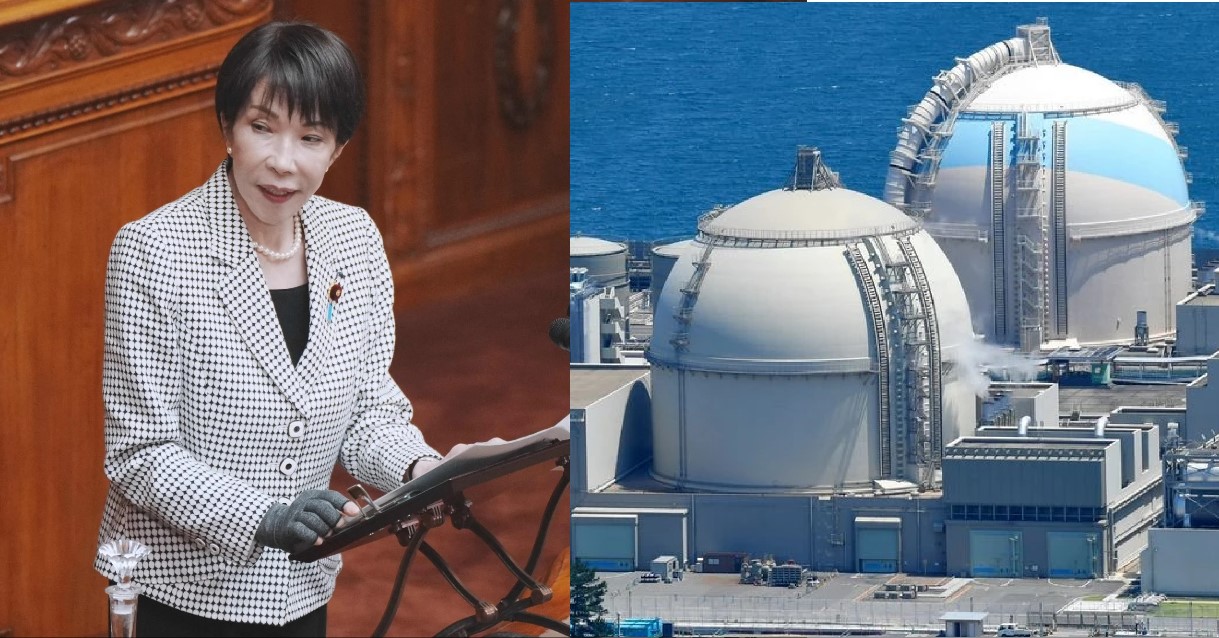
Despite these constraints, Japan has continued efforts to reduce its stockpile through MOX fuel usage in operational reactors, including Takahama Units 3 and 4, Ikata Unit 3, and Genkai Unit 3. The gradual consumption of plutonium in these facilities has contributed to the recent downward trend in total holdings.
However, no significant increase in plutonium consumption or new large-scale reprocessing activity is expected in the immediate fiscal year, and the stockpile is projected to remain broadly stable at approximately 44.5 tonnes through the end of fiscal year 2025.
Regional Security Context
Japan’s plutonium reserves are situated within a broader regional environment in which neighboring countries—including China, Russia, and North Korea—possess operational nuclear arsenals. Japan, in contrast, relies on the United States’ extended deterrence framework, often referred to as the “nuclear umbrella,” for its strategic security.
As regional tensions and defense policy debates continue to evolve, Japan’s civilian plutonium stockpile remains a subject of international attention. While the country maintains strict compliance with international safeguards and nonproliferation commitments, the scale of its fissile material reserves continues to be assessed in the context of both energy policy and regional strategic balance.
——— End of Article ———