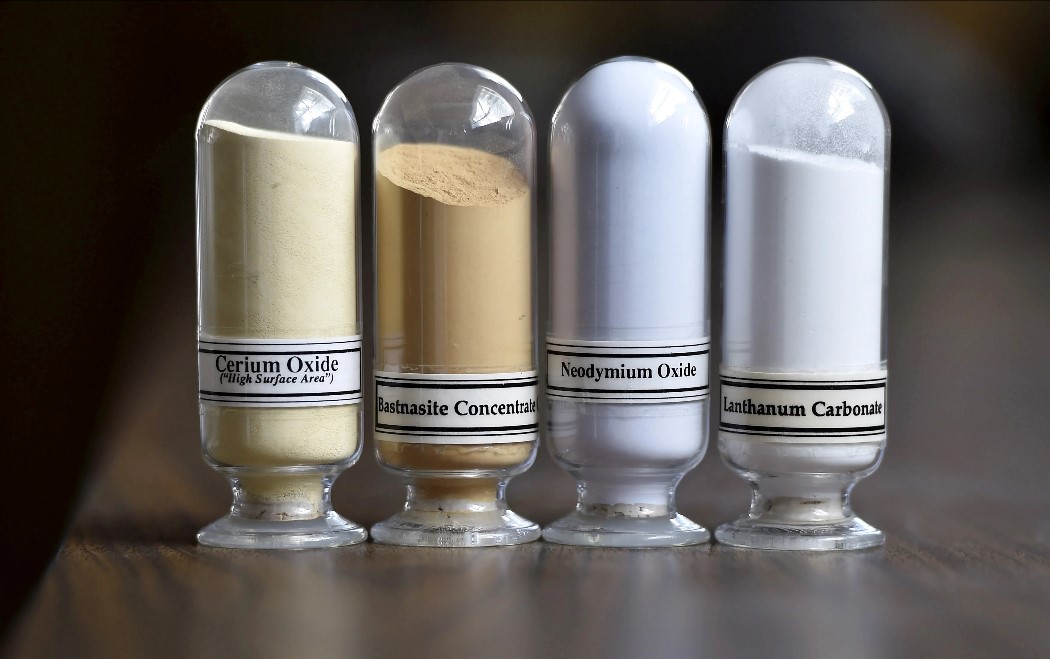
China has made a major discovery in the realm of rare earth elements, unearthing approximately 5 million tonnes of key metals in the Liangshan Yi Autonomous Prefecture in the southwestern Sichuan province. This discovery further cements China’s status as the global leader in rare earth production, a position it has held for decades, and reinforces the nation’s control over resources that are vital to advanced technology, green energy, and defense systems.
Rare earth elements are a group of 17 metal oxides that are critical in manufacturing everything from electric vehicles and wind turbines to robotics and military weapons. These elements are indispensable to modern technological advancements, making China’s dominance in the field a significant geopolitical asset. With the global shift toward clean energy and increasing demand for cutting-edge technology, rare earths are at the center of a growing competition, particularly between China and the United States.
The discovery of 4.96 million tonnes of rare earths in Sichuan boosts China’s already vast reserves, which amount to 44 million tonnes according to the US Geological Survey. This new find strengthens China's leverage in a global market where rare earth elements are in high demand but difficult to mine and refine.
China Rare Earth Group, the state-owned enterprise overseeing the sector, emphasized the importance of this discovery in securing the nation's strategic resources. The company stated that in light of increasing international competition, they are committed to safeguarding China’s resource security. This means not only hoarding rare earth reserves but also strategically controlling their supply to the global market.
In recent years, China has been tightening restrictions on the export of rare earths, recognizing their status as strategic minerals tied directly to national security. This move aligns with the Ministry of State Security’s classification of rare earths as resources of strategic importance, particularly in light of the ongoing tech rivalry with the U.S.
China's grip on the rare earth market has caused concern internationally, especially as nations seek to reduce their reliance on Chinese supply chains. Although China accounted for 80-90% of global rare earth production in the early 2010s, that dominance has slipped to around 70% in 2023 due to increased supply from other countries. Still, China remains the single largest player in this sector, with a deep integration into downstream industries, such as the production of high-tech goods that depend on rare earth elements.
Economist Pan Helin, an advisor to the Ministry of Industry and Information Technology, highlighted that while maintaining control over rare earth resources is critical, China’s industry must also focus on improving efficiency in resource utilization. Pan advocates for expanding China’s presence in downstream sectors and enhancing the technological capabilities of its enterprises to maximize the advantages of these valuable materials.
In response to the growing global competition and the need to maintain its stronghold in the rare earths sector, China formed the China Rare Earth Group in 2021. This merger of state entities was designed to streamline production and ensure that China remains a dominant force in the field. The group is tasked with several key objectives, including increasing reserves, stabilizing supply, reducing production costs, and ensuring the security of its rare earth resources.
Despite international efforts to reduce dependence on Chinese rare earths, China's influence remains vast. The government recently set the upper limit for the year’s second batch of rare earth mining output at 135,000 tonnes and smelting at 127,000 tonnes. This follows the first batch, bringing the total for 2024 to 270,000 tonnes of mining output and 254,000 tonnes of smelting, representing year-on-year increases.
Interestingly, while China’s rare earth exports have risen by 6.4% in the first eight months of 2024, the export value has plunged by over 40%. This reflects both a tightening of supply and the strategic approach China is taking—keeping resources within its borders while managing the international flow of these essential elements.
This discovery in Sichuan is a clear signal of China’s intent to maintain and strengthen its dominance in the rare earth market, securing the nation’s strategic resources in a world increasingly dependent on advanced technologies and sustainable energy solutions.
——— End of Article ———