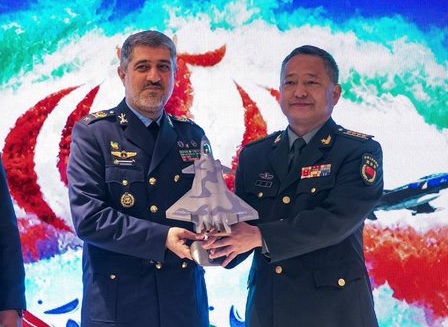
TEHRAN : In a highly publicized diplomatic and military exchange, the Chinese military attaché to Iran presented a scale model of the Chengdu J-20 "Mighty Dragon" stealth fighter to Brigadier General Bahman Behmard, Commander of the Islamic Republic of Iran Air Force (IRIAF). The presentation, which occurred during Iran's Air Force Day commemorations on February 10, 2026, has prompted immediate strategic analysis regarding a potential shift in the Middle Eastern balance of air power.
While no official procurement contract has been announced, the handover of the model is viewed as a calculated signal from Beijing. It indicates either a potential reassessment of China’s strict non-export policy regarding its premier fifth-generation fighter, or a deliberate geopolitical message intended to challenge the current air dominance held by the United States and Israel in the region.
The Contrast to the June 2025 Conflict
The prospect of Iran acquiring the J-20 fundamentally addresses the vulnerabilities exposed during the intensive 12-day conflict in June 2025. During that period, United States and Israeli air forces—utilizing advanced fifth-generation assets such as the F-35 and F-22, alongside B-2 stealth bombers—operated within Iranian airspace with minimal airborne resistance.
In missions such as the US-led "Operation Midnight Hammer" on June 22, 2025, allied strike packages faced virtually no challenge from the IRIAF. Iran's legacy fleet, consisting largely of aging US-made F-14s and Soviet-era airframes, lacked the sensor capabilities to detect or engage modern stealth platforms, granting allied forces uncontested access to strike high-value military and nuclear sites once ground-based defenses were neutralized.
Tactical Implications of a J-20 Acquisition
If the IRIAF were to integrate the J-20 into its operational fleet, the operational freedom previously enjoyed by the US and Israel would be severely restricted. The J-20 is a heavy, twin-engine stealth fighter designed specifically for air superiority and long-range interception. Its presence would complicate allied strike planning in several critical ways:
-
Denial of Uncontested Airspace: The J-20 is equipped with advanced Active Electronically Scanned Array (AESA) radars and modern sensor fusion. Unlike legacy Iranian fighters, a J-20 patrol could detect and track incoming strike packages, forcing stealth fighters like the F-35 into complex air-to-air engagements rather than unopposed bombing runs.
-
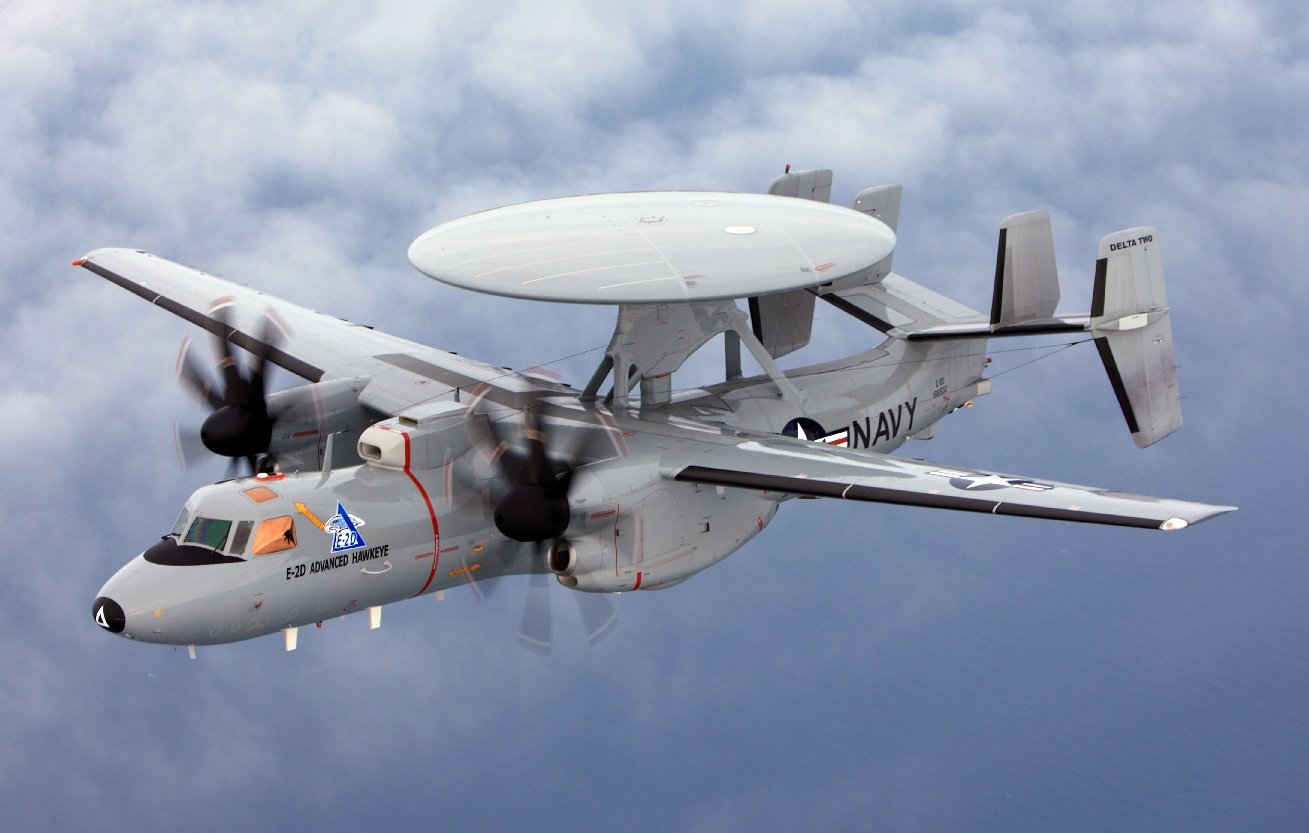
Threat to Critical Support Assets: Designed with a large internal payload, the J-20 carries long-range beyond-visual-range air-to-air missiles (BVRAAMs), such as the PL-15. This capability allows the aircraft to bypass front-line fighters and target critical, non-stealthy support assets like aerial refueling tankers and airborne early warning (AWACS) aircraft, which are vital for sustaining US and Israeli long-range missions.
-
Increased Escort Requirements: To mitigate the threat of an airborne stealth interceptor, future strikes inside Iran would require a significantly higher ratio of dedicated air-to-air escort fighters. This would reduce the overall bomb-carrying capacity of a mission and drastically increase the logistical and strategic risk for allied forces.
Export Policy and Strategic Messaging
Historically, Beijing has strictly prohibited the export of the J-20 to protect its sensitive proprietary stealth technologies, mirroring the US ban on exporting the F-22 Raptor. Previously, China has only offered the lighter FC-31 (J-35) stealth fighter for international export.
If China proceeds with a J-20 transfer to Iran, it represents a major paradigm shift in its defense export policy and a direct counter to the ongoing US military posture
——— End of Article ———