WASHINGTON / TEHRAN : Unconfirmed intelligence reporting circulating among regional security officials and defense analysts indicates that China may have covertly transferred DF-21D anti-ship ballistic missiles to Iran, a development that, if substantiated, would represent a significant shift in the military balance of the Middle East and the northern Indian Ocean.
Neither Beijing nor Tehran has acknowledged the reports, and U.S. officials have so far declined public comment. However, multiple analysts say the possibility is being treated seriously within Western and regional defense circles due to the strategic implications of the DF-21D system and Iran’s longstanding effort to expand its anti-access capabilities.
Nature of the Alleged Transfer
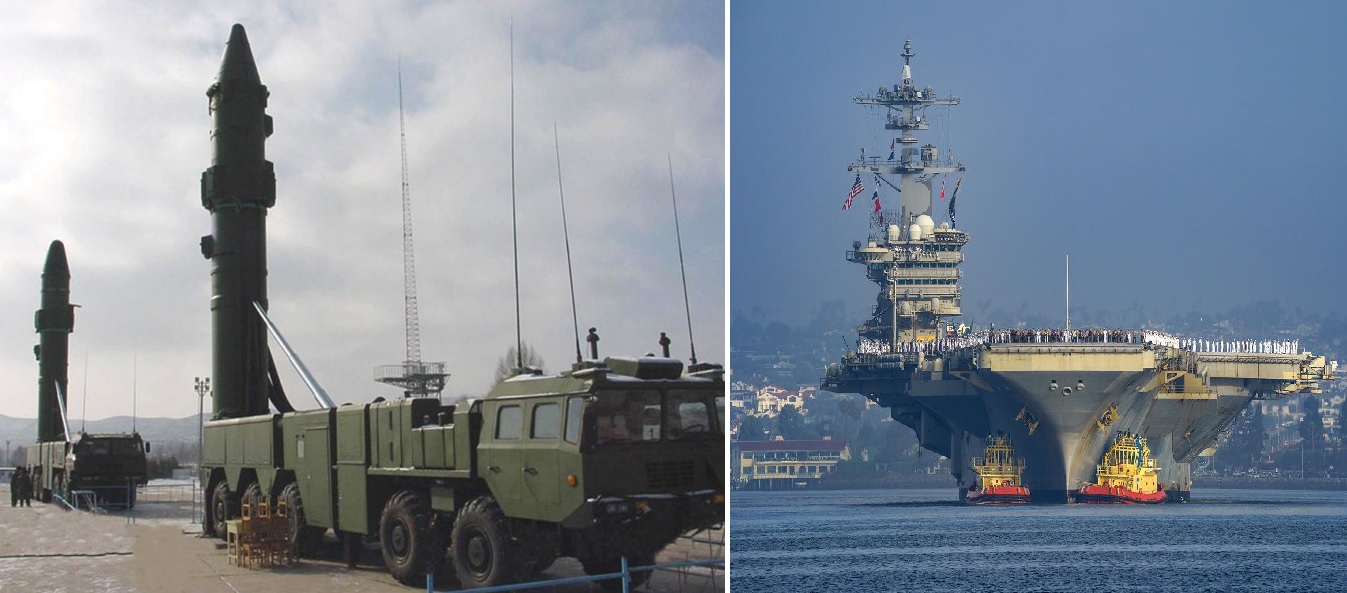
The DF-21D is a Chinese-developed medium-range ballistic missile optimized for maritime strike missions rather than air defense or land attack. Often mischaracterized as an air defense weapon, the system is specifically designed to target large surface combatants, including aircraft carriers, from land-based mobile launchers.
If Iran has acquired even a limited number of DF-21D missiles, it would mark the first known deployment of an operational anti-ship ballistic missile outside China, introducing a capability previously absent from Iran’s missile forces.
Technical Characteristics of the DF-21D
Open-source defense assessments describe the DF-21D as a road-mobile medium-range ballistic missile with an estimated range of approximately 1,500 to 1,700 kilometers. The missile is believed to reach hypersonic speeds during its terminal phase, exceeding Mach 10, and is equipped with a maneuverable re-entry vehicle.
Unlike conventional ballistic missiles that follow a fixed trajectory, the DF-21D warhead can adjust its path during descent, allowing it to engage moving maritime targets. Guidance is thought to rely on a combination of inertial navigation and terminal active radar, potentially supported by off-board sensors such as satellites, maritime patrol aircraft, or unmanned systems.
The payload is assessed to be a conventional high-explosive warhead intended to disable or mission-kill large naval vessels rather than sink them outright.
Implications for U.S. Naval Operations
The reports have focused particular attention on the USS Abraham Lincoln Carrier Strike Group, which has been operating in and around the Middle East region amid heightened tensions. U.S. aircraft carriers form the core of American power projection, but their effectiveness depends on operating within range of their embarked aircraft.
Carrier-based strike aircraft such as the F-35C and F/A-18E/F typically have combat radii of roughly 800 to 1,000 kilometers without extensive aerial refueling. To conduct sustained operations against targets inside Iran, a carrier would need to operate well within the alleged engagement envelope of the DF-21D.
Analysts note that this creates a potential operational constraint rather than an immediate tactical threat. The presence of long-range anti-ship ballistic missiles would force U.S. naval planners to either operate carriers at greater distances, rely more heavily on land-based aircraft and submarines, or devote additional resources to missile defense and counterstrike missions.
Missile Defense and Saturation Concerns
U.S. Navy surface combatants are equipped with layered missile defense systems, including SM-3 and SM-6 interceptors integrated into the Aegis Combat System. These defenses are designed to counter ballistic and cruise missile threats, but their effectiveness depends on detection time, tracking quality, and the number of incoming targets.
Defense analysts emphasize that the principal challenge posed by systems like the DF-21D is not a single missile but the possibility of coordinated launches. A salvo involving multiple ballistic and cruise missiles from different vectors could complicate interception efforts, particularly in confined maritime environments such as the Persian Gulf.
Regional Anti-Access Strategy
Iran has invested heavily over the past two decades in an anti-access/area denial (A2/AD) strategy aimed at limiting the freedom of action of technologically superior adversaries. This approach has relied on layered defenses combining ballistic missiles, cruise missiles, naval mines, fast attack craft, submarines, and unmanned systems.
The addition of an anti-ship ballistic missile with the range attributed to the DF-21D would significantly extend the reach of this strategy beyond the Persian Gulf into the Arabian Sea and approaches to the Strait of Hormuz, through which a substantial portion of the world’s seaborne energy supplies transit.
Verification and Uncertainties
At present, the reports remain unverified. Key uncertainties include whether any missiles have actually been transferred, whether Iran possesses the supporting sensor and targeting infrastructure required to employ the DF-21D effectively, and whether Chinese authorities would be willing to export such a strategically sensitive system.
Defense specialists caution that possession of the missile alone does not guarantee operational capability. Effective use would require reliable real-time targeting data, secure communications, trained personnel, and integration into Iran’s command-and-control networks.
Strategic Significance
If confirmed, the transfer would raise broader questions about China’s role in Middle Eastern security dynamics and its willingness to provide advanced military capabilities that directly challenge U.S. naval dominance. For Iran, it would represent a qualitative leap in deterrence rather than a tool for routine military use.
For now, U.S. and allied militaries are expected to continue monitoring for indicators of deployment or testing, while maintaining existing force protection measures. The situation underscores the growing importance of long-range precision strike and missile defense in shaping future naval operations in contested regions.
——— End of Article ———