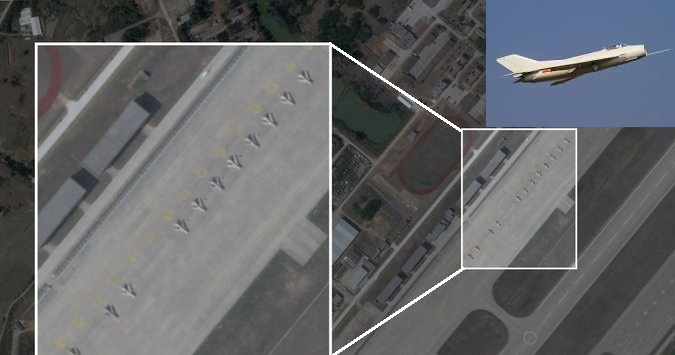
TAIPEI / HONG KONG — March 27, 2026: China has deployed more than 200 converted Cold War-era Shenyang J-6 fighter jets, now configured as unmanned attack drones, across six airbases near the Taiwan Strait, according to a recent assessment by the Mitchell Institute for Aerospace Studies. The development highlights an expanding focus by the People’s Liberation Army (PLA) on high-volume, cost-asymmetric capabilities in a potential regional contingency.
Forward Deployment Confirmed by Satellite Imagery
Analysis of commercial satellite imagery published in the institute’s February 2026 China Airpower Tracker indicates that the aircraft are stationed at five airbases in Fujian province and one in Guangdong province. These installations are located close to the median line of the Taiwan Strait, allowing for rapid sortie generation and minimal warning time in the event of an operational deployment.
Imagery shows rows of swept-wing aircraft positioned on aprons and runways at forward المواقع, including Longtian Air Base in Fujian. The positioning places the platforms within immediate operational range of Taiwan and nearby maritime areas.
Conversion of Legacy Fighters into Unmanned Platforms
The Shenyang J-6, originally introduced in the 1960s as a Chinese-produced variant of the Soviet MiG-19, has been retired from frontline crewed service for decades. Under the current program, these aircraft have been converted into unmanned systems, designated J-6W.
Modifications include the integration of automated flight control systems and terrain-matching navigation technology, enabling the aircraft to operate without onboard pilots. In many configurations, internal gun systems have been removed to accommodate additional electronics and mission equipment while retaining the original propulsion and structural framework.
Military analysts estimate that more than 500 J-6 airframes have undergone conversion into unmanned variants, indicating that the current deployment represents only a portion of the available inventory.
Intended Operational Role and Employment Concept
According to J. Michael Dahm, senior fellow at the Mitchell Institute and a former U.S. naval intelligence officer, the PLA is expected to employ these platforms in a role analogous to cruise missiles during the initial stages of a potential conflict.
Rather than functioning as traditional remotely piloted UAVs, the J-6W drones are designed to be launched in large numbers as disposable, high-speed strike or decoy platforms. Their use in mass formations is intended to saturate and overwhelm air defense systems operated by Taiwan, the United States, or regional allies.
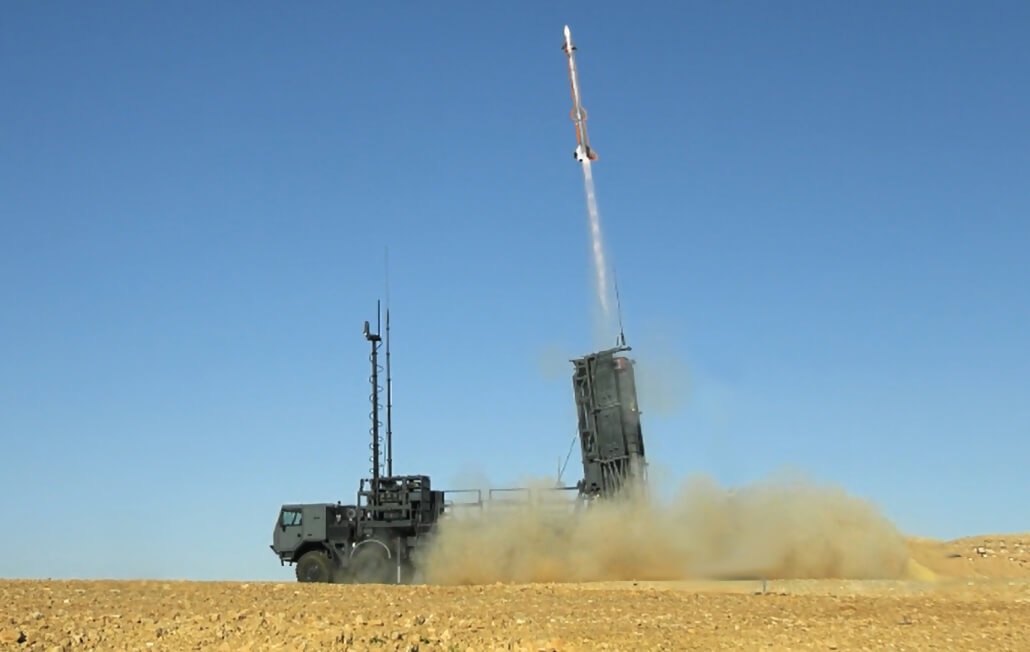
This approach reflects a deliberate cost-asymmetry strategy. By deploying relatively low-cost, repurposed aircraft, the PLA can compel defenders to expend significantly more expensive interceptor missiles. Given the supersonic speed and size of the J-6 airframe, conventional low-cost counter-drone systems are generally insufficient, increasing reliance on advanced surface-to-air missile systems.
Technical Characteristics of the J-6 Platform
The J-6 is a twin-engine, supersonic fighter aircraft powered by two Liming Wopen WP-6A afterburning turbojet engines, each producing approximately 36.78 kN (8,267 lbf) of thrust. Despite its age, the platform retains performance characteristics relevant to an unmanned strike role.
Key specifications include a length of approximately 12.5 to 14.6 metres, a wingspan of around 9 to 9.2 metres, and a height of about 3.9 metres. The aircraft has a wing area of 25.16 square metres and an empty weight ranging between 5,172 and 5,447 kilograms.
Maximum takeoff weight varies between 7,560 and 8,832 kilograms, with some configurations capable of approaching 10,000 kilograms when carrying external stores. The J-6 can reach speeds of up to 1,540 km/h (Mach 1.45) and operates at a service ceiling between 17,600 and 17,900 metres.
In its original crewed configuration, the aircraft was equipped with three 30 mm cannons and four underwing pylons capable of carrying up to 500 kilograms of ordnance, including unguided bombs and rocket pods. These payload capabilities can be adapted for use in the unmanned variant depending on mission requirements.
Strategic Implications and Defensive Considerations
The deployment underscores a broader PLA effort to integrate large numbers of attritable systems into its operational planning. By combining volume, speed, and payload capacity, the J-6W provides a means to conduct saturation attacks designed to degrade opposing air defense networks in the early phases of a conflict.
Taiwan’s Ministry of National Defense is monitoring the situation, while domestic research institutions, including the Institute for National Defence and Security Research, have identified the converted drones as a distinct logistical and operational challenge.
Taiwan is reportedly pursuing countermeasures that include enhancements in electronic warfare capabilities and the development of advanced interception systems. These systems are intended to improve target discrimination, allowing defenders to differentiate between expendable drone platforms and higher-value threats such as advanced combat aircraft or precision-guided munitions.
Broader Context of PLA Modernization
The use of converted J-6 platforms reflects a layered approach within China’s airpower strategy, where legacy systems are repurposed to complement modern assets such as stealth fighters and long-range strike capabilities. By employing older airframes in high-risk roles, the PLA can preserve advanced platforms for follow-on operations once opposing defenses have been weakened.
No official statement has been issued by Chinese authorities regarding the deployment or the operational role of the J-6W drones. However, the scale, positioning, and technical adaptation of these aircraft indicate a deliberate effort to expand operational flexibility and introduce cost-efficient methods of contesting air superiority in the Taiwan Strait region.
——— End of Article ———