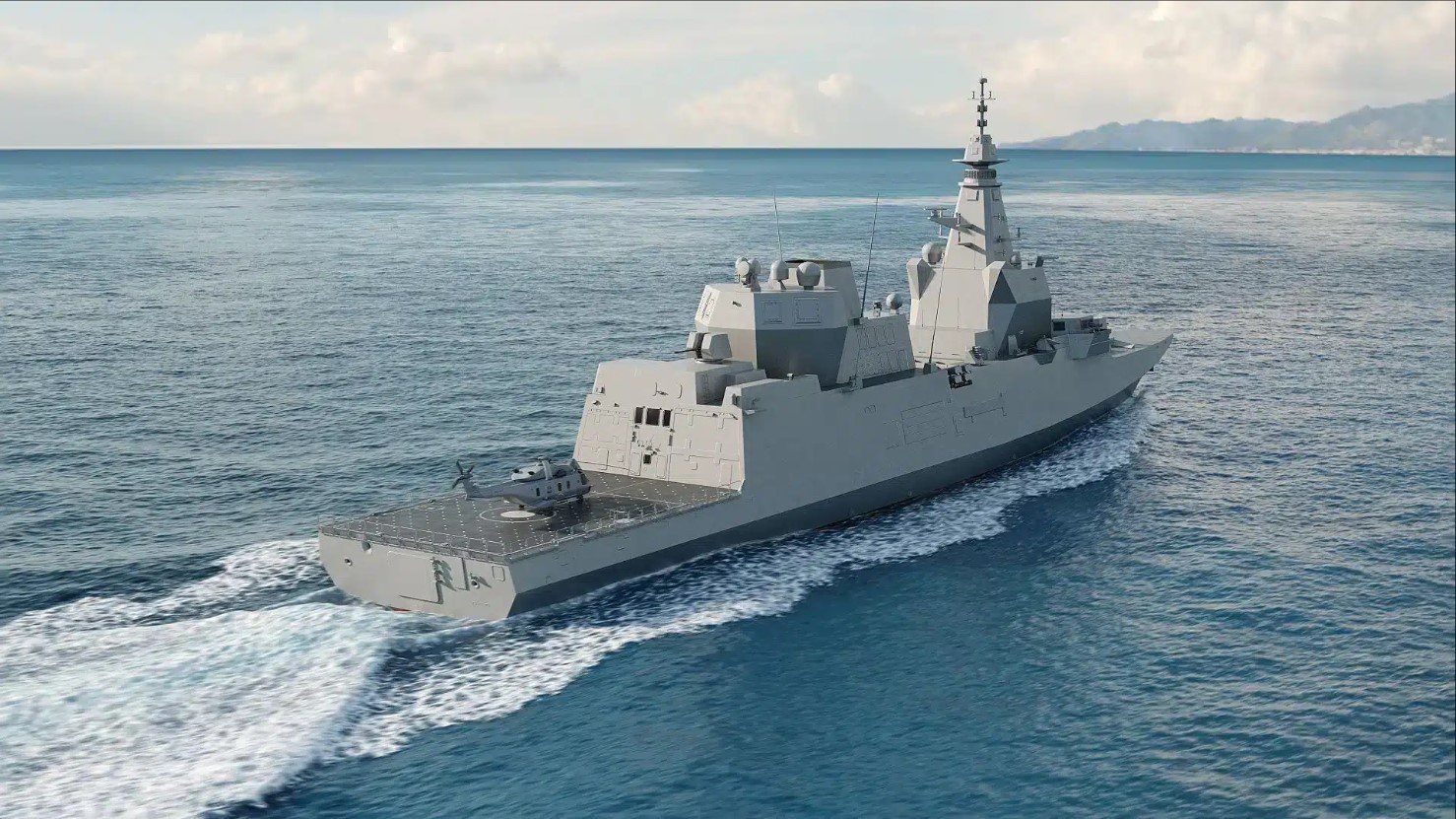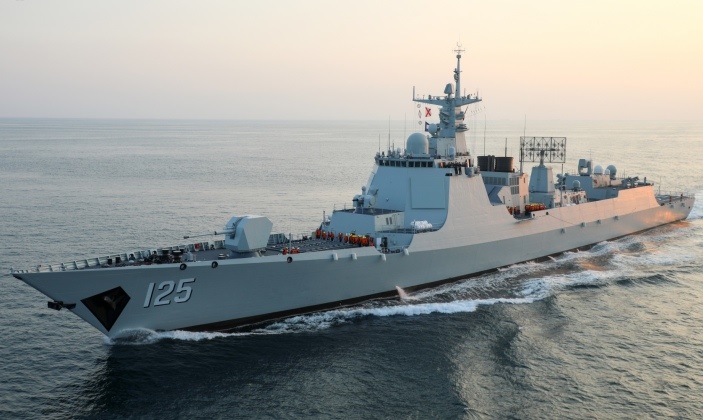
Beijing: The Chinese People’s Liberation Army Navy (PLA Navy) has commissioned a new upgraded guided-missile destroyer, underscoring the rapid pace of China’s naval expansion as it seeks to narrow the gap with United States naval power. Official Chinese media reported on Friday that the newly inducted Type 052D destroyer, named Loudi, incorporates enhanced radar, weapons and networked combat systems, significantly boosting its operational capability.
According to state-run coverage, Zhang Shengwei, a crew member aboard the Loudi, said the warship adopts a new combat system architecture, enabling stronger air-defence, sea-strike and task-force command capabilities. He noted that the destroyer is designed not only for long-range offensive strike missions, but also for escort and area-air-defence roles, allowing it to protect friendly vessels during high-intensity naval operations.
Type 052D: Backbone of China’s Modern Destroyer Fleet
The Type 052D guided missile destroyer is regarded as the mainstay of China’s modern surface combat fleet. The class is equipped with active electronically scanned array (AESA) radar, vertical launch systems for surface-to-air, anti-ship and land-attack missiles, and advanced command-and-control networks that allow seamless integration into carrier strike groups and joint naval task forces.
With the commissioning of Loudi, the PLA Navy continues to standardise and upscale its frontline destroyer force, strengthening its ability to conduct blue-water operations, enforce maritime claims, and project power across the Indo-Pacific region.
Fleet Growth at a ‘One-Ship-a-Month’ Tempo
Military observers say the addition of Loudi highlights the feverish speed at which China is expanding its navy, with estimates suggesting the country is adding roughly one major warship every month. A recent BBC report noted that China has already become the world’s largest navy by ship count, operating 234 warships, compared with the US Navy’s 219 vessels.
Between 2019 and 2023, China’s four largest shipyards — Dalian Shipyard, Guangzhou Shipyard, Jiangnan Shipyard and Hudong-Zhonghua Shipyard — produced 39 warships with a combined displacement of approximately 550,000 tonnes, according to a study by the Centre for Strategic and International Studies (CSIS).
2025 Sees Major Additions Including Aircraft Carrier Fujian
With the induction of Loudi, China has added 11 combat vessels in 2025 alone, a list that includes its newest and most advanced aircraft carrier, Fujian. The rapid commissioning of surface combatants, carriers and support ships reflects Beijing’s ambition to build a world-class navy capable of sustained operations far from home waters.
China’s Naval Exports Strengthen Pakistan’s Fleet
Alongside domestic fleet expansion, China is also exporting advanced naval platforms to close partners. Last month, Beijing launched the fourth Hangor-class submarine for the Pakistan Navy, named Ghazi. It is the second Pakistani submarine to carry the name, recalling the original PNS Ghazi, which was destroyed near Visakhapatnam during the 1971 India-Pakistan war.
Pakistan has signed an agreement with China for the acquisition of eight Hangor-class submarines, with the first three already launched. The programme is expected to significantly enhance Pakistan’s undersea warfare capability, while further cementing China’s role as a key defence supplier in South Asia.
Strategic Implications
The commissioning of Loudi reinforces the trajectory of the PLA Navy’s transformation from a coastal defence force into a globally deployable maritime power. As China continues to add destroyers, carriers and submarines at record speed, analysts warn that the naval balance in the Indo-Pacific is shifting steadily, with long-term implications for regional security and US-China military competition.
——— End of Article ———