WASHINGTON, June 23, 2026 — Boeing has been awarded a $121.2 million cost-plus-fixed-fee contract by the U.S. Department of War to upgrade nine P-8A Poseidon maritime patrol aircraft to the latest Increment 3 Block 2 (I3B2) configuration. The contract, issued through the Naval Air Systems Command (NAVAIR), will enhance the aircraft's anti-submarine warfare, maritime surveillance, and surface target tracking capabilities.
The contract, valued at $121,195,041, includes the procurement of nine Increment 3 Block 2 retrofit A-kits. These kits provide the structural and electronic modifications required to support the upgraded mission system, including new airframe racks, radomes, antennas, sensors, and wiring.
Of the nine A-kits being procured, six are allocated to the U.S. Navy and three to the Royal Australian Air Force (RAAF). Boeing will also install three A-kits and associated government-furnished B-kits on U.S. Navy aircraft. The B-kits contain the advanced mission computers, radios, sensors, and communications equipment that enable the new capabilities.
In addition, the contract includes non-recurring engineering efforts to address supply chain challenges, diminishing manufacturing sources, and material shortages affecting long-term fleet sustainment.
Increment 3 Block 2 Modernization
The Increment 3 Block 2 upgrade represents one of the most significant capability enhancements introduced to the P-8A Poseidon fleet since the aircraft entered operational service.
Key improvements include:
-
Wideband Satellite Communications (SATCOM): Enables secure, high-data-rate communications across extended distances, allowing real-time information sharing with ships, submarines, aircraft, and command centers.
-
Advanced Combat System: Incorporates improved computer processing, enhanced cybersecurity architecture, and a modernized track management system.
-
Enhanced Anti-Submarine Warfare Capabilities: Adds upgraded acoustic processing systems, new antennas, and improved signals intelligence capabilities for detecting and tracking advanced submarine threats.
-
Expanded Network Integration: Allows the aircraft to operate as a connected node within the broader naval command-and-control network.
These upgrades are designed to improve the aircraft's effectiveness against increasingly quiet and sophisticated submarines while strengthening its role in distributed maritime operations.
Backbone of Maritime Patrol Operations
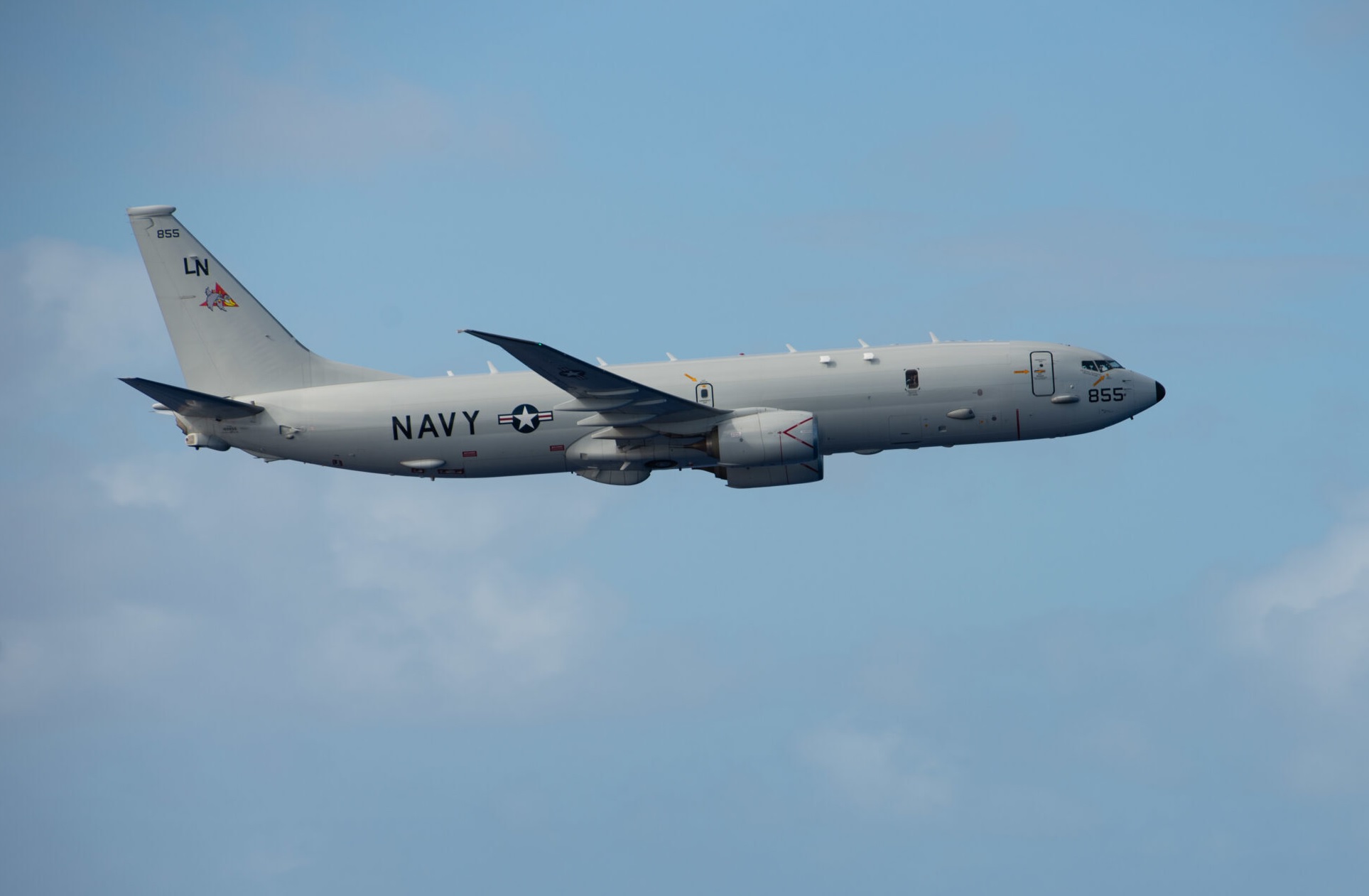
Based on the Boeing 737-800 airframe, the P-8A Poseidon serves as the primary maritime patrol, reconnaissance, and anti-submarine warfare aircraft of the U.S. Navy. The platform began replacing the aging P-3 Orion fleet in 2013 and has since become a cornerstone of maritime surveillance operations.
The aircraft is capable of carrying Mk 54 torpedoes, AGM-84 Harpoon anti-ship missiles, and advanced sonobuoys. With a ferry range of up to 7,500 nautical miles, it can conduct long-duration missions across vast ocean areas while supporting intelligence, surveillance, reconnaissance, anti-surface warfare, and anti-submarine warfare operations.
Program Reaches Operational Milestone
The contract follows a major milestone for the modernization program. On April 24, 2026, the U.S. Navy declared Initial Operational Capability (IOC) for the Increment 3 Block 2 configuration following successful testing conducted by Air Test and Evaluation Squadron One (VX-1).
The IOC declaration confirms that designated operational units have completed training and are authorized to conduct missions using the upgraded system.
The Navy plans to retrofit its entire fleet of approximately 130 P-8A aircraft as part of its long-term modernization strategy.
Strengthening U.S.-Australia Maritime Cooperation
Australia's participation in the program highlights ongoing efforts to improve interoperability between allied maritime forces, particularly in the Indo-Pacific region.
The Royal Australian Air Force currently operates 14 P-8A Poseidon aircraft from RAAF Base Edinburgh and has already begun upgrading its fleet to the Increment 3 Block 2 standard. The Australian government is contributing approximately $20.1 million toward this contract.
The standardized configuration will allow U.S. and Australian forces to share data more effectively and conduct coordinated maritime operations across strategically important sea lanes.
Work Locations and Funding
Most of the contract work will be performed at Boeing's facility in Jacksonville, Florida, which will account for approximately 80 percent of the effort. Additional work will take place in:
- St. Louis, Missouri (11%)
- Mesa, Arizona (9%)
Funding for the award includes $92.8 million from Fiscal Year 2026 U.S. Navy aircraft procurement accounts and $8.3 million from expiring Fiscal Year 2024 Navy procurement funds.
All work under the contract is scheduled for completion by May 2029.
Fleet Modernization Effort
The Increment 3 Block 2 program forms a key part of the U.S. Navy's effort to maintain the P-8A Poseidon's effectiveness against evolving maritime threats. By introducing enhanced networking, processing power, communications, and anti-submarine warfare capabilities, the upgrade will ensure the aircraft remains a critical asset for maritime domain awareness and naval operations for years to come.
For both the U.S. Navy and the Royal Australian Air Force, the modernization effort will strengthen long-range surveillance, improve coordination across allied forces, and enhance the ability to monitor and respond to underwater and surface threats across the world's most strategically important maritime regions.
——— End of Article ———