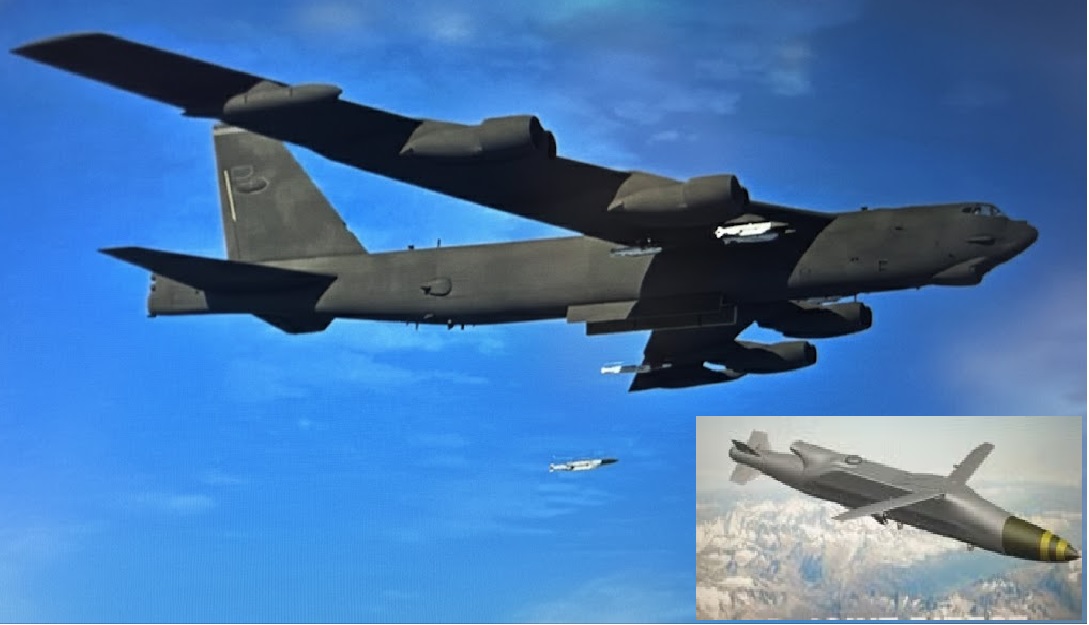
SAN DIEGO : Boeing has presented updated payload configurations and integration details for its Joint Direct Attack Munition Long Range (JDAM LR) at the WEST 2026 conference, outlining how the system can be deployed from U.S. strategic bombers for maritime strike and offensive mining missions.
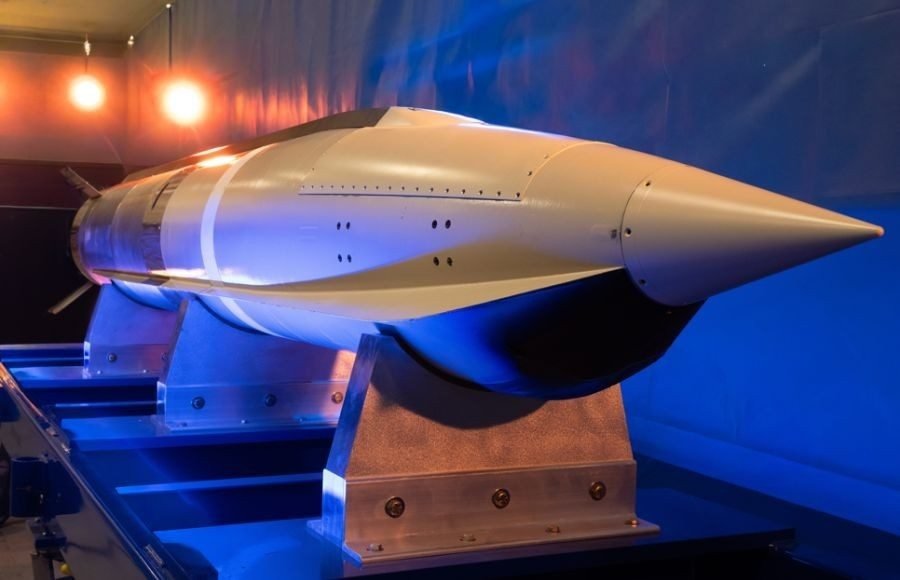
The JDAM LR, previously referred to as the Powered JDAM, builds upon the standard Joint Direct Attack Munition architecture by incorporating a turbojet engine and a wing kit onto the existing Mark 82 500-pound warhead. The addition of powered flight transforms the conventional gravity bomb into a long-range, precision-guided munition capable of engaging targets at distances of up to 300 nautical miles.
Expanded Carriage Capacity on Legacy Bombers
During technical briefings and video demonstrations at WEST 2026, Boeing detailed how the JDAM LR can be integrated onto legacy bomber platforms to increase overall munition density while maintaining standoff range.
The B-52H Stratofortress can carry up to 20 JDAM LR munitions in a single configuration. Eight weapons are housed within the aircraft’s internal conventional rotary launcher, while 12 additional munitions can be mounted on external wing pylons.
The B-1B Lancer can carry up to 30 JDAM LR munitions. This configuration uses three internal rotary launchers along with external hardpoints. Boeing indicated that this payload density approaches that of larger cruise missiles such as the AGM-158 JASSM, while relying on existing bomb bodies and JDAM guidance kit production lines.
Company representatives described the concept as “affordable mass,” emphasizing the ability of bomber aircraft to deploy significant numbers of precision-guided munitions during a single sortie.
Modular Architecture and Mission Variants
Boeing stated that the JDAM LR has been designed with a modular architecture to support multiple operational roles beyond conventional land attack.
For maritime strike missions, the system is optimized to target surface vessels from extended standoff ranges. The powered flight capability allows launch aircraft to remain outside contested air defense envelopes while engaging naval targets.
The Quickstrike configuration is designed for offensive aerial mining operations. In this role, the JDAM LR can deploy aerially delivered mines into contested maritime areas. The extended range addresses limitations associated with traditional mining methods, which require aircraft to fly at low altitudes and in close proximity to target waters.
A decoy variant has also been developed. By removing the warhead to reduce weight and increasing fuel capacity, the munition’s range can be extended to approximately 700 nautical miles. In this configuration, the system is intended to function as a long-endurance decoy to complicate and saturate adversary air defense systems.
Strategic Role in the Indo-Pacific
Boeing’s presentation highlighted the relevance of the JDAM LR for operations in anti-access, area-denial (A2/AD) environments. The 300-nautical-mile standoff range allows aircraft to deliver precision effects while remaining beyond the reach of many surface-to-air missile systems.
The Quickstrike mining variant was identified as particularly applicable to maritime chokepoint control and sea-denial missions in the Indo-Pacific region. By enabling large-scale minefield deployment from extended distances, the system provides a method to influence maritime access without requiring aircraft to enter heavily defended airspace.
Boeing officials stated in previous technical discussions that the objective is to adapt a proven munition framework for use in contested environments by integrating existing components rather than developing an entirely new missile platform.
Production and Procurement Considerations
The formal transition from the “Powered JDAM” designation to JDAM LR aligns with broader Pentagon efforts to expand procurement of standoff weapons. By leveraging established production lines for the Mark 82 bomb body and JDAM guidance kits, Boeing indicated that the system can be manufactured at scale more rapidly than ground-up cruise missile designs.
This approach addresses ongoing concerns about munition inventories and the need for increased production capacity in potential high-intensity theaters. The reliance on mature components and existing supply chains is intended to support accelerated fielding timelines while maintaining cost efficiency.
Boeing stated that the JDAM LR program remains focused on scalable production, platform integration, and multi-mission adaptability as part of its broader precision-strike portfolio.
——— End of Article ———