SEATTLE, — June 09, 2026 : Boeing announced on June 3, 2026, that it has completed the first phase of flight testing for the upgraded Remote Vision System (RVS) 2.0 on the KC-46A Pegasus aerial refueling tanker, marking a major step toward resolving one of the aircraft’s most significant technical deficiencies ahead of a planned fleet-wide retrofit beginning in 2027.
The upgrade is designed to address long-standing issues with the original Remote Vision System, which allows boom operators to conduct aerial refueling using cameras and displays instead of a direct-view observation window. The U.S. Air Force classified the original system as a Category 1 deficiency due to problems involving depth perception, image distortion, and sensitivity to changing lighting conditions. In some situations, including direct sunlight and low-light operations, the system could experience image washout, increasing the risk of boom contact with receiver aircraft.
To overcome these issues, Boeing developed RVS 2.0, a completely redesigned hardware and software system. The new configuration includes six cameras, consisting of visible-spectrum and long-wave infrared sensors, along with additional high-definition cameras to improve depth perception. The system feeds data to a redesigned operator station equipped with a 4K Ultra High-Definition 3D display, providing a clearer and more realistic view during refueling operations.
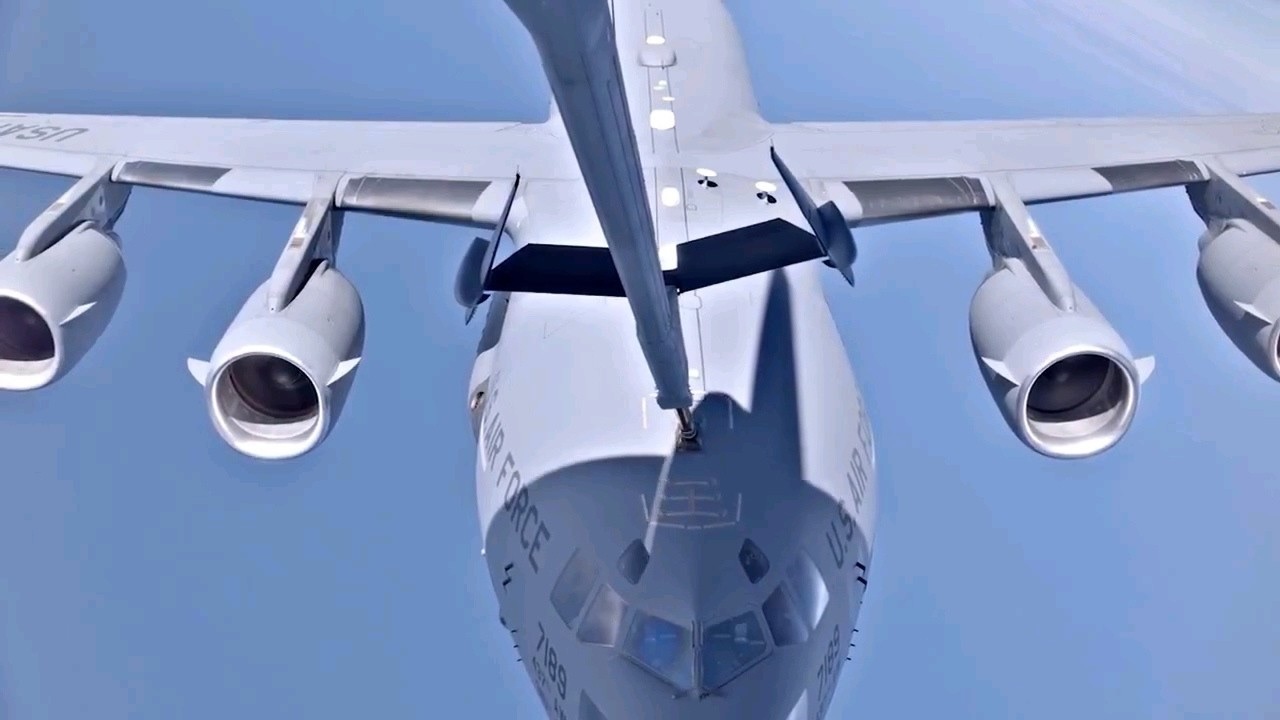
According to Boeing, the completed testing phase validated the performance of the upgraded cameras, image-processing hardware, and control systems. Flight-test footage released by the company showed the modified KC-46A successfully conducting boom contacts with multiple aircraft, including another KC-46A, an RC-135 Rivet Joint, and a C-17 Globemaster III. Simulated refueling operations with a T-38 Talon were also carried out.
The flight-testing campaign follows earlier evaluations conducted in January 2026, when the U.S. Air Force’s 418th Flight Test Squadron supported testing at the Mugu Sea Test Range to assess sensor performance under rapidly changing lighting conditions.
With the first phase now complete, Boeing, the U.S. Air Force, and the KC-46 Joint Program Office will move forward with formal certification activities before beginning fleet-wide installation of RVS 2.0 in 2027.
The progress comes as Boeing and the Air Force continue broader efforts to improve the KC-46A program. In May 2026, both organizations launched a coordinated initiative focused on accelerating RVS 2.0 certification, improving fleet readiness, and increasing aircraft availability. Engineers are also working to resolve other Category 1 deficiencies, including issues related to the refueling boom and nozzle disconnect mechanisms.
As of February 2026, Boeing had delivered 103 KC-46A Pegasus aircraft to the U.S. Air Force. Despite years of technical challenges and significant cost overruns, the KC-46A remains central to the Air Force’s long-term tanker modernization plan and is expected to gradually replace approximately 370 KC-135 Stratotankers currently in service.
The successful completion of the first phase of RVS 2.0 flight testing represents an important milestone toward improving the operational capability and reliability of the KC-46A fleet before retrofit work begins in 2027.
——— End of Article ———