WASHINGTON — April 16, 2026 : The United States Navy has selected the Blackbeard hypersonic missile, developed by defense technology startup Castelion, as the first weapon candidate under its Multi-mission Affordable Capacity Effector (MACE) program, marking a significant step in the service’s effort to field affordable, high-volume precision strike systems.
The Navy confirmed on April 15, 2026, to defense reporter Colby Badhwar that a $49,998,005 firm-fixed-price Small Business Innovation Research (SBIR) Phase III contract awarded to Castelion on February 25, 2026, is dedicated to advancing the MACE initiative. The contract funds full-scale prototype development, flight testing, and early operational fielding of the Blackbeard missile through November 2027, with primary work conducted at the company’s headquarters in Torrance, California.
The confirmation identifies Blackbeard as the first concrete missile system selected under MACE since the program was initially disclosed in 2024, concluding a period of limited visibility following the early requirements phase.
Program Origins and Requirements
The MACE program originated from a Naval Air Systems Command Request for Information issued in February 2024. The Navy sought a modular, air-launched stand-off weapon designed to enhance the survivability of manned aircraft operating against advanced air defense systems.
MACE is structured as a miniature cruise missile intended to complement the AGM-158C Long Range Anti-Ship Missile (LRASM). The requirement specifies a range exceeding 370 kilometers, comparable to LRASM’s unclassified range. LRASM is derived from the AGM-158B JASSM-ER platform, which has an operational range of approximately 925 kilometers.
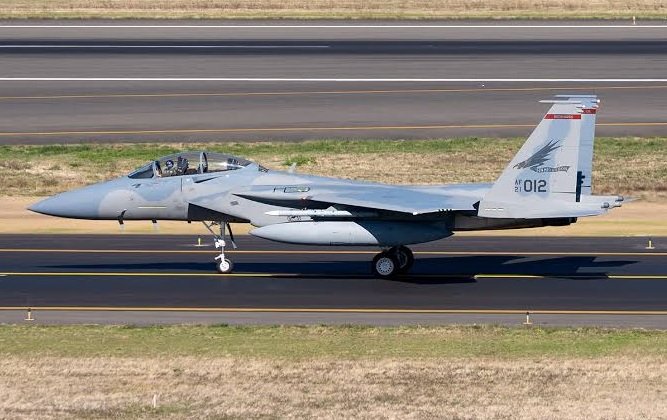
The system is subject to strict dimensional and weight constraints. The primary launch platform is the F/A-18E/F Super Hornet, which is expected to undergo near-term flight testing to validate carrier-based integration. The objective requirement further mandates that four all-up rounds must be carried internally within the weapons bays of both the F-35A and F-35C variants.
Each missile is required to carry a 75-pound (34-kilogram) warhead, which will be integrated by the government, and must incorporate terminal guidance capable of engaging moving targets, including maritime threats. The design must adhere to digital engineering practices and Weapons Open System Architecture (WOSA) standards, allowing for modular payloads and sensor integration without disrupting production.
The Navy has established a unit cost ceiling of $300,000 per missile and a minimum annual production objective of 500 units. These parameters position MACE in a similar operational category to the U.S. Air Force’s Extended Range Attack Munition (ERAM). The program emphasizes the use of existing propulsion technologies and mature subsystems to accelerate development timelines and reduce technical risk.
Blackbeard System Development
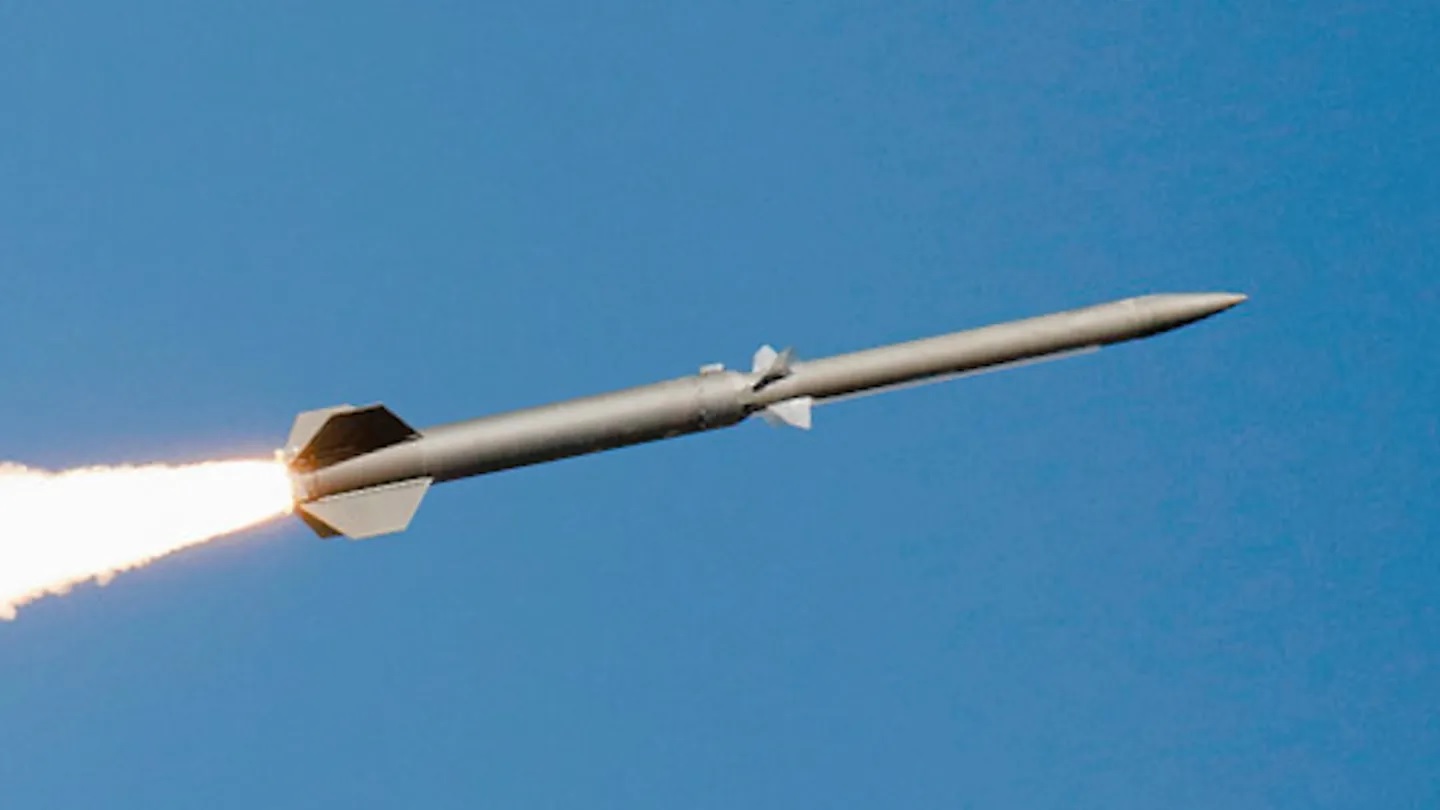
Castelion, founded in 2022 by former SpaceX personnel Bryon Hargis, Sean Pitt, and Andrew Kreitz, developed the Blackbeard missile to operate at speeds exceeding Mach 5 while maintaining maneuverability within the atmosphere.
The missile is designed to support the Department of Defense’s “high-low mix” approach to hypersonic capabilities. Rather than replicating high-cost systems such as the Conventional Prompt Strike (CPS) or the Army’s Dark Eagle program, Blackbeard is intended to provide a lower-cost, high-volume option that bridges the capability gap between strategic hypersonic weapons and subsonic cruise missiles such as JASSM.
As of early April 2026, the Blackbeard program has completed more than 20 flight tests evaluating propulsion, aerodynamics, thermal protection, and control systems. The missile is designed to engage moving and hardened targets at ranges of several hundred kilometers.
A ground-launched variant is being developed in parallel for the U.S. Army, which is contributing $25 million to integrate the system with the M142 HIMARS and the Common Autonomous Multi-Domain Launcher (CAML). This joint-service applicability positions Blackbeard as a tactical strike system bridging conventional rocket artillery and theater-level hypersonic weapons.
Accelerated Acquisition Timeline
The MACE program is being executed under an accelerated acquisition framework. Following initial integration awards to Castelion by both the Army and Navy in October 2025, an aircraft integration contract was issued in November 2025, followed by an airframe development contract in January 2026.
The program is structured within the fiscal year 2026 Navy Research, Development, Test, and Evaluation (RDT&E) budget as a new start under the Precision Strike Weapons Development Program. It combines Other Transaction Authority mechanisms with fixed-price prototyping contracts to reduce administrative timelines and enable rapid development.
MACE is scheduled to transition to a formal Program of Record within fiscal year 2026. Early Operational Capability (EOC) is targeted for fiscal year 2027, with full flight envelope certification accelerated from fiscal year 2028 to fiscal year 2027.
Funding Structure and Procurement Plans
Total funding for the MACE program in fiscal year 2026 has reached $379 million. This includes a base request of $106 million, of which $60 million is allocated to airframe development and subsystem integration.
Congressional additions increased the funding by $140 million, while reconciliation funding contributed an additional $133 million. Within the reconciliation allocation, $44 million is designated for long-lead procurement items, and $89 million supports integration, range testing, and certification activities, including requirements associated with the Weapons Systems Explosives Safety Review Board.
For fiscal year 2027, the Navy has requested $156 million for the procurement of an initial batch of 353 MACE missiles. This results in an average unit cost of approximately $442,000, exceeding the program’s target threshold. Defense officials indicate that unit costs are expected to decline below $300,000 as production scales to the planned minimum of 500 units annually.
Industrial Expansion and Manufacturing Strategy
To support projected demand, Castelion has committed $220 million in private capital to develop “Project Ranger,” a 1,000-acre hypersonic manufacturing facility in Sandoval County, New Mexico.
The site is designed for vertically integrated production, incorporating in-house manufacturing of propulsion and guidance systems. All 21 planned structures at the facility are expected to become operational by the end of 2026.
Castelion’s industrial strategy is structured to enable production of thousands of missiles annually, leveraging combined procurement from the Navy and Army to stabilize output and reduce per-unit costs over time.
System Architecture and Integration
The MACE system is based on an all-up round architecture, integrating propulsion, guidance, control actuators, communications systems, and software into a single deployable unit. Warhead integration remains a government responsibility.
The design complies with Weapons Open System Architecture (WOSA) standards, enabling interchangeable seekers and payload configurations for different mission requirements. The missile is intended to remain compatible with existing aircraft interfaces and support infrastructure.
The selection of Blackbeard as the first MACE candidate advances the Navy’s approach to fielding cost-effective, scalable strike capabilities through rapid prototyping and early operational deployment.
——— End of Article ———