BENGALURU : In a major milestone for India’s private aerospace sector, Bengaluru-based deep-tech startup Nabhdrishti Aerospace has successfully completed the maiden ground test of its indigenously developed ND400 microjet engine, marking a rare domestic breakthrough in small gas-turbine propulsion technology.
The successful ignition and sustained run of the 400-newton thrust engine places Nabhdrishti among a small group of Indian private companies capable of designing, manufacturing and testing high-speed gas turbines—a domain historically dominated by foreign suppliers and state-run laboratories. Industry analysts say the development could significantly reduce India’s dependence on imported propulsion systems for unmanned aerial vehicles (UAVs), target drones, and future collaborative combat aircraft platforms.
A Homegrown Microjet
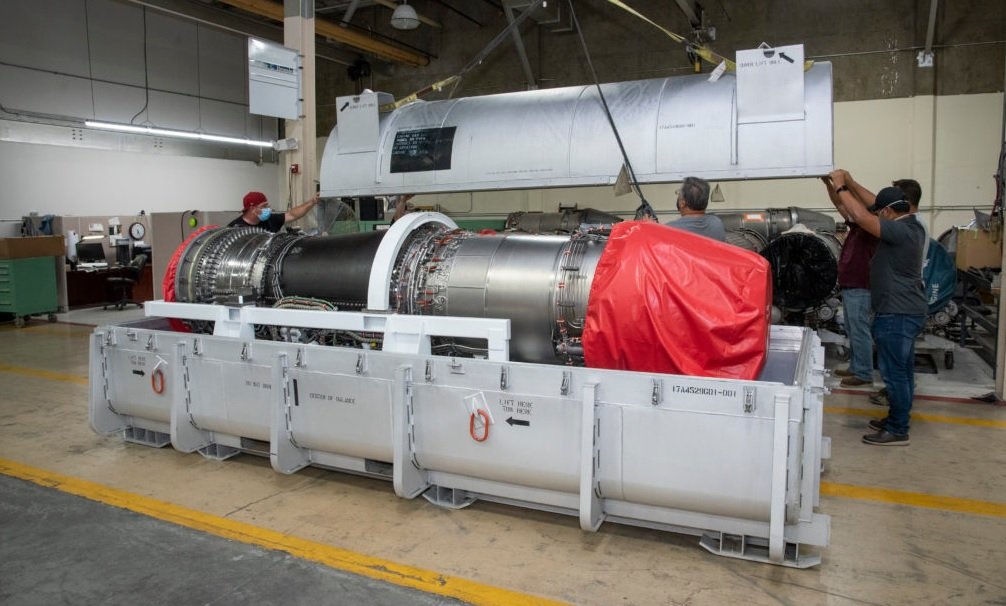
The ND400 is a compact micro gas turbine designed entirely on indigenous intellectual property, encompassing aerodynamic design, combustor architecture, and digital control systems. Engines in this thrust class are typically sourced from European or U.S. manufacturers, often subject to export controls, technology denial regimes, and long procurement timelines. By contrast, the ND400 has been designed, assembled, and tested in India, aligning closely with the government’s “Make in India” and “Atmanirbhar Bharat” initiatives in defence manufacturing.
During the maiden test, the engine reportedly achieved stable operation across its operating envelope, validating critical subsystems including the combustor, rotor dynamics, and thermal management systems. The engine is capable of operating at rotational speeds approaching 95,000 revolutions per minute, highlighting the engineering complexity involved in high-speed turbomachinery.
Lightweight, High-Performance Design
With a thrust rating of 400 newtons—roughly equivalent to 40 kilograms of force—the ND400 is optimized for lightweight aerial platforms where thrust-to-weight ratio is a decisive performance metric. The engine core weighs approximately 3.95 kilograms, while the complete propulsion system, including accessories, weighs about 5.2 kilograms.
A defining feature of the ND400 is its fuel-flexible combustor. Unlike many microturbines limited to aviation kerosene, the ND400 is engineered to operate on multiple fuels, including conventional jet fuel, diesel, and emerging sustainable alternatives such as liquefied natural gas (LNG) and hydrogen blends. This capability broadens the engine’s potential applications beyond aviation, particularly in remote, distributed, and off-grid power systems.
Strategic Significance for Indian Aerospace
For decades, India has made steady advances in airframes, avionics, and flight-control systems, but propulsion has remained the most challenging technological bottleneck. The successful test of the ND400 represents a tangible step toward closing this gap, especially in the rapidly expanding UAV market, where compact, efficient jet engines are increasingly in demand.
“Propulsion has always been the bottleneck in India’s aerospace ambitions,” said Rohit Chouhan, Co-founder and Chief Executive Officer of Nabhdrishti Aerospace. “With the ND400, we have demonstrated that Indian startups can design and validate complex gas-turbine systems. This is the first building block of a broader family of engines that can serve aviation, defence, and energy applications.”
Founders and Ecosystem Support
Nabhdrishti Aerospace was founded by Rohit Chouhan, Arjun Srivatsa, and Antanu Sadhu, engineers with prior experience at global aerospace leaders such as GE, Rolls-Royce, and India’s Defence Research and Development Organisation (DRDO). The company is incubated at the Indian Institute of Science (IISc), providing access to advanced research infrastructure and academic expertise in materials science, thermodynamics, and turbomachinery.
The startup recently closed a $3 million seed funding round, led by Accel, which it plans to deploy toward prototype scaling, manufacturing capability expansion, and certification and validation programmes.
Applications Beyond Flight
While UAV propulsion remains the ND400’s primary near-term focus, Nabhdrishti is positioning its core turbine technology as a dual-use platform. The company is developing a derivative system, the ND350, aimed at ground-based power generation. The variant is expected to deliver up to 275 kilowatts of electrical power, targeting industrial users, remote facilities, and decentralized energy grids.
The company is also evaluating hybrid-electric aviation architectures, where microturbines could serve as range extenders or onboard power generators for next-generation aircraft.
Next Phase of Development
Following the maiden test, Nabhdrishti Aerospace plans to manufacture multiple ND400 prototypes for endurance testing, environmental qualification, and eventual flight trials. While certification, long-cycle reliability, and production scaling remain key challenges, company officials say they are targeting operational deployment within India’s domestic UAV ecosystem in the coming years.
If successful, the ND400 programme could help anchor a broader indigenous propulsion supply chain, spanning precision manufacturing, high-temperature materials, and digital engine-control systems.
The achievement underscores a maturing Indian aerospace startup ecosystem, increasingly capable of tackling technologies once considered beyond the reach of private industry, and highlights the growing role of homegrown startups in shaping the future of India’s defence and aviation landscape.
——— End of Article ———