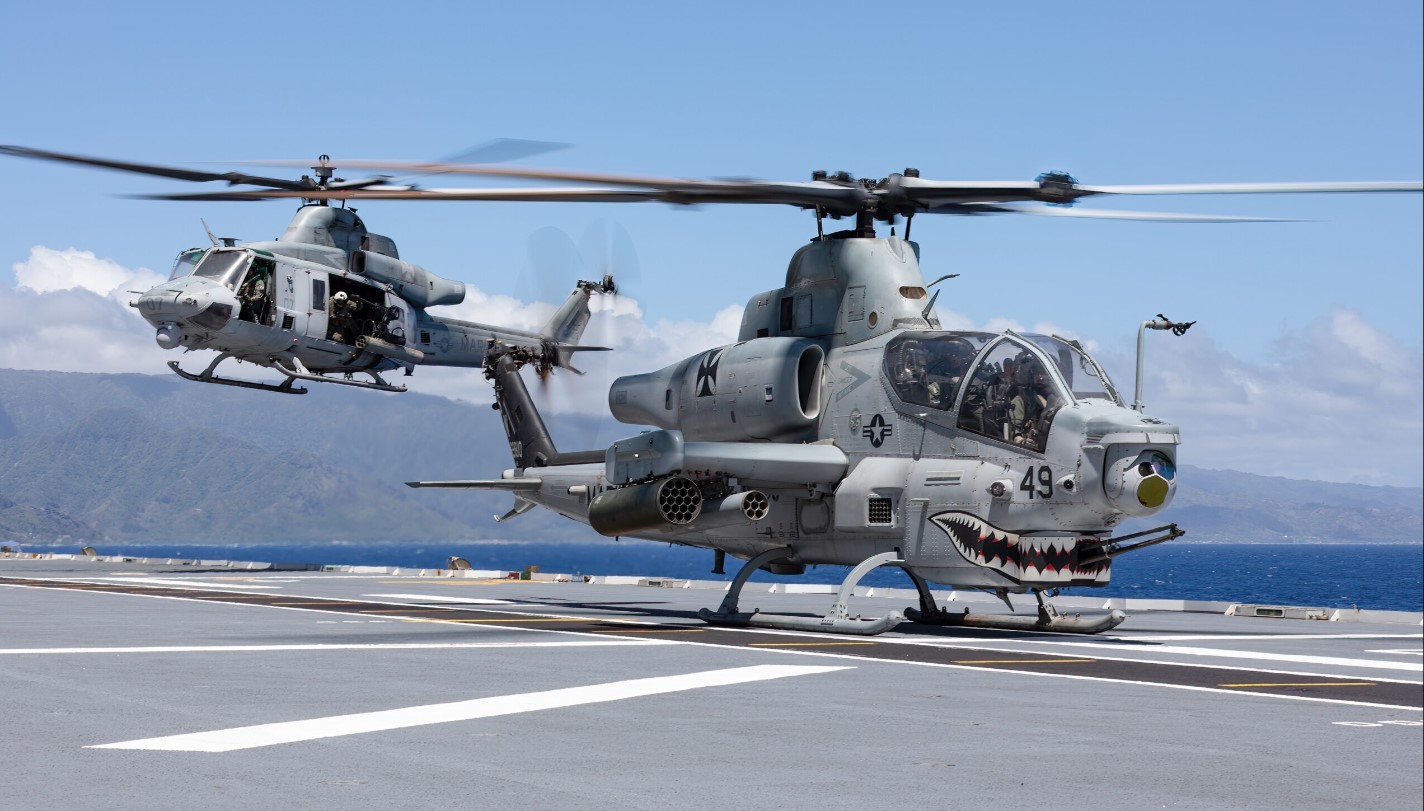
FORT WORTH, Texas — March 17, 2026 : Bell Textron Inc. announced that the first batch of AH-1Z Viper and UH-1Y Venom helicopters upgraded under the U.S. Marine Corps’ Structural Power Improvement for Next-generation Effects (SPINE) program have completed modification work. The aircraft have been transferred to Naval Air Station Patuxent River for continued flight testing and evaluation.
The milestone marks the initial completion phase of a mid-life modernization effort aimed at extending the operational relevance of the Marine Corps’ H-1 helicopter fleet through structural, electrical and digital architecture upgrades.
Program Scope and Technical Objectives
The SPINE program is designed to enhance the baseline capabilities of both platforms by increasing available electrical power, reinforcing structural capacity and introducing an updated digital backbone. These modifications enable integration of future mission systems without compromising performance or operational flexibility.
According to Bell, the upgrades provide additional power margins to support advanced avionics, improved datalinks, next-generation targeting systems, survivability equipment and precision-guided weapons. Structural reinforcements ensure that these additions can be accommodated while maintaining flight safety and mission endurance.
Planned future integrations under the SPINE architecture include the Precision Attack Strike Munition, AIM-9X Sidewinder, and counter-unmanned aerial systems (C-UAS) capabilities. The digital upgrades are also intended to support faster targeting cycles and improved interoperability with joint and networked forces.
Platform Roles and Capability Enhancements
The AH-1Z Viper remains the Marine Corps’ primary attack helicopter, responsible for close air support, anti-armor operations, limited anti-air missions, armed escort, reconnaissance and fire support coordination. The aircraft is equipped with a four-bladed composite rotor system, upgraded drivetrain, glass cockpit and advanced fire-control systems, and is capable of employing a range of precision munitions.
With SPINE modifications, the Viper is expected to support additional mission systems and operate more effectively in contested environments characterized by electronic warfare and integrated air defenses.
The UH-1Y Venom serves as the Corps’ primary utility helicopter, conducting combat assault support, casualty evacuation, search and rescue, command and control, reconnaissance and special operations support. The platform already offers improved range, payload and survivability compared to earlier H-1 variants.
Under the SPINE program, the Venom gains enhanced capacity to function as a networked platform, supporting expanded sensor integration, communications systems and future mission payloads. These upgrades are expected to strengthen its role as a multi-mission support and coordination asset in expeditionary operations.
Fleet Commonality and Operational Efficiency
A defining feature of the H-1 family is the high degree of commonality between the AH-1Z and UH-1Y, which share approximately 85 percent of their components. This design approach reduces maintenance complexity, lowers lifecycle costs and improves operational readiness.
Both aircraft are operated together within Marine Light Attack Helicopter (HMLA) squadrons, often deployed as part of Marine Expeditionary Units aboard amphibious ships. The shared configuration supports operations in constrained environments where deck space, logistics and maintenance resources are limited.
The SPINE program maintains this commonality while upgrading both platforms under a unified modernization framework, preserving the integrated attack-utility pairing central to Marine aviation doctrine.
Strategic Context and Future Role
The modernization aligns with the U.S. Marine Corps’ focus on distributed operations, particularly in maritime and littoral environments such as the Indo-Pacific. In these scenarios, aviation assets are required to support dispersed units, provide responsive firepower and maintain connectivity across a wide operational area.
By expanding electrical capacity and digital integration, the SPINE upgrades enable the H-1 fleet to operate as part of a broader networked force, supporting real-time data sharing and coordinated targeting.
The program is identified in the Marine Corps Aviation Plan 2026 as a key mid-life upgrade for existing AH-1Z and UH-1Y airframes. It reflects a wider Department of Defense approach that prioritizes modernization of existing platforms through modular upgrades rather than replacing them with entirely new systems.
Testing and Program Outlook
The upgraded helicopters will undergo a series of flight tests at Naval Air Station Patuxent River to validate performance under the new electrical and structural configurations. These evaluations will assess system integration, flight characteristics and mission capability under operational conditions.
Bell stated that the work completed at its Amarillo Assembly Center establishes the baseline for a broader fleet-wide upgrade effort expected to continue over the next decade.
No changes to the total number of H-1 helicopters in service or to their planned retirement timelines were announced in connection with this milestone.
The SPINE program ensures that the AH-1Z Viper and UH-1Y Venom remain adaptable platforms capable of integrating future technologies while continuing to support expeditionary aviation requirements within the joint force.
——— End of Article ———