ADELAIDE, South Australia : The Australian government has committed an initial AUD $3.9 billion (approximately USD $2.76 billion) to establish a dedicated nuclear-powered submarine construction yard at Osborne, South Australia. The investment forms part of Australia’s obligations under the AUKUS trilateral security partnership with the United States and the United Kingdom.
Prime Minister Anthony Albanese described the allocation as an initial installment toward the broader development of the Submarine Construction Yard. According to Australian Naval Infrastructure (ANI), the government-owned entity responsible for delivering the project, the total cost of the facility is projected to reach approximately AUD $30 billion over the coming decades.
Scope of the Osborne Development
The new facility will be constructed on a 75-hectare site located north of the existing Osborne Naval Shipyard. The site is currently used to support maintenance operations for the Royal Australian Navy’s Collins-class diesel-electric submarines.
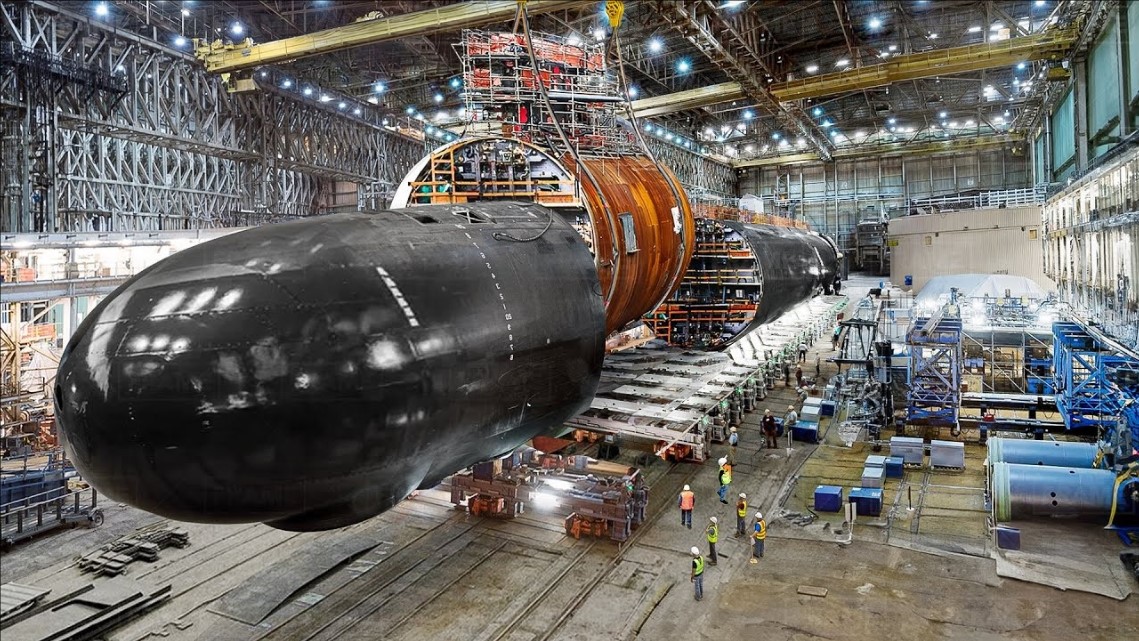
The expanded yard will serve as the primary production base for the SSN-AUKUS class of nuclear-powered submarines. Construction will involve collaboration between ASC (Australia) and BAE Systems (United Kingdom). The submarines will be built in Australia following the acquisition of US-built Virginia-class submarines in the early 2030s.
Key infrastructure specifications released by the government and ANI include:
-
A fabrication hall measuring approximately 420 meters in length.
-
Use of around 710,000 cubic meters of structural concrete.
-
Use of approximately 126,000 tonnes of structural steel.
-
Division of the yard into three primary operational zones: fabrication, outfitting, and a controlled nuclear precinct.
The nuclear precinct will be designed for consolidation, systems testing, launch preparation, and commissioning activities. The development will require significant enabling works, including relocation of utilities, ground preparation, and construction of new access roads. These preparatory works are already underway.
Integration with the AUKUS Program
The shipyard forms part of the broader AUKUS agreement, announced in 2021, under which Australia will transition to operating nuclear-powered, conventionally armed submarines. The framework includes several stages.
In the near term, Australia will host rotational deployments of United States and United Kingdom nuclear-powered submarines. Beginning in the early 2030s, Australia is scheduled to acquire up to three US Virginia-class submarines. Following this interim capability, Australia will transition to domestic production of the SSN-AUKUS class at Osborne.
The SSN-AUKUS design will be based on a United Kingdom platform and incorporate United States technologies, including vertical launch systems and propulsion-related components. As a non-nuclear-weapon state, Australia will not manufacture nuclear fuel. Instead, complete, welded nuclear propulsion units will be supplied by the United States and the United Kingdom.
Industrial and Workforce Planning
The federal and South Australian governments have outlined workforce projections linked to both the construction phase and ongoing submarine production.
During construction of the Osborne Submarine Construction Yard, approximately 4,000 workers are expected to be employed in design and building activities. Once the facility becomes operational and submarine production reaches peak levels, employment is projected to rise to approximately 5,500 workers.
To support long-term workforce requirements, the government has committed an additional AUD $500 million to establish an on-site Skills and Training Academy. The academy is expected to train up to 1,000 apprentices annually to support Australia’s continuous naval shipbuilding program.
Long-Term Infrastructure Development
Australian Naval Infrastructure has indicated that the development represents one of the largest expansions of Australia’s defense industrial base. The scale of the planned construction, including large-volume concrete and steel requirements, reflects the specialized standards necessary for nuclear-powered submarine production.
The Osborne facility will operate alongside existing naval shipbuilding operations and will form part of Australia’s long-term strategy to establish a sovereign nuclear submarine construction capability under the AUKUS partnership.
The initial AUD $3.9 billion allocation marks the first stage of funding for what is projected to be a multi-decade infrastructure program supporting Australia’s transition to nuclear-powered submarine operations.
——— End of Article ———