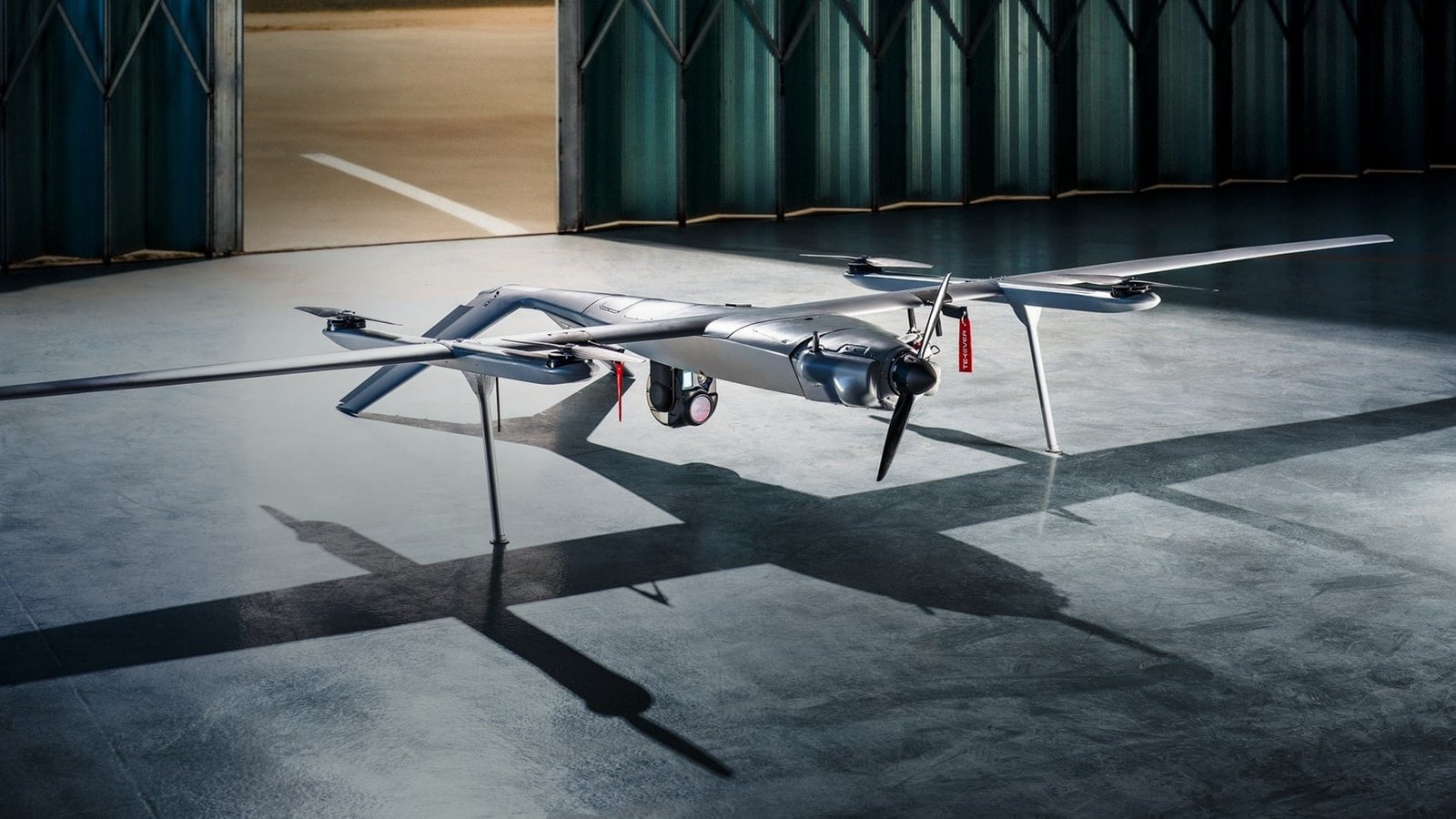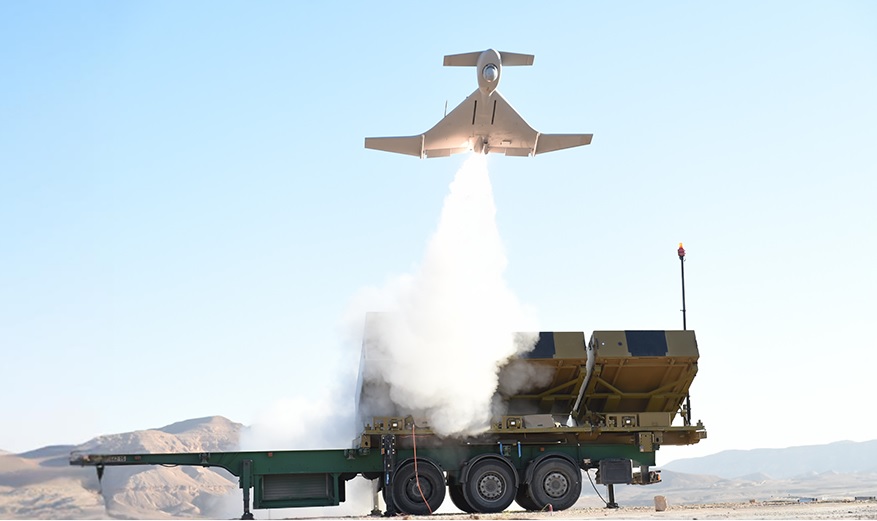
YEREVAN : Armenia has introduced a new domestically produced loitering munition, the “Dragonfly 3,” developed by Armenian defense company Davaro. The unmanned aerial vehicle (UAV) closely resembles the Israeli-manufactured Israel Aerospace Industries (IAI) Harop, a system widely recognized for its operational use during the 2020 Nagorno-Karabakh war.
The Dragonfly 3 was publicly presented as a precision-strike loitering munition designed for one-way attack missions. Such systems are capable of remaining airborne over a target area for extended periods before striking designated assets by detonating an onboard explosive payload. This operational concept mirrors that of the Harop, which functions as both a surveillance and strike platform, particularly in suppression of enemy air defenses (SEAD) roles.
Design and Operational Profile
According to available information, the Dragonfly 3 follows a “kamikaze” attack profile. It is designed to loiter, identify targets, and neutralize them through direct impact. While the external airframe configuration appears visually similar to the Harop, details regarding its propulsion system, seeker technology, guidance mechanisms, and operational range have not been officially disclosed.
The Harop system, developed by Israel Aerospace Industries, is combat-proven and has been used in multiple operational theaters, including by Azerbaijan during the 2020 conflict. That war highlighted the effectiveness of loitering munitions in targeting radar installations, air defense systems, and other high-value military assets.
Questions Over Technological Origins
Defense industry observers have raised questions regarding the Dragonfly 3’s technological lineage. According to reporting by Israeli financial publication Globes, a senior Israeli defense industry executive suggested that technological know-how may have reached Armenia indirectly through India.
India is among Israel’s largest defense customers and maintains licensed production arrangements for several Israeli-designed systems. New Delhi has significantly expanded its defense cooperation with both Israel and Armenia in recent years. Armenia has procured multiple Indian defense systems, including the Pinaka multi-barrel rocket launcher, Akash surface-to-air missile systems, and ATAGS artillery systems, with contracts reportedly exceeding $1 billion since 2022.
Another theory under consideration is reverse engineering. During the 2020 conflict, several Harop units were reportedly downed or malfunctioned over Armenian-controlled territory. Analysts suggest Armenian engineers could have examined recovered systems to replicate structural or aerodynamic components.
It remains unclear whether the Dragonfly 3’s internal avionics, anti-radiation seekers, communications systems, and navigation modules are domestically produced, derived from foreign suppliers, or based on modified imported components.
Regional Security Implications
The unveiling of the Dragonfly 3 introduces a new capability into the South Caucasus military balance. Azerbaijan previously maintained a qualitative edge in unmanned systems, largely due to acquisitions from Israel and Turkey. The Harop played a significant operational role in Azerbaijan’s campaign during the 2020 Nagorno-Karabakh war, contributing to the targeting of Armenian air defense systems and fortified positions.
Azerbaijan has reportedly expressed deep dissatisfaction, viewing Armenia’s acquisition or development of a comparable loitering munition capability as a direct strategic concern. The introduction of such systems potentially reduces the asymmetry in drone warfare that characterized earlier phases of the regional conflict.
Armenia’s Broader Defense Realignment
The Dragonfly 3 program emerges amid Armenia’s broader effort to diversify its defense partnerships. Since 2022, Yerevan has expanded procurement beyond traditional Russian suppliers, entering substantial defense agreements with India and France. These efforts reflect Armenia’s intent to modernize its armed forces and develop indigenous defense production capabilities.
The Dragonfly 3 represents one of the most visible outcomes of Armenia’s domestic defense manufacturing initiatives. However, comprehensive technical specifications, production timelines, operational readiness status, and deployment plans have not yet been publicly detailed by Armenian authorities.
As regional dynamics continue to evolve, the introduction of a domestically unveiled loitering munition comparable to the Harop underscores the increasing role of unmanned strike systems in the South Caucasus security environment.
——— End of Article ———