MUNICH : ArianeGroup, the prime contractor behind Europe’s Ariane rockets and France’s strategic nuclear arsenal, has formally entered negotiations with the governments of France and Germany to develop a new land-based ballistic missile system. The proposed weapon is designed to strike targets at ranges between 1,000 and 3,000 kilometers, utilizing hypersonic warhead technology to evade modern air defenses.
The discussions, confirmed by company executives on the sidelines of the Munich Security Conference, mark a significant potential shift in European defense strategy as the continent seeks to establish sovereign "deep strike" capabilities independent of United States assets.
Closing the "Deep Strike" Gap
Vincent Pery, ArianeGroup’s Director of Defence Programs, stated that the company is currently engaged in preliminary talks regarding the technical and operational requirements for the system.
"We are talking about a range of at least 1,000 kilometers," Pery told reporters. "We can go to 2,000 kilometers, we can go to 3,000 kilometers. It would be up to European leaders to decide what range was needed and how to incorporate it into their militaries."
The proposed system, tentatively referred to in French defense circles as the Missile Balistique Terrestre (MBT), addresses a specific capability gap identified by NATO allies: the lack of a European-made, long-range conventional weapon capable of striking critical logistics, command centers, or airfields deep within adversary territory.
Leveraging Proven M51 Technology
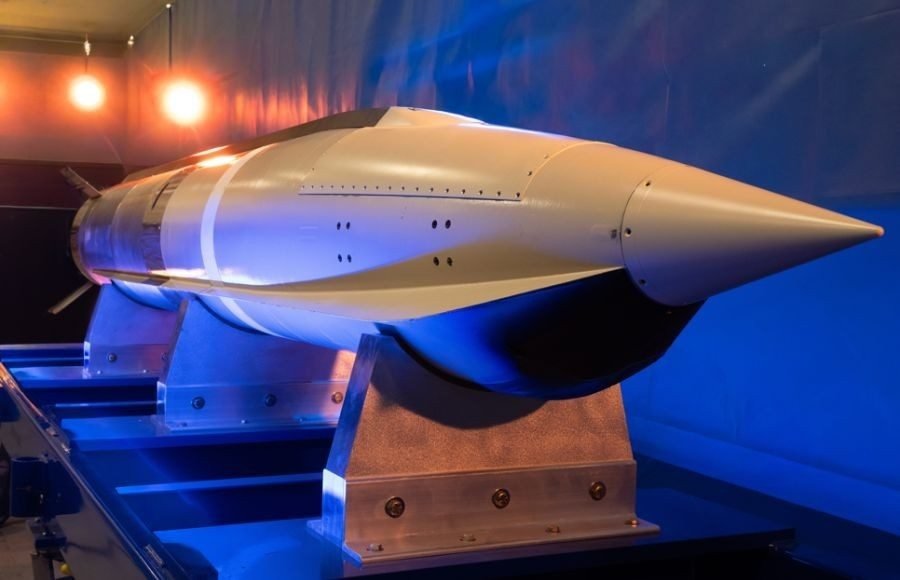
The proposal leverages ArianeGroup's existing industrial base, specifically its experience producing the M51 submarine-launched ballistic missile (SLBM). The M51 serves as the backbone of France’s nuclear deterrent, capable of delivering payloads over intercontinental distances.
The new land-based system would reportedly utilize a modified version of this technology but configured for conventional (non-nuclear) warheads.
-
Hypersonic Capability: The missile would likely feature a maneuverable reentry vehicle capable of hypersonic speeds (exceeding Mach 5), making it difficult for current anti-ballistic missile systems to intercept.
-
Land-Based Mobility: Unlike the submarine-based M51, this system would be deployed from mobile ground launchers, increasing survivability and operational flexibility.
Strategic Sovereignty and ELSA
The talks align with the broader "European Long-Range Strike Approach" (ELSA), an initiative signed by France, Germany, Italy, and Poland to jointly develop long-range fires.
While Germany has previously expressed interest in purchasing American-made Tomahawk cruise missiles or the Israeli PULS system to fill immediate gaps, France has strongly advocated for a sovereign European solution. French officials argue that relying on non-European suppliers for strategic weapons creates a dependency that could limit operational freedom in future conflicts.
France has reportedly already allocated preliminary funding in its 2026 defense budget to explore the feasibility of the project. Pery noted that while development is feasible given existing technology, production and deployment of the new system would take "a few years."
A Shift in Posture
If approved, the project would represent the first time in decades that Western European powers have developed a new class of intermediate-range ballistic missiles. The move reflects a growing consensus in Berlin and Paris that the security architecture of Europe requires a credible conventional deterrent to counterbalance the proliferation of ballistic and cruise missiles in the arsenals of potential adversaries, including Russia.
——— End of Article ———