PARIS — March 11, 2026 : French defense manufacturers ArianeGroup and Thales Group have publicly presented the first visual renderings and technical outline of the FLP-T 150 long-range rocket artillery system, a program intended to replace the French Army’s aging Lance‑Roquettes Unitaire (LRU) launchers and restore a domestically developed deep-strike capability.
The unveiling precedes a scheduled development milestone. Initial flight tests of the guided munition are planned during the first half of 2026, followed by official demonstration firings overseen by the French defense procurement authority, the Direction générale de l’armement (DGA), which are expected to take place in May 2026 as part of the selection process for France’s next-generation rocket artillery system.
Program Objective and Operational Role
The FLP-T 150 program forms part of France’s broader effort to rebuild long-range artillery capabilities after years of limited investment in rocket artillery. The French Army currently operates a very small number of LRU systems—modernized versions of the American M270 Multiple Launch Rocket System (MLRS)—which are approaching the end of their operational life.
Only nine LRU launchers remain in service. These systems provide a maximum strike range of approximately 70 kilometers, significantly below the distances now considered necessary for modern high-intensity conflict.
French military planners have therefore defined a requirement for a next-generation rocket artillery platform capable of engaging targets at distances of at least 150 kilometers, allowing ground forces to strike command posts, logistics hubs, and air defense assets located deep behind opposing front lines.
The FLP-T program also supports the French Army’s goal of fielding a fully operational division capable of high-intensity combat by 2027, a force structure requirement outlined in recent defense planning.
Launcher Design and Platform Architecture
The FLP-T 150 is designed as a high-mobility multiple rocket launcher system mounted on a heavy tactical vehicle platform. The launcher is integrated on the Mercedes‑Benz Zetros 8×8 military truck chassis.
France has previously procured large numbers of this vehicle type as part of broader logistics modernization efforts. The trucks were ordered through French defense company Arquus in partnership with Daimler Truck, with approximately 7,000 units planned for delivery across several French military vehicle programs.
The FLP-T launcher module is installed behind an armored driver cabin and consists of a rectangular containerized launch structure.
Key structural characteristics include:
-
Payload configuration:
The launcher contains eight rocket launch cells arranged in two rows of four within a single container module. -
Containerized ammunition system:
Rockets are stored and transported inside standardized launch containers designed for rapid replacement. -
Hydraulic elevation system:
The launch container is raised and positioned using a hydraulic actuator, allowing the rockets to be fired along a calculated ballistic trajectory. -
Rapid reload capability:
Entire launch containers can be swapped using support vehicles, simplifying field reloading and reducing turnaround time between firing missions.
This architecture differs from several other contemporary rocket artillery systems.
The American M142 HIMARS, for example, uses a single six-rocket pod, while South Korea’s K239 Chunmoo employs two separate six-rocket pods mounted side-by-side.
The FLP-T 150 instead utilizes a single integrated eight-cell container, giving it a distinct configuration among modern launcher systems.
Guided Munition and Strike Characteristics
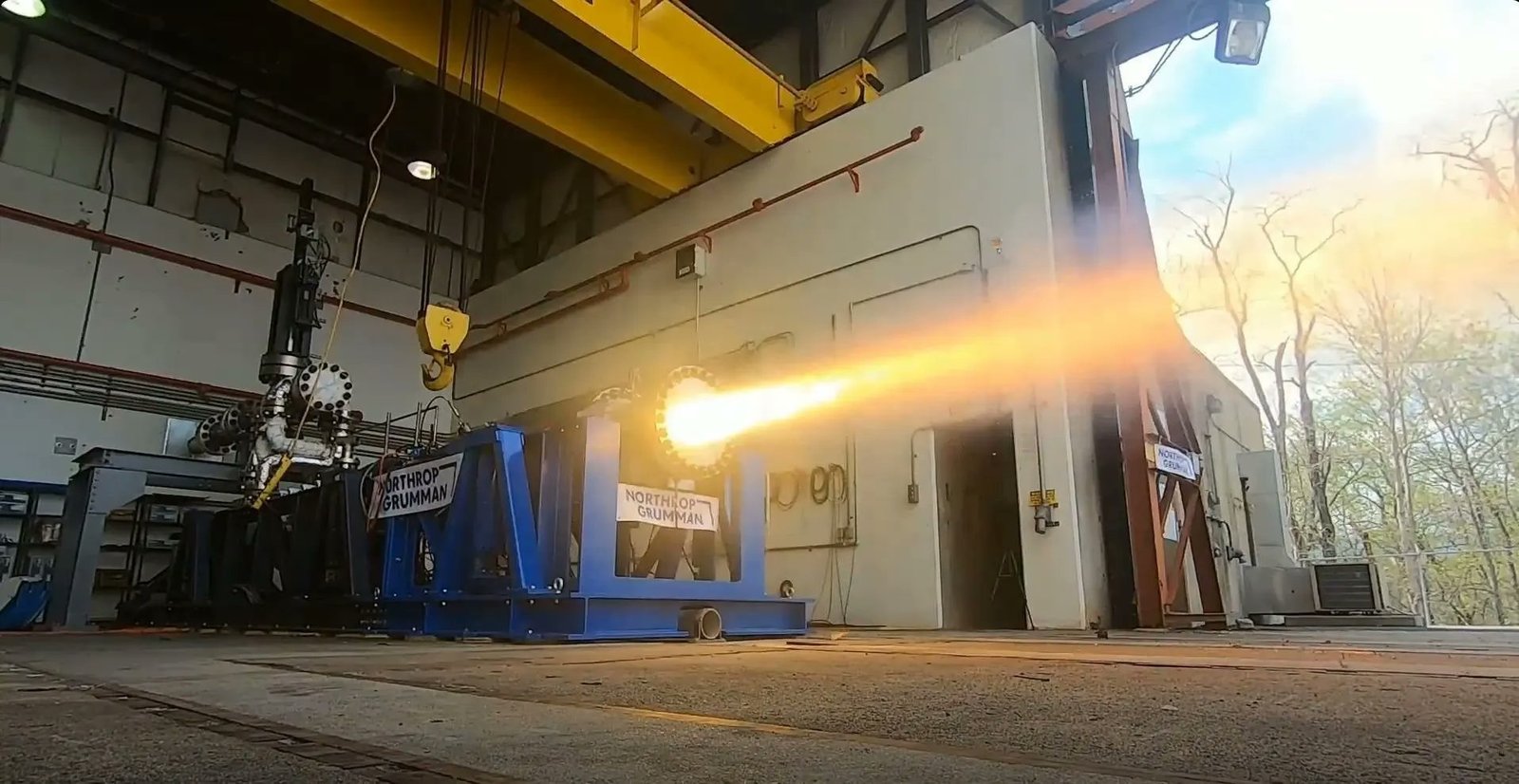
The long-range guided rocket used by the FLP-T 150 is primarily developed by ArianeGroup, drawing on the company’s experience in high-velocity aerospace propulsion and ballistic guidance systems.
The munition follows a high-arc ballistic flight profile, reaching significant altitude before descending toward the target at high terminal velocity. Maintaining accuracy during this trajectory requires continuous guidance and trajectory correction.
According to the companies involved in development, the munition is designed to achieve precision accuracy measured in single-digit meters.
The rocket incorporates:
-
Advanced inertial navigation systems
-
Satellite navigation support
-
In-flight trajectory correction
The design also includes electronic warfare resilience, allowing the munition to maintain targeting precision even when satellite navigation signals such as GPS are degraded or intentionally jammed.
ArianeGroup’s work on the system draws on technological expertise developed during the production of the Ariane launch vehicle family used for commercial space missions, as well as France’s strategic nuclear deterrent missile program, including the M51 submarine‑launched ballistic missile.
ITAR-Free Design and Export Considerations
One of the defining characteristics of the FLP-T 150 program is its complete independence from United States components.
The system has been designed to avoid any parts subject to International Traffic in Arms Regulations (ITAR). These export control regulations apply to many U.S. defense technologies and can restrict international sales or third-party transfers.
By ensuring the launcher and its munitions are entirely European-built, the program aims to guarantee both operational sovereignty for France and export flexibility for potential international customers.
Procurement Plan and Program Value
The FLP-T program represents a significant artillery modernization investment for France.
Current planning outlines:
-
Estimated program value: approximately €600 million
-
Initial procurement target: at least 13 launchers
-
Planned delivery timeline: by 2030
These systems are expected to form the foundation of France’s future long-range artillery capability.
Competing Systems in the French Evaluation Process
The DGA’s planned demonstration trials in May 2026 will compare the FLP-T 150 with several alternative systems developed by domestic and international suppliers.
France has encouraged competition among national defense companies in order to maintain industrial sovereignty.
Two additional French programs are currently competing:
-
Thundart, developed by MBDA and Safran, which uses guidance technology derived from the AASM Hammer precision air-to-ground weapon and is designed for a similar 150-kilometer strike range.
-
Foudre, a rocket artillery proposal developed by French defense contractor Turgis & Gaillard.
France has also examined foreign rocket artillery systems during earlier stages of its evaluation process.
These included the American M142 HIMARS, the multinational EuroPULS launcher developed from the Israeli PULS system, and GMARS, a German-American artillery project.
In addition, the Indian Pinaka multi‑barrel rocket launcher was previously considered as a possible option tied to industrial cooperation with India following its procurement of the Dassault Rafale fighter aircraft.
Upcoming Development Milestones
The next stage of the FLP-T 150 program will involve guided rocket flight tests scheduled for early 2026.
These tests will validate propulsion performance, guidance accuracy, and trajectory control before the system proceeds to the DGA demonstration trials planned for May 2026.
The outcome of these trials will determine whether the FLP-T 150 proceeds toward full production as France’s next operational long-range rocket artillery system.
——— End of Article ———