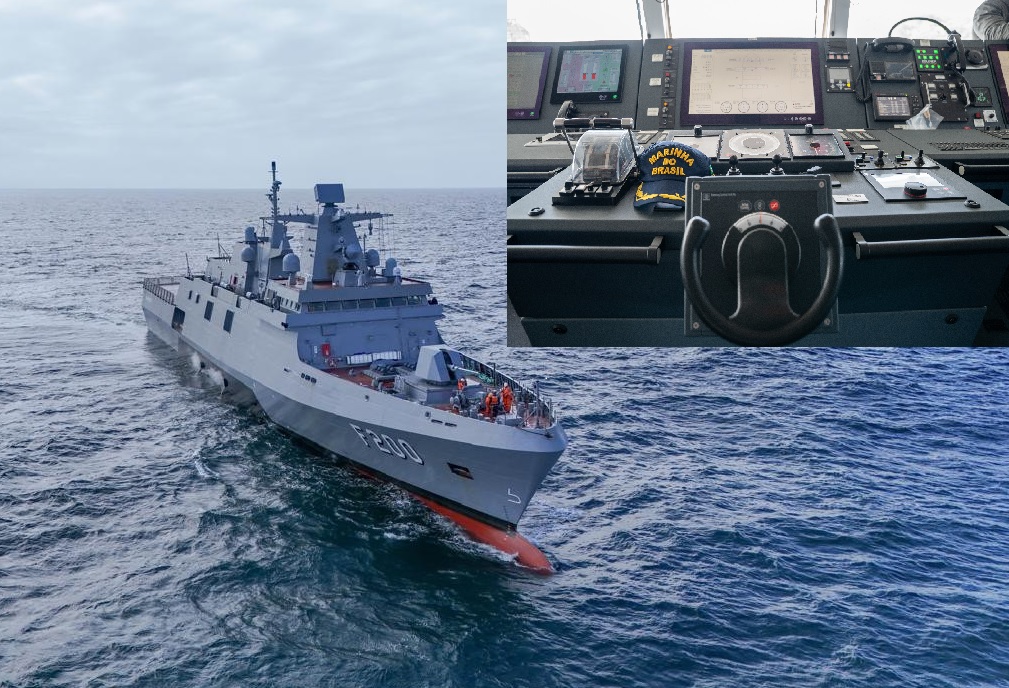
ITAJAÍ, BRAZIL : German navigation systems manufacturer Anschütz has delivered and commissioned its SYNAPSIS Integrated Navigation and Bridge System (INBS) on Tamandaré (F200), the lead vessel of the Brazilian Navy’s Tamandaré-class frigate program. The commissioning was completed at the TKMS Estaleiro Brasil Sul shipyard in Itajaí, where the ship is being built by the SPE Águas Azuis consortium.
The frigate is scheduled for formal incorporation into the Brazilian naval fleet early this year. Installation and activation of the integrated bridge system marks a key milestone in final preparations ahead of commissioning.
Program Background and Industrial Structure
The Tamandaré-class frigate program represents one of Brazil’s principal naval modernization initiatives. The ships are being constructed by SPE Águas Azuis, a joint venture comprising ThyssenKrupp Marine Systems (TKMS), Embraer Defense & Security, and Atech. Construction is taking place at the TKMS Estaleiro Brasil Sul facility in Itajaí, Santa Catarina.
The Tamandaré-class design is based on the MEKO A-100 platform and configured as a 3,500-tonne, 107.2-meter multi-role stealth frigate. The vessels are intended to perform maritime security operations, patrol duties within Brazil’s Exclusive Economic Zone (Blue Amazon), and participation in joint and international missions.
The program incorporates a significant national industrial component and mandates technology transfer in naval engineering, platform and combat systems integration, logistics support, and long-term lifecycle management.
SYNAPSIS Integrated Navigation and Bridge System
The SYNAPSIS INBS supplied by Anschütz forms the core of the frigate’s bridge and navigation architecture. The system is built around standardized, globally deployed navigation technologies and structured on a centralized integration platform.
The integrated system includes multifunctional workstations supporting:
-
Navigation radar incorporating X-band technology
-
Electronic Chart Display and Information System (ECDIS)
-
Conning and supplementary navigational functions
-
Closed-Circuit Television (CCTV) integration
-
Steering control system with autopilot
-
Global Maritime Distress and Safety System (GMDSS)
At the center of the architecture is the SYNAPSIS integration platform, which enables consistent data processing across connected sensors and subsystems. The platform provides a uniform human-machine interface (HMI) across workstations and allows centralized monitoring of bridge operations. This configuration supports safe navigation during routine transits, confined maneuvering, and mission deployments by presenting consolidated operational data.
Modular and Lifecycle-Oriented Design
A defining characteristic of the SYNAPSIS architecture is its software-defined, modular structure. The design allows scalability and functional expansion over the ship’s operational lifespan.
The system can accommodate software updates, integration of additional external sensors, and structural adjustments required by evolving operational requirements. This modular approach is intended to support long-term reliability, simplify maintenance processes, and ensure continued operational readiness throughout the vessel’s service life.
Local Participation and Support Framework
In line with the Tamandaré-class program’s technology transfer requirements, local industry participation was incorporated into the navigation system’s integration and commissioning.
Anschuetz do Brasil, the company’s subsidiary based in Rio de Janeiro, carried out system commissioning activities and managed bridge equipment during sea trials. The local team also oversaw final systems integration onboard the vessel. Following delivery, Anschuetz do Brasil will act as the Brazilian Navy’s primary national point of contact for technical support, maintenance, and service operations related to the navigation system.
Platform Capabilities and Program Outlook
Tamandaré (F200) is the first of four frigates planned under the program. The vessel is equipped with locally co-developed MANSUP anti-ship missiles and Sea Ceptor vertical launch surface-to-air missile systems, alongside other modern combat and platform systems.
Sea trials for the lead ship were completed late last year. With the commissioning of the SYNAPSIS INBS, the frigate’s navigation and bridge systems are fully operational ahead of formal entry into service.
Construction of the remaining vessels in the Tamandaré-class is ongoing under the SPE Águas Azuis consortium, with the program structured to strengthen domestic shipbuilding capacity while incorporating established international naval technologies.
——— End of Article ———