LONG BEACH, California : Anduril Industries, the defense technology firm founded by Silicon Valley entrepreneur Palmer Luckey, has announced plans to invest $1 billion in a sprawling new manufacturing and engineering campus in Long Beach, a move that signals a dramatic expansion of the company’s ambitions and a direct challenge to America’s traditional defense giants.
The project, one of the largest private defense manufacturing investments in Southern California in decades, will transform a former Boeing aerospace facility into what Anduril describes as a next-generation production hub for autonomous and AI-driven weapons systems. Company executives say the site will anchor Anduril’s transition from a fast-growing defense startup into a full-scale industrial manufacturer capable of producing advanced systems at speed and scale.
Reviving a Historic Aerospace Hub
The new campus will occupy approximately 1.2 million square feet near Long Beach Airport, a site once used to assemble the C-17 Globemaster III military transport aircraft. By reclaiming the long-idle facility, Anduril is positioning itself within a region historically central to U.S. aerospace and defense manufacturing, particularly during the Cold War.
The company expects the investment to generate thousands of high-skilled jobs over the coming years, including engineers, software developers, machinists, and production specialists. Local officials have welcomed the announcement as a major economic boost, restoring advanced manufacturing to a city that has steadily lost aerospace employment over the past two decades.
Anduril leadership has framed the expansion as part of a broader effort to rebuild America’s industrial defense base, which they argue has atrophied due to outsourcing, consolidation among major contractors, and slow Pentagon procurement processes.
A Shift Toward Mass Production
Founded in 2017, Anduril has built its reputation on rapid prototyping and software-centric defense systems, often developed with private venture capital rather than traditional Pentagon funding. The Long Beach campus marks a strategic shift: a commitment to large-scale, in-house manufacturing of hardware designed for sustained production, not limited deployment.
Company officials say the facility will integrate design, testing, and manufacturing under one roof, enabling faster iteration and deployment than the fragmented supply chains used by legacy defense contractors. This vertically integrated approach is intended to shorten development cycles and reduce costs for the U.S. military and allied nations.
Autonomous Warfare at the Core
The Long Beach site will focus on producing a wide range of autonomous and semi-autonomous systems tailored for modern warfare, where speed, data processing, and uncrewed platforms are increasingly decisive.
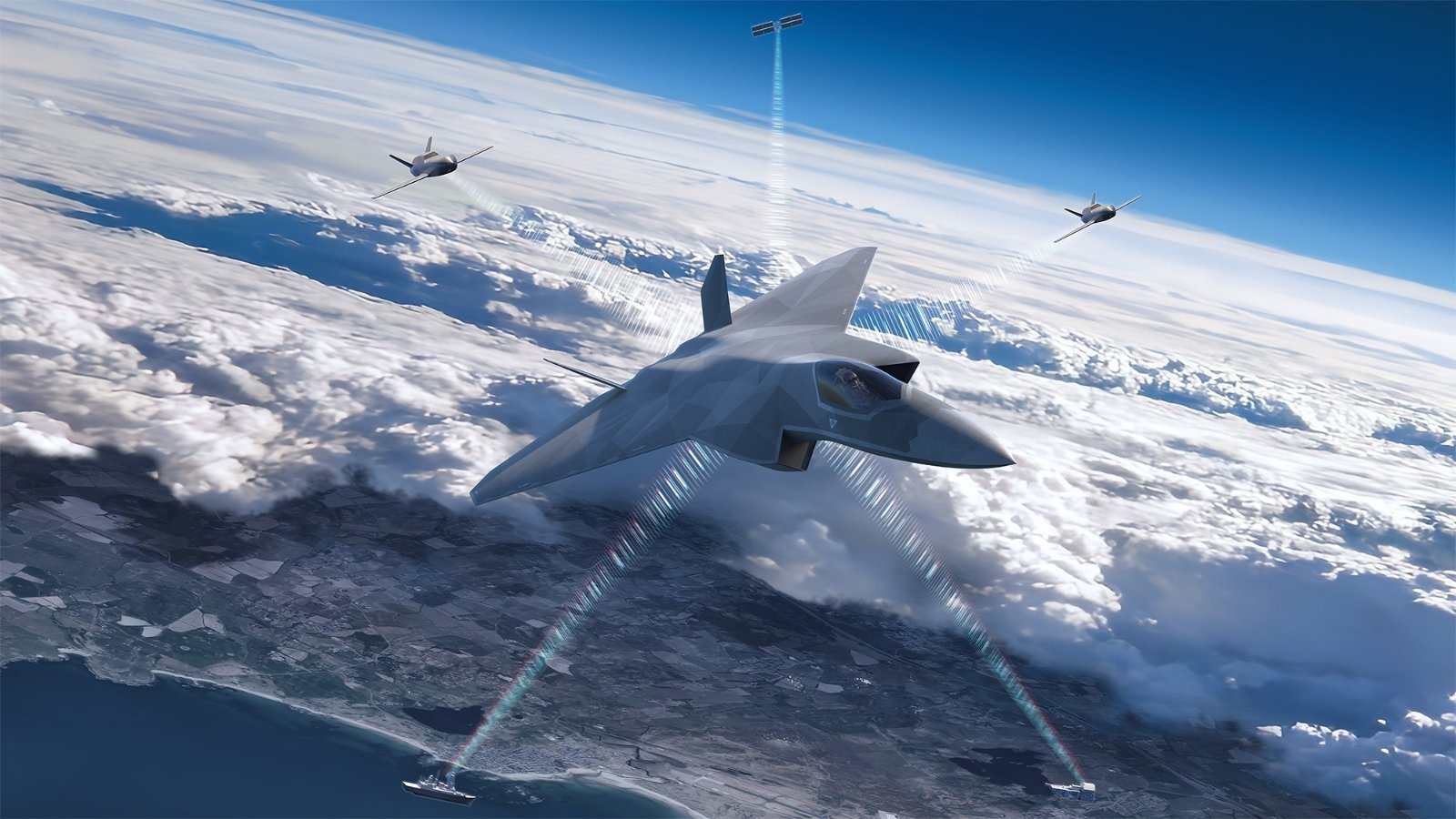
Among the systems expected to be developed and manufactured are autonomous fighter aircraft for the U.S. Air Force’s Collaborative Combat Aircraft (CCA) program, designed to operate alongside human pilots as robotic wingmen. The facility will also support production of large autonomous underwater vehicles (AUVs) used for maritime surveillance, reconnaissance, and data collection without onboard crews.
In addition, Anduril plans to expand manufacturing of its Roadrunner system, a reusable vertical-takeoff interceptor designed to counter drones and cruise missiles, as well as a family of loitering munitions and defensive missile systems. All platforms are built around Anduril’s proprietary artificial-intelligence software, enabling autonomous navigation, target identification, and mission coordination.
Palmer Luckey and a New Defense Model
Anduril was co-founded by Palmer Luckey, best known for creating Oculus VR and selling it to Facebook (now Meta) for $2 billion in 2014. After his departure from Meta, Luckey pivoted toward defense technology, arguing that Silicon Valley must play a central role in national security.
Luckey is a prominent donor to former President Donald Trump and other Republican political causes, and has been outspoken about the need to rapidly modernize the U.S. military in response to China’s expanding technological and industrial capabilities. While Anduril positions itself as politically independent, Luckey’s views have helped shape the company’s aggressive approach to defense innovation and production.
Unlike traditional contractors that rely on long-term, cost-plus government contracts, Anduril uses venture capital funding to develop systems ahead of formal Pentagon demand. With a valuation exceeding $12 billion, the company has been able to self-fund major programs, betting that the military will later adopt systems that are already tested, scalable, and production-ready.
Challenging the Defense Establishment
The scale of the Long Beach investment underscores Anduril’s intent to compete directly with established defense primes such as Lockheed Martin, Northrop Grumman, and Boeing. By combining software-driven design with large-scale manufacturing, the company is attempting to redefine how weapons systems are built and delivered.
Defense analysts say the move reflects a broader shift within the Pentagon, which has increasingly emphasized rapid production, autonomy, and industrial resilience amid concerns about high-intensity conflicts and supply-chain vulnerabilities.
For Anduril, the project represents more than expansion. It is a statement of intent that the future of U.S. defense manufacturing—long dominated by legacy contractors—may be entering a new era defined by speed, software, and a revitalized American industrial base.
——— End of Article ———