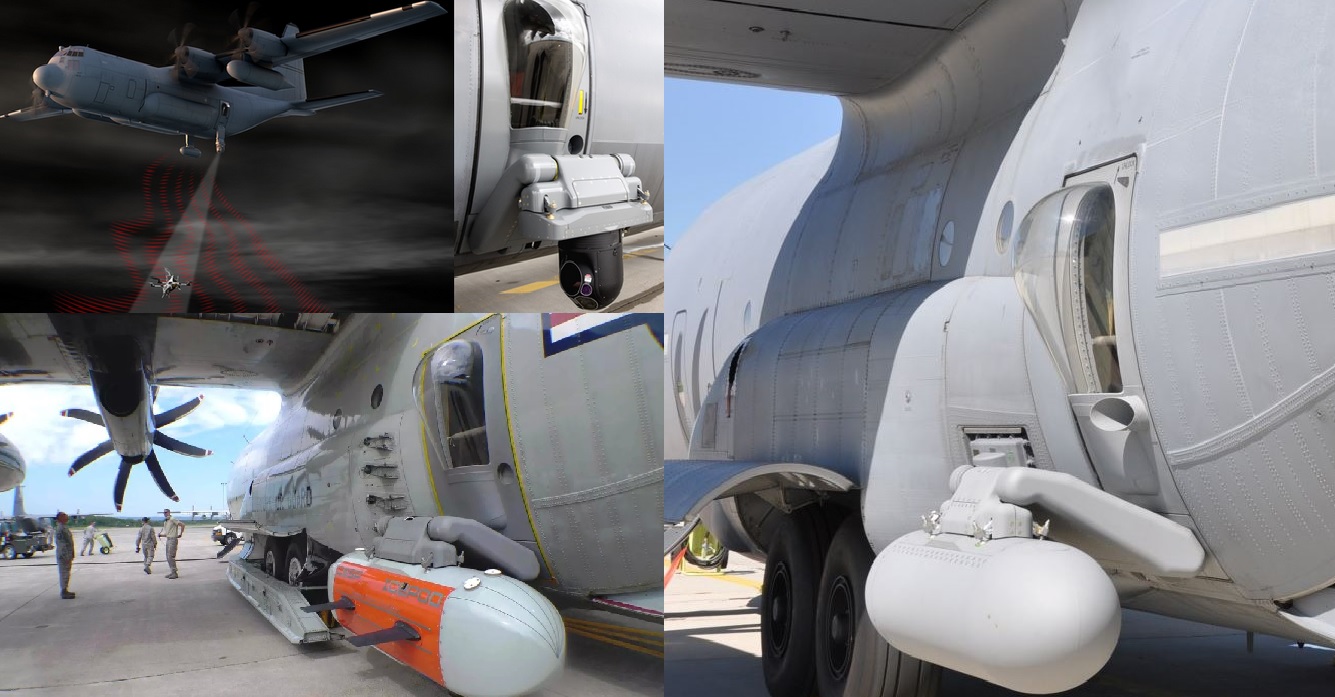
BROOKSVILLE, Florida — February 22, 2026 : Airdyne Aerospace has detailed the operational capabilities of its AS-7 Strut robotic arm hardpoint system, developed to enable rapid integration of special-mission payloads on C-130 Hercules aircraft without permanent structural modification.
The AS-7 Strut is a core component of the company’s modular SABIR platform and is designed to mechanically articulate sensors beneath the aircraft using the existing paratroop door positions. The configuration allows operators to deploy payloads below and alongside the fuselage, providing an unrestricted field of view for surveillance, electronic warfare, communications, and other tactical missions.
Company Background and Development
Airdyne Aerospace, headquartered at Hernando County Airport in Brooksville, Florida, was established less than a decade ago in response to demand for specialized engineering services supporting roll-on C-130 special mission systems. The privately owned firm focuses on aircraft special mission systems engineering, manufacturing, and research.
In addition to its Florida headquarters, the company maintains research and development activities in Calgary, Alberta, Canada. Since its founding, Airdyne has expanded its portfolio to include support for other fixed-wing and rotary-wing aircraft, as well as backend mission operational support systems.
The SABIR platform, which includes the AS-7 Strut, scanner doors, multi-mission pods, crashworthy seating, and avionics racks, is designed to be positioned outboard of the cargo rail system. This placement ensures that cargo movement, airdrop operations, and paratroop activities remain unaffected. Aircraft equipped with the system can remain pressurized during operations.
Rapid Installation and Payload Integration
The AS-7 Strut is engineered for quick installation and reconfiguration. Initial installation requires standard hand tools and takes only a few hours to add two additional hardpoints to a C-130 airframe. Once the structural hardware is installed, integrating new sensors or payloads can be completed in minutes.
Each strut hardpoint incorporates standard 14-inch lug spacing, allowing compatibility with a wide range of pods, sensors, and payloads. Airdyne provides specialized adaptors to expand integration options further.
To streamline ground handling, operators can roll a pod or sensor directly to the strut. The system is capable of autonomously lifting the payload into position, eliminating the need for external heavy lifting equipment. The design supports modular reconfiguration between aircraft or mission profiles without permanent changes to the airframe, enabling both temporary and permanent installations.
The AS-7 Strut is electrically operated and includes independent manual retraction systems. Deployment or retraction can be completed in approximately one minute. The system is compatible with all C-130 models.
Structural Design and Load Capacity
Structural support is provided by a Low-Profile Floor Brace and Adaptive Mounting System, which together allow the dual hardpoint configuration to support up to 1,100 kilograms of assorted special-mission payloads and sensors across two struts. The system operates without interfering with the aircraft’s internal cargo area.
The configuration is designed to preserve the C-130’s primary airlift role while adding special-mission capabilities through bolt-on modifications.
Power, Data and Direct Connectivity
For power and data integration, cables are routed directly from the external sensor through the strut and into the adjacent AS-T4 Workstation and AS-20S AV-Rack. This direct connectivity bypasses traditional internal aircraft wiring, allowing streamlined system integration and operation.
Advanced Positioning and Sensor Geometry
In flight, the AS-7 Strut is controlled through an Operator Control Unit that commands dual-redundant brushless DC motors. The system allows precise raising and lowering of the strut to achieve the required sensor geometry.
When deployed, the strut positions payloads away from the aircraft structure, enabling sensors to descend significantly beneath the fuselage or extend horizontally toward the belly of the aircraft. This configuration provides an unobstructed field of view for a range of mission applications.
The system supports tactical angles suitable for directing electronic warfare arrays, countering ascending unmanned aerial systems, enabling communications, deploying mission effects, and conducting environmental sensing.
Operational Coverage Capabilities
The AS-7 Strut enables multiple operational coverage configurations:
-
Full Half Hemispheric Electro-Optical/Infrared (EOIR) Coverage, providing 180-degree sensor coverage for surveillance and monitoring missions.
-
Full Hemispheric Radio Frequency (RF) Coverage, extending detection range for communication and threat detection tasks.
-
Directional Special Applications, allowing targeted coverage zones tailored to specific mission requirements.
The platform supports a variety of payloads, including electro-optical/infrared turrets, synthetic aperture radar systems, electronic warfare equipment, communications arrays, and small unmanned aerial vehicle launchers.
Operational Users and Partnerships
Airdyne Aerospace has supplied SABIR systems, including AS-7 Strut configurations, to operators such as the Royal Danish Air Force for maritime search and rescue missions and the Philippine Air Force for maritime surveillance and intelligence, surveillance, and reconnaissance roles.
The company has partnered with HENSOLDT to offer integrated mission suites combining sensor technologies with the SABIR platform. Airdyne has also supported integrations involving systems such as the Northrop Grumman LITENING targeting pod on HC-130J aircraft.
Continued C-130 Mission Flexibility
The AS-7 Strut is intended to extend the operational flexibility of the C-130 platform by enabling rapid, modular integration of special-mission equipment while maintaining cargo, airdrop, and paratroop functionality. The system’s bolt-on design allows operators to adapt aircraft for multi-role missions without permanent structural changes, preserving long-term fleet utility.
——— End of Article ———